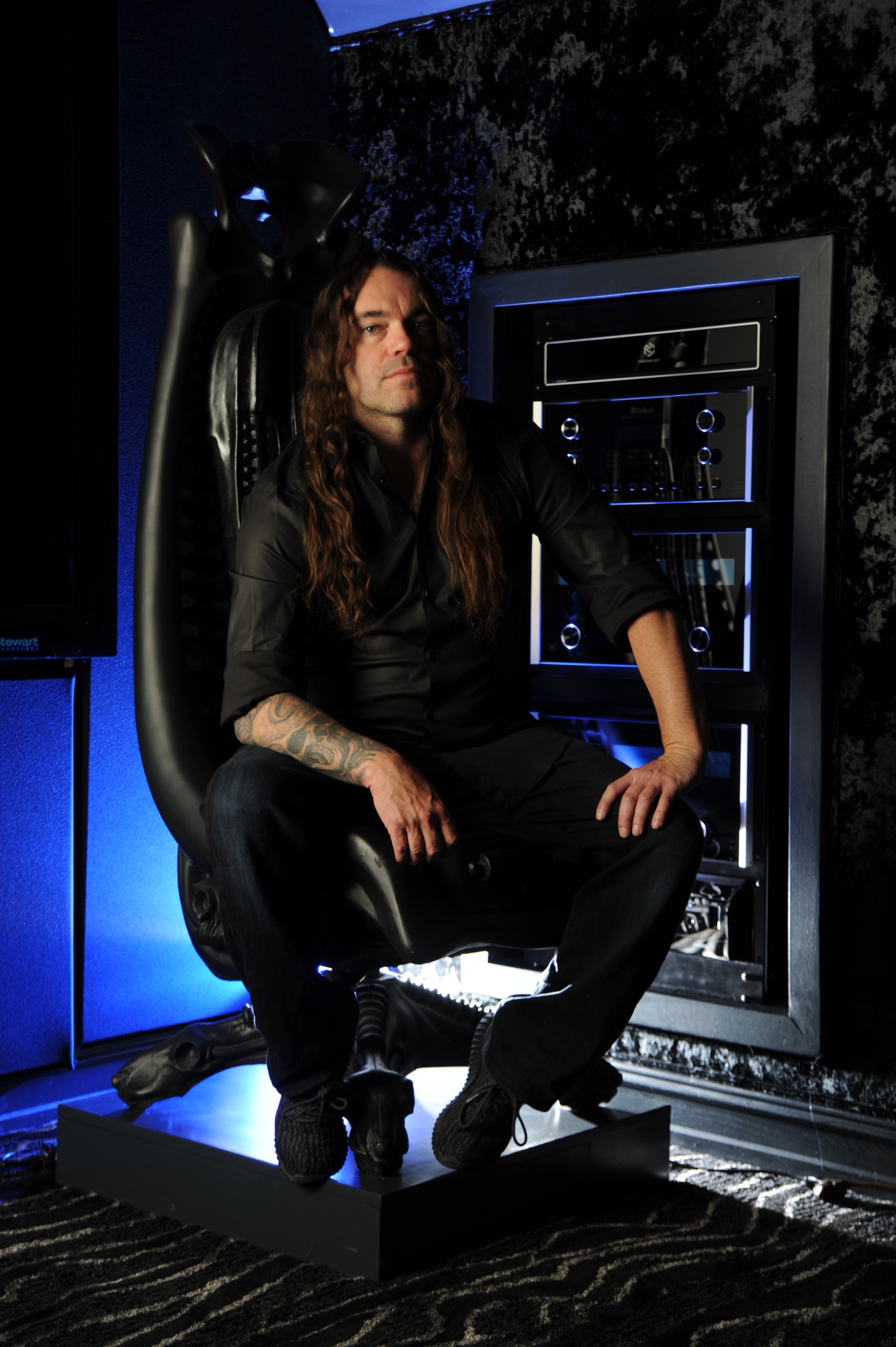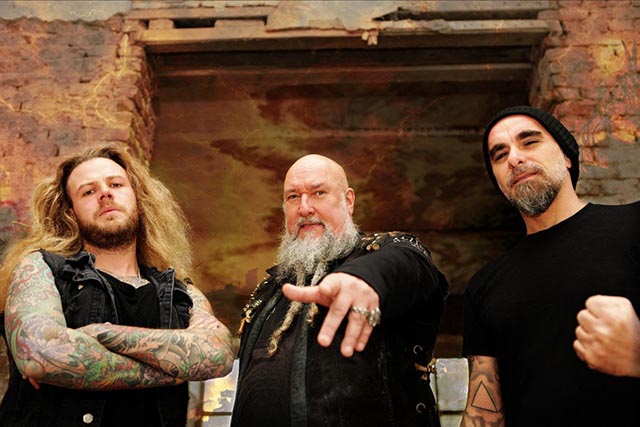
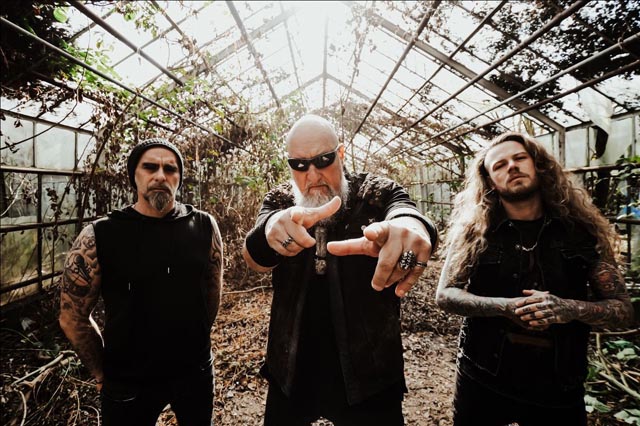
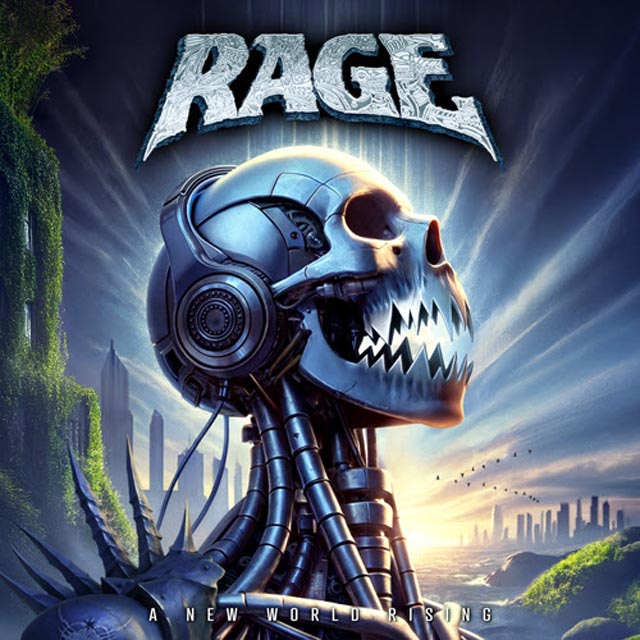
For over four decades, Rage has stood as one of Germany’s most influential power metal bands, driven by the relentless creativity of mastermind Peter “Peavy” Wagner. With more than 25 albums, a book, and a career built on pure dedication, Wagner proves there’s no excuse to stop creating; his work ethic is a lesson we can all learn from. The band’s latest effort, A New World Rising (released September 26, 2025, via Steamhammer), continues that legacy with a surge of energy and optimism. Metal Insider caught up with the legend himself to discuss the record, the history of Rage, and what keeps the fire burning after all these years.
How would you describe A New World Rising compared to your previous album, Afterlifelines?
This new album, there’s no orchestration, first of all. Like it was on half of the last one. It’s pretty pure and rough, I would say. The sound is a bit more thrashy. And besides this, it’s full of the typical trademarks of the band, including some progressive elements.
What was a specific moment that inspired the more optimistic direction?
There are two things to mention. First of all, last year the band celebrated its 40th anniversary. And I had also written a band biography named Soundchaser. Took me a couple of years to do all the research for this, and go through all the memories for basically my whole life. And after I released this, it felt for me like I could let the past go. Now this new year felt to me like just jumping into the future without the ballast of the past. So this gave me a kind of feeling of freedom. Also, we have a very positive vibe. It’s the moment in the band. This lineup works really perfectly together, especially with me and my guitar player, Jean Bormann. We have a very creative phase at some moments. And yeah, this kind of positive mind view gave us inspiration for this.
How did the recording at your own studio impact the creative process?
Well, of course you can imagine when you have a studio where you can just go in 24/7, then this is of course very convenient. You don’t have to do demos anymore, you don’t have to do any kind of pre-production or so. You can record your ideas right from the scratch right away when you have them. So you can capture them also in a very rough and pure stage. So, this is of course very positive and very helpful for a good output.
It’s awesome to have that ability, to just use your creative minds 24/7.
Yeah. And we use it.
Now, as you mentioned, you decided not to include orchestration this time around, but what led to saving that element for the next record?
Yeah, I mean, this is not gone, of course, this is one of the trademarks of Rage. It just happened by chance that we didn’t use anything like this for this new album. Actually, after we had released Afterlifelines, the album before, we didn’t really plan to have a new album that quickly. The songs just happened by the way. And so when we captured our ideas, it was all really, like I said, already quite rough and quite pure. So, it didn’t even come up with the idea of doing some more complex arrangements. We just used very simple basic band arrangements with the three-piece band. And so the album turns out to be completely without, but that doesn’t mean that we don’t use this element again in the future.
And for A New World Rising, which song do you think best captures the essence of the record?
So, we have picked out a couple of songs that we also did video clips for. The first one is already released, the title is Freedom. Then next week will come out a second clip for the opening track, Innovation. And on the release date, which is 26th of September, we’ll have a clip for Fire in Your Eyes. Meanwhile, in between, we also had a clip for the bonus track of the album, which is a new version of Straight to Hell, an old song from the band, which is included in a movie soundtrack here of a very popular movie right here in Germany. And we also used material from this movie. It’s a kind of Wild West parody movie. So, this is also an additional promo tool.
And as you mentioned, Freedom was the debut single. What did you feel that track was the right introduction for the album?
I think it has the most typical Rage trademarks. It’s pretty simple, it’s pretty catchy, it has a kind of middle groove. It’s not too fast, it’s not too slow. I think it’s just a kind of typical Rage track.
Were there any tracks that you were writing during the process that sparked your momentum to get more while writing the album, any certain songs that gave an inspirational boost?
I couldn’t really say so. Actually, we just collect ideas, we just gather the ideas. And at the moment we are still in this kind of creative situation. We already have, believe it or not, we have already another more tracks written in between for some whatever future album. And it’s just happening without any plan or any bigger idea behind it or so. It’s just happening right now, we’re just coming up with a lot of good ideas, especially Jean and I. We just bomb each other with new ideas, and this inspires one or the other for having even more ideas. So it wasn’t really some deeper plan behind it.
You guys have quite the extensive catalog, and that creativity just seems to keep on flowing with you, it’s awesome, and it’s very inspiring too. And how do you maintain that creativity with such an extensive discography?
That’s a good question. I was always like a song collector. Even when I was a kid, when I started to learn guitar, it started with nine years or so, I was collecting with each new chord that I learned on the guitar, I was writing another song, just around this chord. So, I remember I still have a map here that has more than 200 of those really early written songs. I mean, they’re pretty simple and primitive, so there’s no reason to work them out, or release something from this, surely not. But it’s a nice memory of my childhood.
And it was always like this. We were just working on stuff because we just love to do this. We were working on ideas. And all these new albums that basically happened, by the way, it’s not that we have to make a big plan before, or try to, like now, okay, we’re going in the songwriting phase and now everybody has to, whatever, get out of this normal life or so, get out of the daily routine, to get into a special writing mode. We are constantly in this kind of creative mood.
And it was always my whole life like this. So for me, it appears normal. And I was sometimes wondering when I see other bands how difficult it is for them to get new material together, and how long it takes them to write a new album. We never had this.
So, it’s more like a second nature to you at this point.
Yeah. I mean, everybody has their talents, I guess.
Now, since you’ve been doing this basically your whole life, do you still approach writing with the same mindset you had in the 80s, or has it evolved for you?
If I have the same mindset like in the 80s? I couldn’t say so. Of course, I grew up, and I have learned new things that also made my view on the world and other things a bit more complex already. I changed my mind on some things, and plus my whole life has changed. I mean, I’m 60 now, and within this last 60 years, I don’t know how old you are, probably a lot younger, that the world itself has changed a lot over all these years. So, all these experiences of course influenced my way of thinking. And today, I have a more different mindset than I had in the 80s, truly.
Looking back throughout all Rage’s albums, which album do you think was the biggest turning point?
Big turning point… There are a couple of albums that made a kind of turn in the career of the band. The first I would mention him was in the 80s, Perfect Man, in 1988, which shows for the first time that the typical style, composition style of the band. And that also made us become a bit more popular outside of Europe. And in the 90s, then a bit later, surely albums like Trapped! or Black in Mind, they made an impact, explored new worlds for us.
Then musically, definitely Lingua Mortis and XIII, a little bit later, by the end of the 90s, where we developed classical arrangements into the music, and brought this into the stylistic output of the band, and the range of the band.
Then in the 2000s, when we had Mike Terrana, an American drummer, and Victor Smolski, a Russian guitar player, both very experienced instrumentalists, the band became a bit more progressive, I guess, which also got into the range of this musical style. And all this basically grew together to the typical sound that the band has today, nowadays.
And it’s a coincidence that you mentioned Black in Mind because this year actually marks the 30th anniversary of the album. What do you remember most from creating it?
Yeah. I remember back then it was also kind of a new start for the band. We had a lineup change before this. And we grew from a three-piece band to a quartet, two guitar players in the band, both very young and hungry guys. And then we also had an immense creative output back then. We wrote songs like we were making sandwiches. I remember back then, of course, we didn’t have our own studio, so we met every day in the rehearsal room, and worked from after breakfast till late afternoon. And I remember we had one, two new songs every day for a longer phase. And this was also kind of a breaking up feeling, breaking up for new borders.
With over 40 years in, is there something Rage hasn’t done musically yet that you’d like to explore?
Well, basically I’m really happy with the musical output. And I did so many things that I never imagined I could do. I saw so many parts of the world, and met so many nice people that I don’t want to miss in my life. So, the metal scene, the global metal scene was really good to me, and I’m really grateful for this chance, the opportunity that I could live my own life doing what I love the most, to make this kind of music, and actually make a living from this. I never did anything else than being a band musician.
So basically it’s a song, Fire in Your Eyes on the new album. This is a kind of thank you to the metal scene, to the metal fans, to the Rage fans. And yeah, this is the feeling that I have today, that I’m really blessed with what I have here, or what happened to me.
That’s actually a very beautiful answer. And my last question for you is, is there anything else that you want to say or add that you want your fans to take away from the new album?
Yeah. The new album, of course, check it out, try it. I think it turned out really good. Plus, if you are interested in the history of the band and want to know more about some details or so, I mentioned already in the beginning that I have released a book called Soundchaser: My Life with Rage. It’s a kind of biography about my life and about basically the band. And it will come out in an English version by the end of the year or beginning next year, I don’t know the exact release date. So, you can at least get it as an ebook in America. So, give a check-out for this, and maybe it’s interesting for you.
Awesome. I would love to check that book out.
Thank you.
Feature Image Photo Credit: XoXo Photography