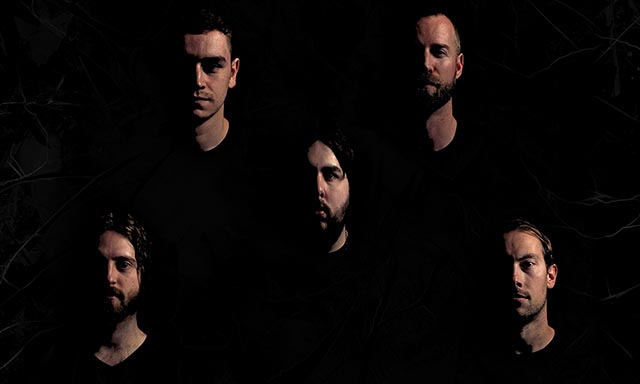
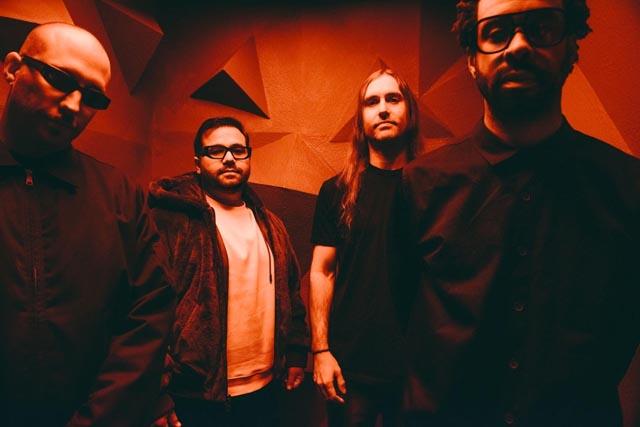
California progressive metalcore outfit Volumes closed 2025 with the release of their new album, Mirror Touch. Metal Insider recently caught up with vocalist Myke Terry to discuss the record, changes in the music industry, and more.
Video Interview:
Transcription:
‘Mirror touch.’ I heard it.
That was a good one. Yup. Yeah.
It feels like a record about just internal collision or like combustion. It’s like two, two emotional weather systems smashing into each other. When you were making it, did you feel like you were documenting who you are now or predicting who you’re inevitably going to become? And blurb a little bit about the writing process.
It’s a bit of both. You know, more so, more reflection over what has happened from the inception of the band. You know, even before I was in the band, and it was just Michael, you know, I think. Yeah. The album spans all of that, and it’s like, I don’t know, maybe not necessarily for the future, but it definitely puts our stamp on the present. You know what I mean? Like, I don’t know. With this band we don’t really like say, we want to be this. We enjoy where we are. You know what I mean? And focus on that because, you know, a lot of times it’s very rare. We’re just thankful that we got to the point we are at. It’s hard to look to be like, you know, we’re just I’m just we’re just thrilled to be here right now. Just living in the moment versus like, oh, it’s going to be so sick in the future. Like, being present right now is the best.
Right. I mean, it feels that way. Listening to it last night, it was angelic. You guys did an incredible job. And it is very different from anything you’ve ever done. It’s really good. And I know that’s cliché, but do you think Mirror Touch is the kind of album that could only be made by a band with, like, your specific history of breakups, reconciliations, label fiascos, and, you know, lineup mutations, or could an alternative universe Volumes with no drama have made something similar?
No. The tumultuous. The craziness about Volumes is what makes it. That’s what makes it what it is like. Even when I first joined the band, like my very first few sessions recording with the band, just for some of the artists, it was just the wildest thing, like, just the excess and just how, like, careless it was. And not even in a bad way, but careless in, like, in a lackadaisical way. It was just like, we just didn’t care. You could do whatever you wanted. Like time didn’t matter. We just felt like you’re at the top of the world. And, like, you know, we’re just making this great music, and life can never hit you hard, you know? And so we live like that.
We played like that. We partied like that, and like, that’s what came out of the music in those eras. Like, we were really living what we were talking about. So, you know, but all of that came from the shit that we had been going through in our personal lives. So like, it was just like one thing to cope with, the next thing to cover up the thing that we’re really trying to deal with. So, in a perfect world, no, we couldn’t do that, because if we all had good lives and everything was going well, we wouldn’t have anything to struggle with to talk about. We’d be playing worship music or something like that. I don’t know.
A different band entirely at that point.
In our alternative universe, we’d be a worship band.
And, you know, you’re far more controversial at this point. You’d be up in arms about whatever Christmas music. When you listen back to this recording and, you know, the order of operations that you put into it, whose emotional fingerprints do you feel most clearly are on it? Do you feel like it’s your own or like the band’s collective subconscious?
It is more collective. At any given point, there are no Volumes without the key members. And just because we all worked on it so much together that it’s just all over, it’s on everything. It’s the DNA that has been left everywhere. And that’s cool. Cuz we’ve done albums, and we’ve been in recording processes where it wasn’t like that. It wasn’t that everyone necessarily had the opportunity to contribute like they wanted to or, you know, to reach their full potential. Myself included. And like, so it’s cool that on this album it was like, we didn’t pull any punches. We just went for it, and everyone got to get it out, you know, to say everyone got to have their say kind of thing.
Talking about the coming tours, touring is basically an anthropology experiment. Same people in different cities repeating variations of the same ritual each night. What do you think this next tour will reveal about you as an individual?
That is just how serious it is. And how fortunate we are to be able to do this, because we didn’t know if Volumes would tour anytime soon. So, it’s coming from, as I said in the past, where it was like, oh, we’re on the road. Nine months out of the ten months out of the year, like, you know, to have a stop, like considerably slow down and to be like, well, we’ll tour when we, you know, when it works out so that now it’s just like when we do get the opportunity to tour, it’s like, probably not going to spend the whole tour. All fucked up. So I can remember it, you know what I mean? It would be nice to take it seriously.
You gotta do what you gotta do to get through the bullshit. I understand that.
But I mean, back, you know, back in the old days, we were going hard just because that’s what we felt like we were supposed to do. And it’s like a competition where the goal now is to play your music and sound like something people want to come and listen to on stage. So the sense of, you know, we’re still wild, and we can still get it in. But it could give something more meaningful to the fans and to ourselves. And, you know, we’re all on more positive life paths now. So it’s like, you know, it’s not a train wreck coming to every city. It’s going to be a good time, this time.
Right? As it should be, though. Is there a specific song from Mirror Touch that you’re secretly worried will evolve into something completely different once you’ve played it 40 times live?
Not really, so. I’m the kind of person who. Yeah, like with songs, even music that we play now, like “Wormholes,“ we still play “Wormholes.“ And that’s like one of the, like, songs that we, the band as a whole, probably doesn’t want to play because it’s like seven minutes long. Anybody trying to do all that, you know, it’s just one of the ones. It’s like, no matter where we play it, people want to hear it. And you know, the fact that wherever we go, people want to hear that song is like, that’s kind of a cool thing. Like someone, we could be anywhere in the world first. We’re far from home, and they want to hear the song we wrote. Yeah. It sucks that we’ve played it a million times, but to them, that’s the first time hearing it. So, trying to remind myself, like that’s someone’s first experience every time. It’s so cool. And it keeps me grounded, where it doesn’t bother me. So I was like, 40 times, 50 times, 150 times, how many times?
Because think of how we practice the song a million times to go on tour, to play it a million times, so it’s like at this point it’s second nature. I just, you know, it doesn’t matter. It doesn’t bother me. I like it, honestly, at least that they want to hear that. And then this versus something I can’t remember.
That would set you up for a gimmick real quick.
Exactly. You know, so I like it because it could be the other way around. I want to hear something that I don’t remember. So we’ll take it. It’s cool with me.
Exactly right. Exactly. If touring were suddenly illegal, but the government allowed one final show for, you know, archival purposes, what would your setlist be, and who would you imagine that archive is genuinely for, like your fans, the specific aspects of your fan base that will carry on?
Man, we would. It would be a banger. It would just be a banger with them. With the emotions on the side, all the hits. And then a couple like really solid deep cuts, probably be like an hour and a half, two hours, you know, take the floor, and kind of what we did with, we just did a Halloween set just to like, you know, pay tribute to where we’ve come, you know, where the band has come from, all the albums before, all the way back to ‘The Concept of Dreaming,‘ the first EP, which is years before I was even a part of the band.
I was a fan when that came out, you know, and then just play all those and then just dig into the new ones and then, you know, send it off for the final goodbye and play some “Wormholes.‘ These guys are out there, and that’s it.
Love it, love it. That’s how you do it. So, about the industry, do you ever feel like metalcore as a scene is caught in a loop, like obsessed with nostalgia and reinvention at the exact same time? And if so, where do you think Volumes fits into that paradox?
I think so, music is cyclical. Everything is cyclical. You know, it’s like they say, there’s nothing new under the sun. It just comes in a different reiteration. So, there are a lot of bands; right now, they’re doing the 25th anniversary. We just celebrated our 15th anniversary. Like, you know, people still want to hold on to that feeling because music, when you’re younger, music like the songs you listen to back then they put you in a place, you know, you listen like to think like the first time you heard “Psychosocial“ or first time you heard “Wait and Bleed“ or like, you know, like, where were you?
Like, I remember I was in middle school, skating in the skate park, you know, that’s a core memory for me. So, like, I think in all our rush to, like, stay grounded, remember, and just have a good time. Music is the easy way to put you back there. Because, you know, a lot of people don’t have the pictures from back then or don’t have videos, but you have the mental videos, and the music is like the catalyst to help take you there. So I think that being said, where we fit in, it’s cool because where music was, and this is before I was in the band, so I can say this like the band was, had changed.
It was starting to change the game, like they were one of the first bands to do djent. That was like not one of the first to do it, but one of the first to do where it was, you know, accepted or, you know, liked right off the jump. So for us, being able to take four years between writing albums and still have the response, support, and love from the fans is a good testament to that. We must be doing something good. You know what I mean?
100%. I have a house full of boys, teenage boys. I’m a boy mom, and I played “Edge of the Earth,” and one of their friends is like, oh my God, I know that song. How do you know that song? And he’s like, “I heard it in a video game.” I’m like, what video game? And he’s like, I can’t remember, but it was so cool. It was live on Twitch, and it was so cool. And you know, you guys have that kind of household portrayal going on. So hopefully it keeps on going. And if you are on there.
That’s so cool. You know, because probably when that song was written, he wasn’t even alive.
Yeah. Exactly. It’s so funny. So if you had the power to delete one industry practice forever, which would you choose: streaming payouts, label contracts, or genre marketing algorithms? I can’t even say it, man. Playlists or, you know, whatever. Like all this new methodology behind doing things. What disappears first for you?
Yeah. Probably streaming. Yeah. I think that would probably even the playing field out a lot and make things way crazier. But I mean, I remember I’m old enough to remember before streaming for real. So yeah. And it was a different world. It was like more exciting and like you got like excited to get the physical copy of an album and like, wait at the music store overnight, like, oh, till midnight, till they drop the release or like, you know, you got the booklet and stuff like that, and, you know, it is, it’s not nearly as poss as, as it’s not nearly as, popular as it was back then. Like people, you know, we do vinyls and CDs, but they don’t scan or sell nearly as much. Like, there was a time where your CDs scans on tour and your sound scans were like, that’s what made you you, you know, how big you were, that determined where you are. Now, it’s how many Spotify spins you have and like and just how they counted and what they like, you know, how they just value what we spend countless hours putting everything that we have into it, just how they devalue that into just once you one stream, you know, it’s kind of like some of it’s kind of shitty.
So I would get rid of that first for sure and give more attention to the artist and to, you know, the people who are putting in the work. It would be beneficial to everyone because it would give musicians and music stores jobs again and boost CD sales and all that. If we went back to that again, it would be like we were living in a simpler time.
There’s so much more appreciation. I was thinking about it the other day. Do you remember when they had clip its at Kmart?
Yeah.
Twenty seconds of a song for twelve bucks. You put it there. And it only came with one earbud, man. And now it’s oversaturated. But you still have genuine bands like you guys pulling it out. Is there a sound on Mirror Touch that came from an accident? Like an accident, like a wrong pitch, a weird sign chain? The signal chain is like a dropped guitar, anything like that. That ended up being essential?
Yeah, plenty of stuff. Yeah. A lot goes on in the studio that it’s like, oh. What was that? Or, you know, in the middle of something’s happening and something crosses over something like, oh, who is that? Go back. That’s it, like, that was. That’s all I should know. Do it again like that. And then. No, it’s like a tangent into something else, you know that. That’s the magic of being in the studio versus when we did Happier?. Most of that album was done remotely. So it was us on Zoom in separate rooms. So, like, the intimacy was taken out of it, whereas with this album cycle, we were all in the room together. Somebody was clumsy, somebody tripped, somebody knocked them over, somebody made some noise. Somebody did something. You know, anything that triggers the interactions. Someone’s laughing, and we get on a whole new plan, the whole vibe, and then, you know, whereas, you know, maybe that would have never happened if we were separate. And then trying to write, you know. So that’s really cool that we can have those kinds of moments in our sessions because that steers a lot of what we do. You know, I joke around a lot in the studio. And so that’s a lot of some of the things that we try, or that actually make it on the album, because I was joking around.
You got this sound, that’s built on precision but feels like chaos, like math equations written during an earthquake with, you know, the way you guys throw things together, and it’s absolutely epic. But what piece of gear, like a guitar pedal, bike plugin, is the absolute anchor of that controlled chaos that you can think of?
The laptop. Because if the laptop takes a shit nerve, that’s what happened to us. We played in Hawaii, and I don’t hear anything that has never happened before. It just felt like the computer was melting, and then it started slowing down. But we’re still trying to keep it going, and, like, that’s proof. Without a laptop. Yup. Shit’s creek, man. So that’s the most important part for us. Anyway, for now, because we didn’t expect you to have any cabs. So if that goes out, you won’t even hear music. You’re just in it because it’s all going through the house. So. So I’m maybe telling the secrets, but yeah.
That’s all right. I mean, everybody loves you no matter what. So, the last two questions. What is the most incorrect assumption people make about Volumes? And why do you think they keep making it?
That we’re not a band. And because we don’t play many shows. Well, we are a band, and we do play shows, guys.
Yeah. Well, in this economy, especially, I’m jaw-dropping over the number of people, like big-name bands, dropping out of Australia right now. It’s just too hard. Yeah, it’s a lot. It’s too expensive.
It is. It’s expensive to travel over there already, and I don’t even know, you know, getting gear over there. We went there before stuff started getting really crazy. So I don’t know. Touring is hard now. The economy as it is, is, you know, it doesn’t matter if you are at the top or if you’re in a local band. It is difficult to tour financially. You know, a lot because the more money you make, the more you’re putting into your show and the more people you have to hire to do that. So you’re still making money, but you’re still spending a shit ton of money too. So, you know, it’s just you got to do it for the love, man. You know
Make good friends with good record labels, who I clearly remember when I toured with the band on Media Scare Records, and we had to deal with the financial aspect of things, and it’s terrifying, especially if you don’t have the support that you need, you know? So it’s hard. It’s hard for everybody, like you say, all right, last question. When you imagine Volumes 20 years from now, do you picture evolution collapse or reincarnation? And does that answer scare you or comfort you? When you think about the future, like 20 years into the future, you know, obviously, everybody talks to anybody for like Fit For An Autopsy to Slipknot. And they’re banking on the fact that they’ve made the investment correctly and that your music will still be, you know, cycling through generation after generation. But where do you see yourself, like a brotherhood, as a family? Where do you guys see yourselves in the future?
We’ll still be standing, you know, we’ve been through so much together that it’s hard to think of it as a family. We’ve been through so much. I mean, we’ve lost a member, man. We actually had somebody die, like, we’ve been through a lot. We may take a bunch of, like, a lengthy break, but there will always be room for us to get together and jam and play some tunes. You know, I don’t think that’ll ever go away. Just our love for each other, just for the music, and just for everything that we built. It’s really pretty strong, you know, things happen, and the industry is what it is and shit. Just life happens, and you know, things are out of your control. And like, we, you know, one thing that binds us good at is just rolling with the punches, man. And just we don’t quit. So, you know, I would say that in 20 years, I would like to be able to say that, man, we just had smooth sailing. And if people are still listening to this album, Mirror Touch, or any of the albums, you know, before that, then that’s a win. You know, we don’t even necessarily have to be playing shows, but as long as I can spot and people are enjoying them when they do come across them, it’s, you know, because who knows what the music platform will be right now. Probably a neural link. You think about the music, and it’s just you sneeze two times, and music starts playing, you know, who knows, man. I don’t even know, I don’t care, I want to be here. The band, you know, if we’re all alive, then we’ll be able to. We’d still be able to hang in there, and we’ll be out one time. Good for 20 years. That’s up there, man.
I know you, but you never know. You never know. Especially with this world we live in now.
That’s true. You know that’s true. You don’t know. It’s cool to like, you know? It is cool to think about it. Like, even thinking 20 years of being a band at all is, like, such, so fucking, I don’t know. So it’s just such a foreign concept to me. And so, so happy we’re at 15 now. So. And what is that, 20 plus 35 years?
I foresee it, especially this album. This album is so, like I said, so different than any other band. I initially put it up there with like Block Party Good, where I’m like, this is, this is the band, this is the album that you want on vinyl. You want to collect. You want to put it as a keepsake for your kids.
That, now, is one of the most insane compliments I’ve ever heard: Block Party is monumental.
That’s how it made me feel when I listened to Silent Alarm for the first time. I’m like, this is so out of nowhere for you guys. Because when I, you know, before the other albums, I heard them through friends at Warped Tour. So I’d be doing work on warped. They’re like, hey, listen to this. And I’m like, oh, this is, this is wild. This is really good. This is so technical. But this time around, there’s so much more heart into it. And there’s such an angelic description of California. You know, I’m here, I’m in San Diego. I’m originally from Reno, Nevada. And it nails every aspect. And it just gets you in a good headspace where you’re like, wow, this must be what, like, how Block Party was for the UK? You know, you’re like, okay, they get it, and it’s still there. The spirit is still there even though all hell is breaking loose, you know? You got it.
Thank you so much. That’s incredible. I really appreciate that. That’s sick.