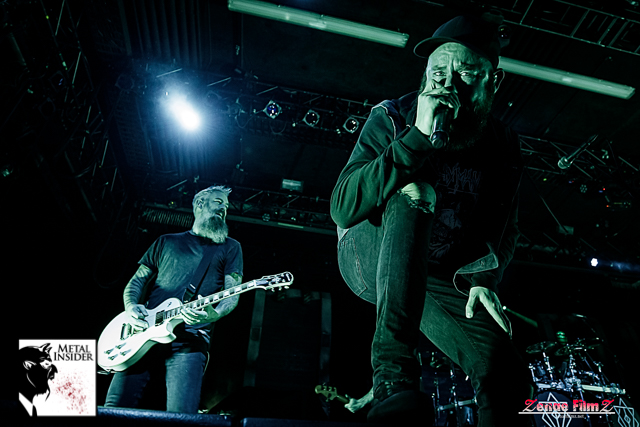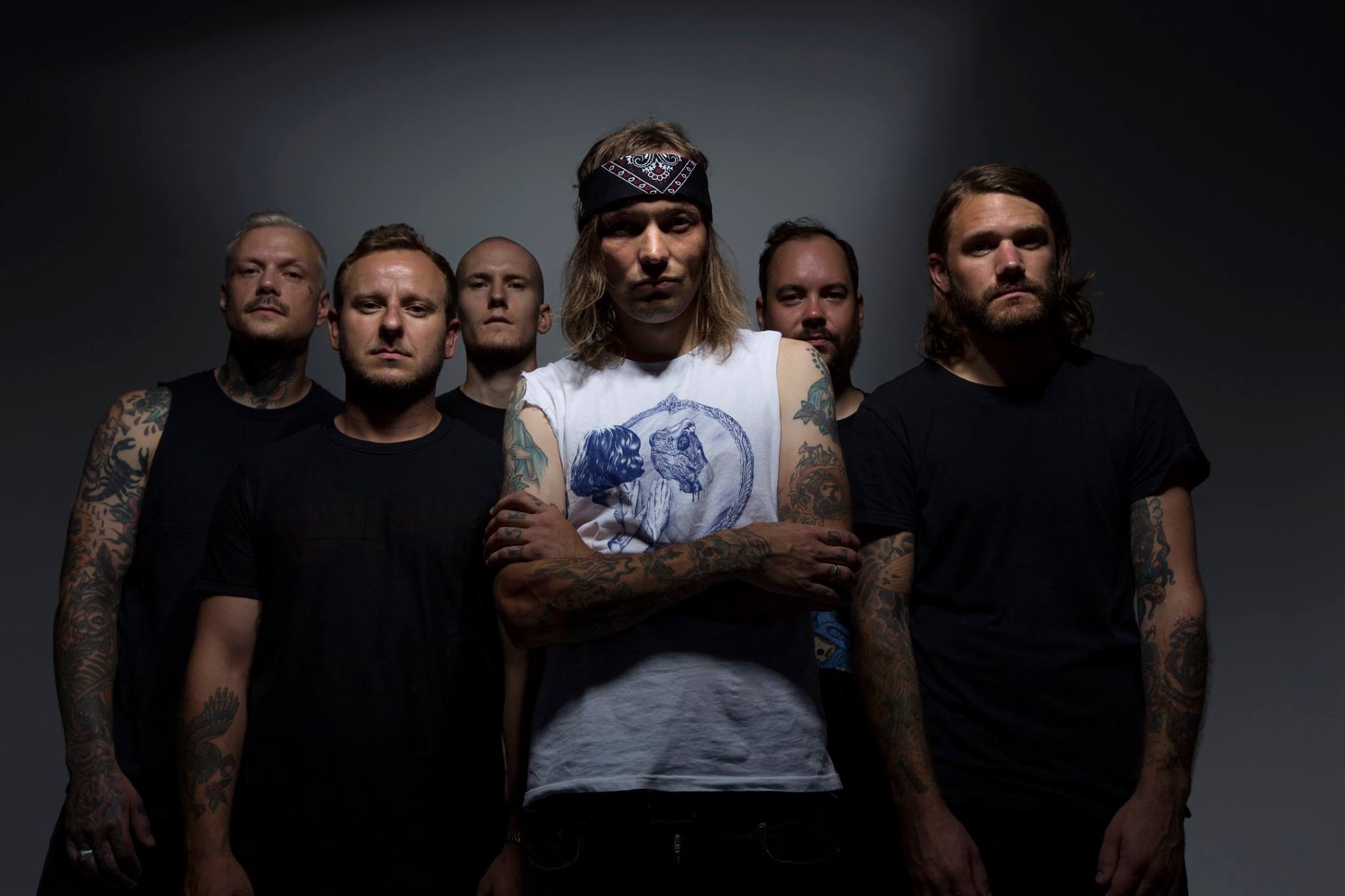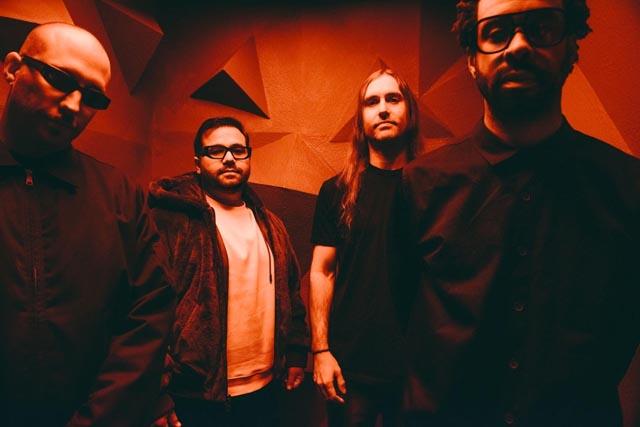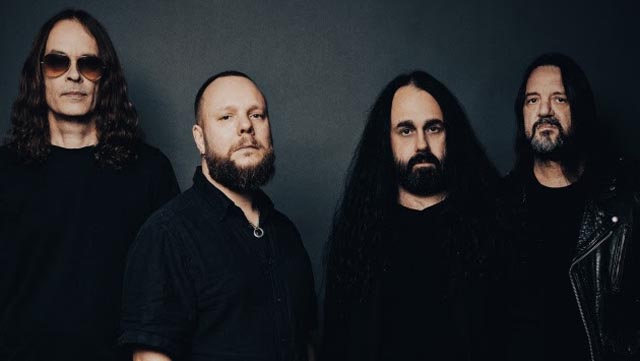
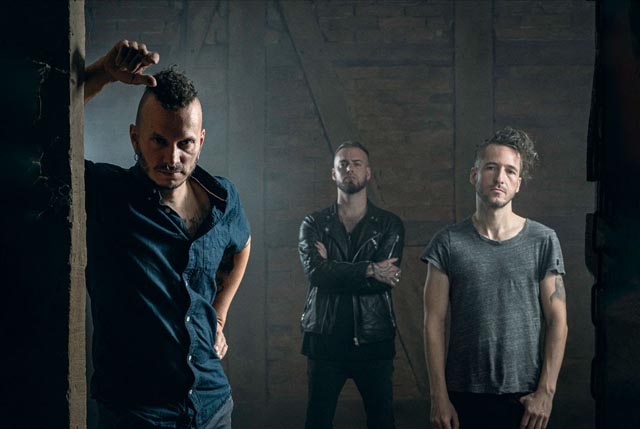
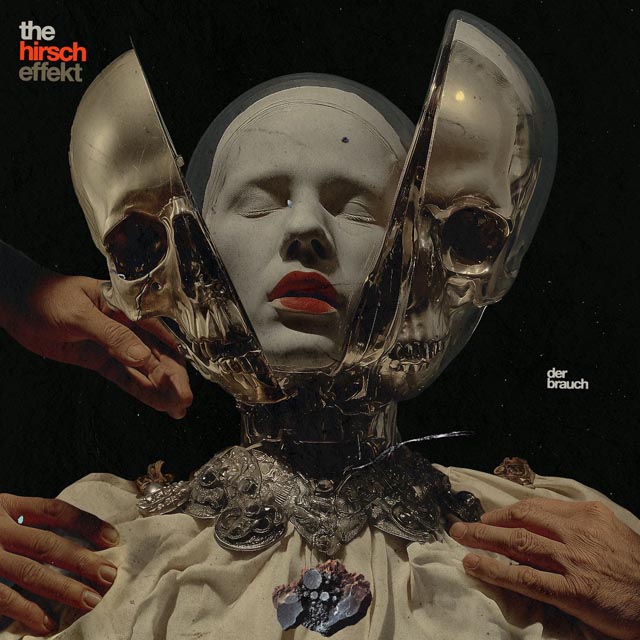
Progressive German metal outfit The Hirsch Effekt have unleashed their most melancholic and introspective album yet with Der Brauch on January 30, 2026. Read the review on Metal Insider here. We caught up with guitarist/vocalist Nils Wittrock and bassist/vocalist Ilja John Lappin in an extensive interview to discuss how the album was written differently, the struggles of more expensive times, how their style continues to evolve, and more. Order the album at this location.
Video Interview:
Transcription:
In the context of the band’s history, does it feel like the continuation of something you’ve been circling for years, or like a conscious break from it?
Nils: It’s more like, we’ve, we’re coming back to where we started. The second album of ours is, to my mind, the fans’ favorite album. And after that, we progressed more into, like, a mathcore type of music. It was, until we toured with The Dillinger Escape Plan in 2013, and after that, we somehow got their style into our music. Last year, I was at a point where I thought maybe I should do what I feel like doing. It’s not like we were thinking that we want to go to a certain style with our music or that we want to approach a specific style. But I had the feeling that, with the previous albums, we wanted to be freaky, djenty, hard, difficult, funny.
And last year, at a point, I just wanted to make the music I felt. It could also be because I was more alone and not with my bandmates. I composed the songs more or less alone, and I tried not to think about what I wanted to approach with that. Yeah, what I felt. Yeah, maybe that’s the the answer to your question.
I love it. Leads beautifully into my next one. So did your role as songwriter feel heavier or lighter this time around compared to earlier records?
Nils: That’s a good question. Maybe both. At first, I was unsure whether I could do this on my own—Ilja, the bass player in our band, who will, actually, John.
Ilja: I’m actually here already.
Nils: He’s there already. Hi. Perfect. On the previous album, Urian, Ilja was the leading composer, and the parts were more similar. And at the beginning of this process, I was unsure whether I could do this on my own and whether what I’m doing makes sense for my bandmates, for me, and for our fans. But on the other hand, it felt lighter. Felt easier because I don’t have to discuss the music. I don’t have to present the music to my bandmates. And what was new to me was meeting our producer team, Justin and David. Justin is also our live mixer, a live front-of-house guy.
And, they are very supportive people. They were very excited about the music, and that felt very good. And that was maybe something we were missing in the band, because we are always very critical of each other and of ourselves. This is something we. Over the years, we’ve become overly critical of what we do. That was new, that was supportive, that was nice to have. And that made the process. Yeah. Easier.
Ilja: This time it was also pretty. Yeah. That is absolutely everything very true, because with the last album that we did with the old producer, Tim Tautorat, during our Kollaps era, the thing was shifting into that.
We weren’t quite happy with the way we were producing, either, when we were working together as a producer team. Today, it’s a much-criticized album in our discography, for the production and sound, and like, for some odd reasons, we already felt that things were drifting apart with him and us at that point, and that it probably did not make so much sense to make the next record directly with him.
So we started self-producing a lot on our own, but that, again, took a lot of different directions and went here and there. During Urian, we found this producer team, David and Justin from 1408 Productions. But it was still a lot of production by ourselves, and with Urian, I may have written a couple more pieces. I already did a lot of the production on certain songs myself. So this time, with Nils meeting up with the producer team, there was just a flow and a new way of working together that we hadn’t done before. Also, I wasn’t present at the time due to other touring obligations and other stuff. So this was a really special, unique situation we hadn’t encountered in years. That’s why, obviously, the result turned out very different.
It’s like you made a lot of really bold choices. You know, production especially. Making those decisions helped you to have a lot of strength in the creative process. Especially with the title. With it emulating rituals, habits, and tradition, at what point during the writing process did you guys decide what this album was about, and how did you all coordinate on that?
Nils: Actually, it was clear from the beginning, because, on this album, the lyrics came at the same time as the music, that’s something different from the previous album as well. Our main process was writing music, and when the songs finished, we thought, okay, what could this song be about? And then we wrote the lyrics, but this time I was writing them on the fly. With the instrumental, I realized I wanted to write about my situation. My situation inside the band, but also my situation inside the music business, my career at this point, I found out that I was, somehow, trapped inside my professional situation. I’ve been trying for 18 years to make this band my primary income.
Ilja: It concluded that it won’t read itself well on paper, if you try to apply for now a different studies or a different kind of job where it just says, well, I did Hirsch Effekt for 18 years, like, this is what I did, and so would you now give me the job, you know, because of course, maybe other opportunities, other realities, that the roads could not be taken in that time span that one put into building up this band. So, certain chances of becoming a lawyer or in some other profession might be out the window. And it’s coming to terms with a certain reality that one has built for oneself.
Nils: I’m in my 40s now. It’s the same in the US; life is more expensive than it was ten years ago. I’m teaching guitar. For many years, I was able to live from that, from teaching guitar, and I could, yeah. Everything I earned with the band was nice to have. And in this century, there was a turning point when I needed the income from the band, as an addition to what I earn from teaching, to make a living. And I realized I have very few opportunities to do something else because I was so focused on this band and, on the same hand, I needed this band to go on. I needed us to go on tour. For many years, we did two tours a year.
And that’s where we make most of our money with the band, because when we are touring, we can sell merch. And yeah, if there’s no new music, there’s no tour. And that was, also a financial problem that I discovered in my life. And then I thought, okay, the band is, it’s not enough for me. And at the same time, it’s too much to give it up. We played a very nice end-of-year show on Saturday, and this is a very good example of what we have achieved in these 18 years. The audience was great. These shows make me think. These shows are the reason I’m doing this,
Ilja: Yeah. It pays off.
Nils: It’s so hard to give up.
You have way more emotional intelligence than a great many American bands at this point, especially with this new surge in AI—the lack of understanding of the process and the adversity. And you guys have been through a lot.
Ilja: That’s very true. And I add, the music business, you said AI is turning to like it was bad before already, and has been bad for artists and streaming. But things are getting even worse with all these different points of rising costs for everybody, monopolies that are, you know, well, are there in the media with Live Nation and other big companies, sort of like, yeah, just, monopolizing and keeping all the rights for themselves and deciding who plays where.
And it’s tough because you also have to pay for certain prizes nowadays. Otherwise, promoters won’t do shows with you. But at the same time, everybody’s expecting you to keep on selling higher numbers all the time, which is just sometimes not possible. Everything changed again after that, during the pandemic. That is true. The only way we make as a band income is if we go on tour and sell merch. Like, those are the only two things that are still left there: ticket sales, where you get your cut from, and merch sales. So that’s very interesting — weird times.
Absolutely insane times. And then a number of our legendary venues are going up in flames, like Chain Reaction just went down. And that was one of the most legendary venues in the Los Angeles area. And I know it’s because of rising costs, but it’s like, I don’t know how it is in Germany. If you have that local venue that everybody congregates at and you got to know all of your friends there. But I mean, that was where everybody went. So it’s crazy, and I hope that if you do tour here, there’s even a venue left, you know, that doesn’t have anything to do with Live Nation. So your guitar work often feels like, you know, architecture. Did this album change the way you think about guitars and structure and the tools at all?
Nils: On the previous albums, I wanted to emphasize the skills that I wanted to show, that I’m a good guitar player. And this album may be the first time I stop thinking about that: if this part is not difficult to play, it’s totally okay if it fits the song. I think this is a big difference from the previous album and from my guitar work on this album. It’s, Yeah, it’s not so difficult to play. It’s not. It is heavy, but it’s not; I play fewer notes.
Ilja: It’s maybe not so tech-driven. Or not from the playing style that one knows from heavy metal music in general. Like, you know, it’s that just the influences come here and there from more genres. Like, there are a lot of bluesy parts as well. So, in my opinion
Nils: Not agree with that, but okay.
ilja: Okay. Interesting.
You disagree. I love it, honestly. The very first track hit me like a ton of bricks. It’s like I said in the very beginning of the interview, people are going to jump on my butt for not adhering to our genre standards. And, you know, the for the fraction of, being folk metal. But there’s so much more elegance to it that revolves around where you come from. And, if it gives the image of, you know, the elegance of Germany and the things that we overlook, then you’re doing your job beyond reason. But metal often values power. Where does ritual repetition or, you know, vulnerability fit into the equation for you? When it came to the writing process?
Nils: You mean, in the way that the lyrics are written or
I think in the finale as you heard, I’m guessing you listened to the album completely through when it was done, was there any given point where you heard it and it made you feel emotional where you’re like, wow, I know this is going to nail, you know, everything that we wanted to nail for, you know, whoever receives it.
Nils: Yeah. Totally. There are, some parts on the album that, still give me goosebumps, which is kind of embarrassing because I wrote it myself. (Ilja laughs) And giving yourself goosebumps with your own music is embarrassing, but this is something I’ve felt from the beginning: since I make music, I’m on the one hand embarrassed about myself. And on the other hand, I’m touched. It’s weird. What I’m hoping is that I’m kind of. I’m opening a room inside myself that people can enter, and hopefully, they can find something they feel as well. It may not be the same because I’m writing about, a certain special situation, but I think, and I hope other people can
That’s a perfect answer.
Nils: I was not sure if it was the answer to your question, but if you think so.
It was perfect. I love how you struggle to bare your emotions to me, because it just shows how deeply metal you were on the inside, you know? You don’t know how to tell me what’s up. And it’s good. It’s really good. You’re keeping your image. But if this album ends up being someone’s first Hirsch Effekt album, someone stumbles upon this album, and they’ve never heard any of your previous albums. What do you think they’ll immediately understand about what you are trying to project to them? And what do you think might take them a couple of tries or maybe some further research?
Nils: Our music is so diverse; it’s hard to pick a single song to say, “If you want to know how the album sounds, listen to that song.” If you want to know how the album sounds, listen to that song. And it’s also difficult to say you want to know how our band sounds, then listen to that album. On the one hand, it’s fun for people who like some music. And on the other hand, it’s tough to reach new people, but it’s even harder because we are so hard to grab.
Ilja: Categorize. Yeah.
Nils: Yeah, to categorize. This album is fragile. It’s not that there’s no show off. This may be something you get from the beginning. And if you want to understand this band in total, you have to dig deeper into our work to get the funny parts, if that makes sense to you.
Ilja: The record is very different in terms of its being very artsy this time. And like, leading positively, like leaning into words more of that. It is not so much metal as our previous record was or like people who know maybe us from the Eskapist era, that was really like math metal-ish, that is like not one of the trademarks that, settles on this album because it’s just about a different musical side that, in my opinion, traces back a little bit more to the first two records that are, by the way, quite different to compare to our latest works, like in the recent years as well.
So, then again, throughout the years, I’ve found it harder to really, try to understand what the fan will feel while listening to New Hirsch Effekt music, because as Nils said it, the directions can sometimes go to so many different places that it’s hard to even like pick a trademark song nowadays and say, well, yes, this is a typical Hirsch Effekt track. Like, what is the typical Hirsch Effekt track nowadays? It’s like we’ve gone through a lot of different things, and for the first time, it’s a more emotional, softer record. I would put it that way. As a couple of previous ones, but just to show the very different side, which is a good thing. I think. It’s definitely a record where the band did not repeat themselves.
Nils: Yeah. And what’s interesting for me is that I’m still talking to magazines that have the word metal included, like this one, or I’ve had an interview with the Metal Hammer, and nobody’s complaining that this album is not metal. That’s, yeah, that’s very interesting for me.
Ilja: That’s very interesting. Also, I must add something, which was very different this time. I don’t know if you guys already addressed it. It’s the tracklist, because we usually pick words in other languages or come up with some weird stuff to make it sound super fancy and, you know, just odd to irritate people. And this time, the songs mostly turned out like the titles turned out the way they were written as the diary entries.
You know, like we did not change the song titles to some weird other language, but actually, I think Nils sort of like showed the titles up at the end of the process and was like the songs are at this moment named this. And then I was the one who wrote in a band chat, like, you know, I would find it great this time, if we just kept it that way, because it’s something we’ve never done. We’ve never left the titles in German and, like, have a more direct association with the song lyrics. So why not do things just differently this time? That was something new as well.
Feature Image Photo Credit: Freakshot