Metal Insider is getting into the Halloween spirit this year with something a little different. Throughout October, we’re sharing the history and eerie tales behind venues across the world. Check out our latest column, Halloween Countdown for more, and Enjoy!
Introduction
Today’s countdown includes four in one, for October 11, 12, 13 and 14th with venues the Red Rocks Amphitheatre in Morrison, CO, Worcester Palladium in Worcester, MA, The Paramount Theatre in Seattle, WA, and The Stanley Hotel Concert Hall in Estes Park, CO.
Red Rocks Amphitheatre
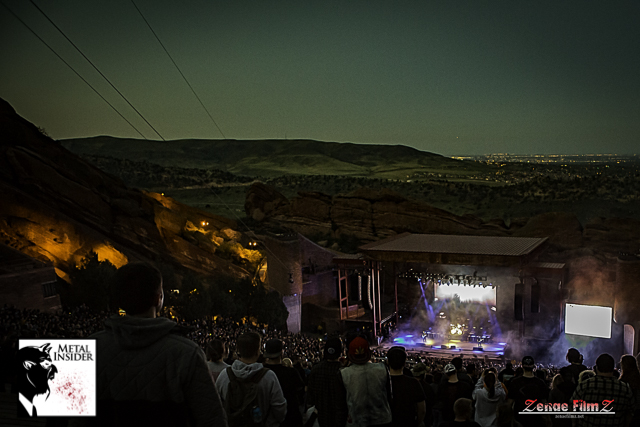
The famous Red Rocks Amphitheater sitting just outside of Denver, is arguably the best venue the United States has to offer in terms of sound due to the natural acoustics of the mountains. The elements surrounding the venue were formed over 300 million years ago, long before booking metal shows in the area. They started as part of Colorado’s ancient fountain formation and eventually became what it is today. This location is filled with history, tracing back to the age of the dinosaurs, geological discoveries, and more. Standing 6,450 feet above sea level, the area, covering 738 acres in total, belonged to 48 contemporary tribal nations, including the Ute, Cheyanne, and Arapahoe (reported on the Red Rockswebsite).
Red Rocks was rediscovered in 1820 and eventually named “Garden of the Angels.” After a few resellings and new developers, by the early 1900s, Red Rocks was developed by John Brisben Walker, who aimed to create the “Garden of the Titans.” The City of Denver later acquired the land in 1927, leading to the construction of the Red Rocks Park and Amphitheater, which was finally built between 1935 and 1941. Since its opening in 1941, Red Rocks has evolved to be one of the iconic venues on the globe.
Worcester Palladium
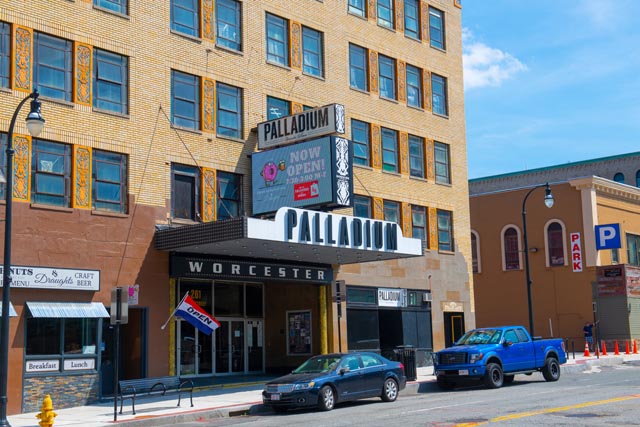
Initially opened in 1928 as the Plymouth Theatre. Designed by architect Arlan W. Johnson, it first served as a grand movie and performance house, complete with ornate décor and a Robert Morton pipe organ. Located in a central area for cultural life in Worcester, the venue became E.M. Loew’s Center for the Performing Arts in 1980 before being named The Palladium in 1990. The venue hosts concerts throughout the year and is home to the New England Metal & Hardcore festival.
The Paramount Theatre
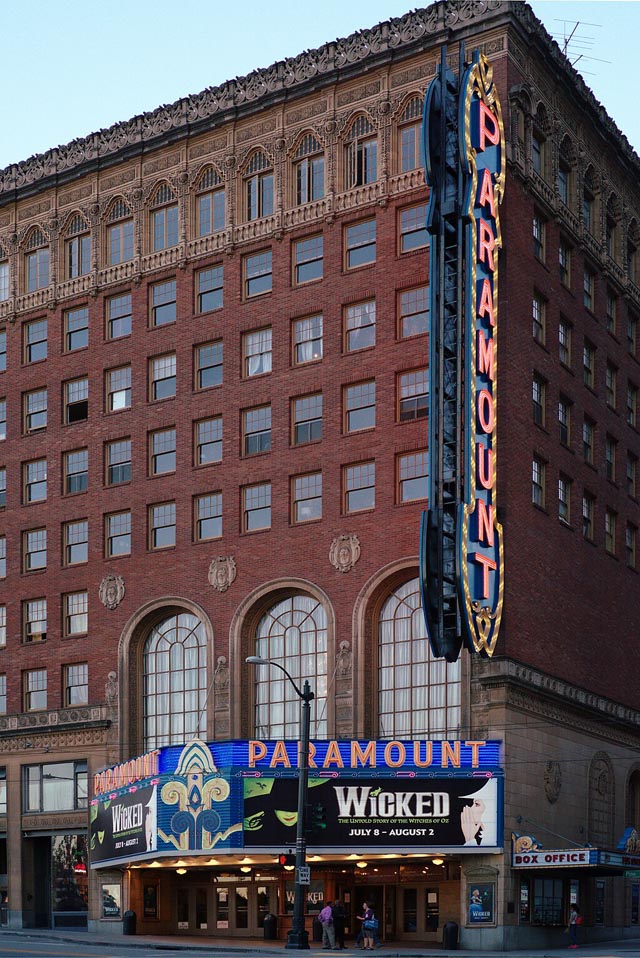
Like many venues we’ve explored, such as the Palladium, the Paramount Theatre initially opened on March 1, 1928, as the Seattle Theatre. It was constructed as an opulent movie palace and vaudeville venue during the height of the Roaring Twenties and silent-film era.
Designed by Chicago architects Rapp & Rapp with local contributions from B. Marcus Priteca, the Beaux-Arts–style theatre was built with a luxury style intended for a holy ceremonial place, but it was used for entertainment. It featured chandeliers, gold leaf, and one of the largest Wurlitzer organs of its time. The grand idea didn’t last long. By 1930, it was renamed the Paramount Theatre as part of Paramount Pictures’ Publix Theatre chain, surviving the Great Depression and transitioning from silent films to “talkies.”
Through decades of reinvention, from a Cinerama movie house to a rock concert hall, the Paramount faced decline until former Microsoft executive Ida Cole purchased and restored it in the early 1990s, reopening in 1995 under the non-profit Seattle Theatre Group (STG). Today, the 2,807-seat landmark continues to host Broadway productions, concerts, and community events while preserving its history as a National Register of Historic Places site. There’s an extensive amount of information surrounding this building and its history on the Paramount Theatre’swebsite as well as being featured inHistory Link.
The Stanley Hotel Concert Hall
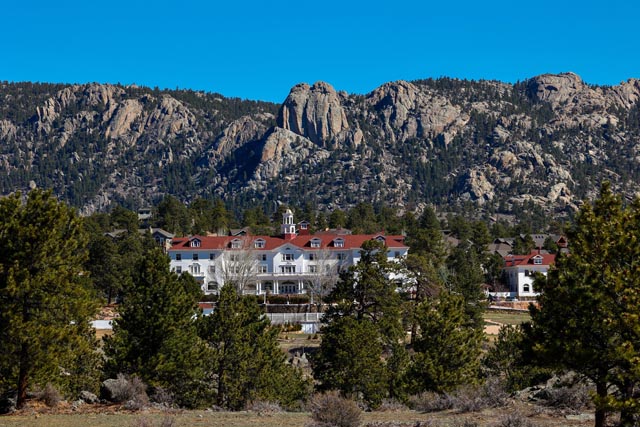
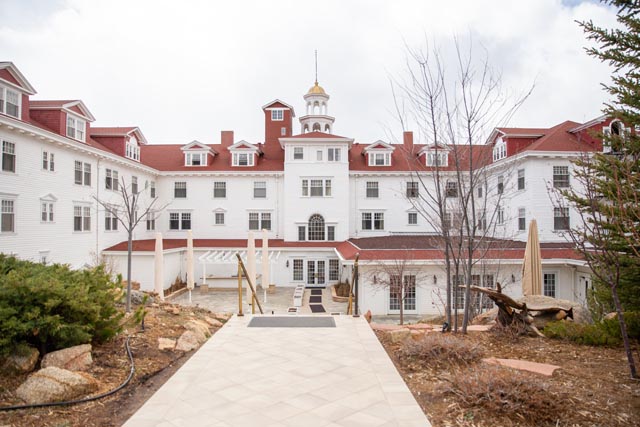
The famous Stanley Hotel, known to Stephen King fans as The Overlook Hotel, is the location that inspired the 1977 novel, The Shining. As today’s four-day collection, started in Colorado with the Red Rocks Amphitheater, this ends back in Colorado, in Estes Park, about ninety minutes away from Denver. Focusing more on the Stanley Hotel’s Concert Hall, a fancier performance location built in 1909, designed by Henry “Lord Cornwallis” Rogers and commissioned by hotel founder F.O. Stanley.
History states that the hall was a gift to his wife, Flora Stanley, who was a pianist and music lover. Its interior features classical design influences reminiscent of Boston Symphony Hall. The construction originally included a stage trap door and a two-lane bowling alley below. After extensive restorations in the 2000s, the Stanley Hotel Concert Hall continues to host performances under the Stanley Live program.
Facts
Red Rocks Amphitheatre
Location: Morrison, Colorado (10 miles southwest of Denver) Venue Type: Open-air amphitheatre Year Built (and Key Dates): Construction began in 1936; officially opened June 15, 1941; designated a National Historic Landmark in 2015 Status: Active concert venue owned and operated by the City of Denver Capacity: 9,525
Worcester Palladium
Location: Worcester, Massachusetts (corner of Main St. and Central St.) Venue Type: Historic concert hall / all-ages general admission venue Year Built (and Key Dates): Built and opened in 1928 as the Plymouth Theatre; renamed E.M. Loew’s Center for the Performing Arts in 1980; became The Palladium in 1990 Status: Active and operational concert venue Capacity: 2,160 (Main Room) / 500 (Upstairs Room)
The Paramount Theatre
Location: 9th Ave & Pine St, Downtown Seattle, WA Venue Type: Historic performing arts theater / concert hall (Broadway, concerts, dance, comedy, film) Year Built (and key dates): Opened March 1, 1928 (as Seattle Theatre); Renamed Paramount in 1930; Added to National Register of Historic Places 1974; Major restoration 1994–95, reopened March 17, 1995; Ownership transferred to Seattle Theatre Group (STG) 2002 Status: Active; owned and operated by the non-profit Seattle Theatre Group; designated Seattle City Landmark & on the National Register Capacity: 2,807 seated; up to ~3,000 for GA/convertible-floor concerts (balcony seated, main floor standing)
The Stanley Hotel Concert Hall
Location: Estes Park, Colorado Venue Type: Historic hotel concert hall / performing arts venue Year Built (and key dates): Built in 1909 (adjacent to the main Stanley Hotel); underwent major renovation/restoration in the 2000s Status: Active — hosts “Stanley Live” concerts, shows, and special events within the Stanley Hotel property Capacity: 300
Music Cred
Red Rocks Amphitheatre
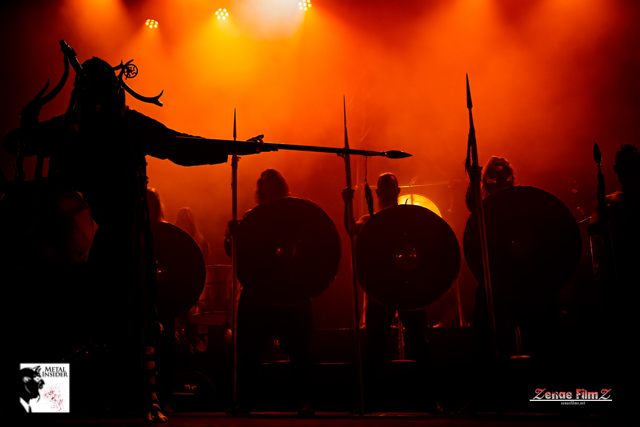
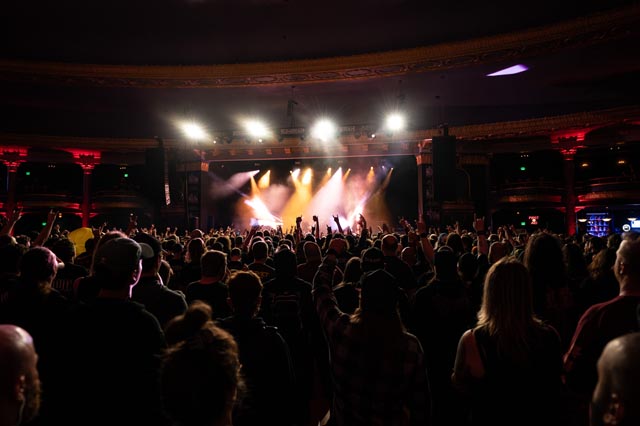
Enjoying a show at the Red Rocks Amphitheater is something you want to experience. The venue has hosted a diverse set of musical acts. On the heavier side,Metal Insider was present for at leastHeilung andOpeth, as well as Gojira and Devin Townsend. Other acts that have graced the open-air venue are Metallica, Chelsea Wolfe, Coheed and Cambria, Nine Inch Nails, Cannibal Corpse, A Perfect Circle, and the legendary, one-and-only, Jimi Hendrix.
Worcester Palladium
Tons of bands have performed here, Sacred Reich, Dying Fetus, Alestorm, Poppy, Dance Gavin Dance, Nails, Obituary, Undeath, Fleshgod Apocalypse, Cradle of Filth, Arch Enemy, Mayhem, Sevendust, Coal Chamber, Fear Factory, and Deftones, to name a few.
The Paramount Theatre
Similar to countless venues across the United States, the Paramount Theatre has become a common stop for bands on their touring schedules in recent years. Before the reconstruction in the 1990s to what we know today, the era dates back to the 1970s, when even KISS made an appearance, and to the late 1980s with Alice In Chains. Other acts include Powerman 5000, Limp Bizkit, Foo Fighters, Deftones, Life of Agony, August Burns Red, Trivium, and Killswitch Engage.
The Stanley Hotel Concert Hall
With such an iconic location, the Concert Hall doesn’t hold many seats, or so we can findhere. However, several artists have been lucky to perform at this historic location, including Clutch, VNV Nation, Uncle Acid and the Deadbeats, Chelsea Wolfe and Ice Nine Kills.
Reported Hauntings
Red Rocks Amphitheatre
With a location based on 300 million years of history, it’s no surprise that there are reported haunted sightings. Sources such asDenver Terrors,Denver Gazette,95rockfm, and plenty more have reported the following hauntings:
The Hatchet Lady
The most famous spirit residing at the Red Rocks is The Hatchet Lady, an angry apparition who reportedly appears to those she deems disrespectful of her land. Described as an old, ragged woman with tangled gray hair, she’s been seen chasing basically anyone who annoys her: rowdy crowds, misbehaving children, and couples showing too much PDA. Some witnesses have claimed she moves at an unnatural pace, swinging her dull hatchet while glaring out with her yellow teeth. Others report seeing her at the top of the amphitheater, appearing headless before vanishing into nothingness. Her legend stems from “Old Ms. Johnson,” a woman who either lost her property when Red Rocks was built or used her hatchet to keep her daughter’s suitors away.
The Old Miner
An unpopular report is that the old miner has been spotted near the off-limits area by the stage. Witnesses describe him as short, bearded, and carrying a bottle of whiskey. Unlike the Hatchet Lady, he’s more of a grumpy presence than a violent one. His story ties back to Colorado’s mining days. With many abandoned mines throughout Colorado, it has been said that miners have succumbed to their deaths from being trapped in a cave-in or long-term exposure to dust and debris.
The Haunted Trading Post
Employees of the Red Rocks Trading Post report nightly disturbances that don’t seem to explain vandalism or break-ins. However, coffee mugs are found shattered on the floor, doors rattle, merchandise goes missing, locks click open on their own, and unknown voices and scratching are heard. The basement boiler room is said to be the most active area, where objects move off the shelves. The area is also known to have sudden drops in temperature. Souvenir mugs labeled “Randy” have been reported as a direct target, but it is not fully known why.
The Energy Vortex
With the amount of history and tribal nations that have roamed the land prior, it’s no surprise many believe there is an indescribable, powerful energy surrounding the area. Known as the “Red Rocks Energy Vortex,” visitors claim to feel waves of energy, hear distant sounds, or see flashes of light during concerts or hikes. This energy is said to heighten the paranormal activity in the area.
The Red Rocks Cemetery
The Red Rocks Cemetery dates back to the 1800s and is reserved for local residents. Though it’s now closed to the public, the area around it is said to carry an intense spiritual energy.
Haunted Trails of Red Rocks
Hikers have claimed to have encountered spirits of Native tribes, miners, or the original workers who built the amphitheater.
Worcester Palladium
While it doesn’t seem like there are many credible sources online for haunted findings at the Palladium, you may take these findings with a grain of salt or bring a ghost-hunting kit of your own and discover it for yourself. According toMA Haunted Houses, there have been sightings of a giant floating orb the size of a soccer ball and disembodied footsteps. The history behind these sightings are tied to undocumented evidentary claims or rumors, where dead bodies were allegedly found in the dressing room some time ago. More evidence of this location is that it appeared in aGhost Hunters episode, aired on April 5, 2006, inSeason 2, Episode 15: Ghostly Grace & The Palladium.
In this episode of Ghost Hunters, the team investigates claims of paranormal activity, including a door that allegedly slammed on someone’s hand and mysterious lights seen near the balcony. Jason and Grant detected cold spots and high EMF readings in the dressing room, while Brian and Steve determined wind could have caused the door to close suddenly. The supposed orb of light is later debunked as reflections from passing car headlights.
In the end, the team concludes that although the building has a fascinating history, there’s no concrete evidence of paranormal activity. However, the cold spots and the dark history itself may require its time for another investigation. But that would require fewer concerts, as the location likely needs more time to investigate any paranormal findings beyond reflections. After all, spirits aren’t like your local streaming channel; they don’t always show up on demand. You be the judge for this one.
The Paramount Theatre
While the Paramount Theater is on the list of historic places, it’s not widely reported as haunted. Or, not yet. Seattle is known for its manyghost tours, paranormal investigations, and haunted history. The Moore Theatre, a sister theatre to the Paramount, opened in 1907 and is recognized as Seattle’s oldest active venue. It is located just two blocks away from the famous Pike Place Market. The Moore Theatre isbelieved to be haunted by female actresses who used to perform there.
People have reported discomfort within the theatre as well as strong odors of cigar smoke. It wouldn’t hurt to check out that theatre as well, which is also a concert venue where W.A.S.P., Jerry Cantrell, Avatar, New York Dolls, Def Leppard, Raven, Dead Kennedys, Anthrax, Celtic Frost, and many more have performed. The Moore Theatre is part of the Seattle Theatre Group and is among other theatres worth exploring: Neptune Theatre and 5th Avenue Theatre. The Moore Theater also appears inSeason 3, Episode 15 of Ghost Hunters. Read more on the Moore Theatre’s historyhere.
For the Paramount Theatre, we found a source in an old archivedUSA Today Travel report, which cited the Seattle Times reporting that a Paramount Theatre stagehand had told reporters in 1971: “There are ghosts in this place, something terrible.” There have also been rumors of a male ghost who died in one of the building’s old apartments, who may have been spotted over the years. Speaking of Ghosts, the Paramount Theatre is featured in the1989 comic book, Issue #12 of the Ghostbusters Comic Book series, as one of the locations. Perhaps there was some inspiration in using that as a location beyond fiction. You be the judge.
The Stanley Hotel Concert Hall
There have been tons of reports surrounding the Stanley Hotel and, of course, the Concert Hall. Whether they are true tales or over-dramatic video discoveries you see on YouTube, you should book a show and stay at the hotel to experience it for yourself. Here are a few well-listed sites,US Ghost Adventures andUncover Colorado, that provide much more detail. You can also book a ghost tour of your own at thislocation.
The short list:
Room 217
There’s a ton of history in Room 217. Dating back to 1911, a massive gas explosion ripped through the west wing of the hotel, directly beneath room 217. Staff activated a new gas system while unaware of a gas leak developing between the floors. The explosion started when the hotel’s head chambermaid, Elizabeth “Lizzie” Wilson, entered room 217 carrying a lit candle, which ignited the explosion and destroyed about ten percent of the entire structure.
Destruction included a bathtub crashing through the ceiling, walls collapsing, and debris falling into the dining room. Miraculously, Elizabeth survived her fall through the Floor. Stanley himself covered her medical expenses, and upon her recovery, she returned to work and remained employed at the hotel until she died in 1950. It wasn’t long after her passing that reports began of phantom housekeeping in Room 217 with unseen hands making beds, unpacking luggage, and apparently separating unmarried couples sleeping together.
Stephen King stayed in room 217 in 1974 with his wife Tabitha, just before Stanley closed for the winter season. They were the only guests who remained for the season aside from a bartender and a housekeeper. While walking through empty halls, the eerieness gave King strange nightmares of his young son being strangled by a fire hose that had come to life, and eventually, his idea for his next novel, The Shining, came to life. Years later, Jim Carrey requested to stay in room 217 while filming the 1994 film, Dumb and Dumber. The actor fled the room a few hours later, without explaining what he had encountered. To this day, no one knows what made Carrey flee the room.
The Concert Hall
Beyond hotel rooms, the Concert Hall is one of the most active buildings on the property. Most notoriously, there are three spirits: Lucy, Paul, and Edward. Lucy is believed to be a homeless woman who lived in the hall when it was abandoned. Guests and staff have heard her voice, seen her silhouette, and even watched flashlights turn on and off at her request during ghost tours. Next is Paul, a former maintenance man known for enforcing curfews; his ghost is said to yell “get out” after 11 p.m. Lastly, Edward, another handyman spirit known for loud bangs and heavy footsteps near the stage area.
The Music Room
F.O. and Flora Stanley are said to linger in the music room, where Flora’s grand piano occasionally plays on its own. The cover has reportedly slammed down on guests. F.O. is often spotted nearby with his reflection appearing in mirrors and even photographs taken in the lobby.
The Fourth Floor
The top Floor of the hotel has some ongoing activity with guests reporting sounds of children running and giggling in the hallways. Others have found toys mysteriously moved overnight. Rooms 407 and 428 are particularly active, with Room 407 hosting a grumpy spirit known as the “Irishman,” and Room 428 having “The Cowboy,” who is said to sit at the edge of guests’ beds.
Another Vortex in Colorado
Based on prior investigations and guest experiences over time, there appears to be a potential energy field surrounding the famous staircase in the lobby. Reffered as a spiritual portal called “The Vortex,” at the bottom of the staircase, guests have reported sudden temperature drops, strange lights, and other unexplained activities.
Interested in horror and the paranormal?Metal Insider is teaming up with the newly resurrected siteDizarranged, which is also running a haunted countdown to Halloween, featuring 31 haunted places from around the globe.
California progressive metalcore outfit Volumes closed 2025 with the release of their new album, Mirror Touch. Metal Insider recently caught up with vocalist Myke Terry to discuss the record, changes in the music industry, and more. Video Interview: Transcription:...
Writing about this is not easy. No one should feel comfortable confronting loss like this. At the Gates' video for their latest single, "The Fever Mask," goes far beyond the typical performance video format, cutting much deeper on an emotional level. Compiled by...
Australian-Finnish dark metal act The Eternal have unveiled a lyric video for the song, "Bleeding Into Light." The track is taken from their new EP, Celestial, which arrived last month via Reigning Phoenix Music. Vocalist and guitarist Mark Kelson comments: "The...
New & Noteworthy is Metal Insider’s weekly column highlighting some of the newest rock and metal releases coming out each week. This week includes new music from the likes of New Found Glory, Brian James, Exhumed, Yungblud and Sylosis amongst the many...
New & Noteworthy is Metal Insider’s weekly column highlighting some of the newest rock and metal releases coming out each week. This week sees new music from the likes of Converge, Gogol Bordello, Mariachi El Bronx and Story Of The Year amongst the many...
New & Noteworthy is Metal Insider’s weekly column highlighting some of the newest rock and metal releases coming out each week. The first New Music Friday of February sees LPs from the likes of Puscifer, KMFDM, Mayhem and Tailgunner amongst the many outstanding...