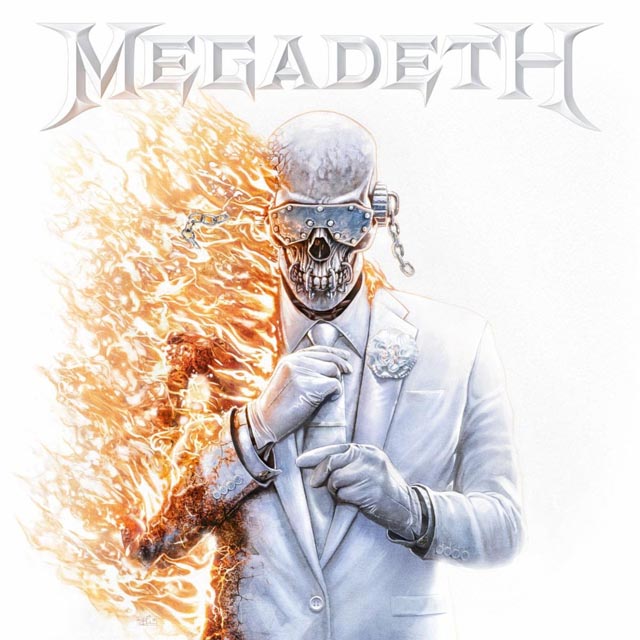
The overall seventeenth, self-titled album marks the beginning of the end for Megadeth. Dave Mustaine deserves credit. That part isn’t up for debate. Getting kicked out of Metallica, starting over, and building Megadeth into one of the defining bands of American thrash metal is an achievement few musicians ever reach. Over time, Megadeth stopped being “the band formed by Metallica’s ex-guitarist” and became its own force, with its own catalog, fanbase, and identity.
Most fans today can enjoy both Megadeth and Metallica without caring about the old feud. Some even joke about it. Others build a fence between the two. Yet, moments like the therapy scene in 2004’s Some Kind of Monster showed that Mustaine never really let it go. Even after a peaceful attempt at the 2011 Big Four of American Thrash Metal event at Yankee Stadium, sharing the stage with Metallica, Slayer, and Anthrax, it eventually became clear once again that resentment never fully disappeared.
By now, Megadeth doesn’t need Metallica’s name attached. They haven’t needed it for decades. And yet, here we are, over forty years later, talking about Metallica again, because the most-discussed part of Megadeth’s final album is a cover of “Ride the Lightning.” The cover clearly overshadowed the record with endless click-baity headlines. The choice may have boosted promotional appeal but hurts the record itself, overall.
If you remove the bonus track, the album works. It feels like a proper send-off that reflects Megadeth’s own history, sound, and evolution through lineup changes and stylistic shifts. And would have made a much-less complex, simplified, praised review. Most songs sit comfortably in the three-to-four-minute range, one stretches past five, and the longest track on the album is the Metallica cover. That says a lot. Overall, this should be remembered as a solid farewell from a major thrash metal band. Instead, it’s partially outshined by an unnecessary decision.
Track-by-Track Review
“Tipping Point”
A straightforward opener. The riff is simple, the drums lock in quickly, and the song settles into a steady groove before breaking into a smoother, restrained solo. This leans closer to Thirteen (2011) than Peace Sells… but Who’s Buying? (1986) or Rust in Peace (1990). Nothing flashy, nothing extreme, just a standard Megadeth track. The chorus takes on a darker tone toward the end.
“I Don’t Care”
“I Don’t Care” immediately brings to mind Metallica’s Garage Days–era “So What,” originally by the punk rock group Anti-Nowhere League, later made infamous through Metallica’s cover. Now we have a Megadeth original built around a similar attitude, just filtered through Mustaine’s lens. Coincidence, or another pointed nod? It’s hard not to question it, especially when the song’s defiant stance clashes with the reality that Mustaine has carried his disdain for Metallica for four decades and counting.
“Hey, God?!”
“Hey, God?!? sounds like Megadeth pulling from multiple eras at once. It fits somewhere between Countdown to Extinction (1992) and Super Collider (2013), which makes sense if this album is meant to look back across the band’s career.
“Let There Be Shred”
Taking things in a heavier direction, though nothing like the in-your-face aggression of 2016’s Dystopia, nor the record shaped by Mustaine’s very real battle with cancer, 2022’s The Sick, the Dying… and the Dead!. Instead, this track lands somewhere in between, heavier in spirit, lighter in execution in some areas. It’s a stretch at times, but it runs parallel to a return-to-roots mindset, reaching back toward the band’s debut, 1985’s Killing Is My Business… and Business Is Good!. There’s a youthful, aggressive energy here, the kind fueled by rage and anger, an anger that has stayed true to form for forty years. A fun guitar solo rounds it out.
“Puppet Parade”
Is this closer to 1999’s Risk, or are we getting a second nod toward Metallica just by using the word “Puppet”? Coincidence, or intentional? The track opens a bit slower, with production that feels crunched together, then settles into a catchy melody you could easily place within 1992’s Countdown to Extinction era. But once lyrics like “you must obey” surface, it starts to raise the question of where the inspiration is really coming from. This ends up being the most melodic track on the album, with fun, differentiative shifts in style across its four-minute runtime.
“Another Bad Day”
Vocals are restrained, lyrics are relatable, and the melody is familiar Megadeth territory, just not particularly strong. It works, but it doesn’t stand out.
“Made to Kill”
Drums lead the way into a thick, sludgy riff. Stylistically, this could sit between Endgame (2009) and Super Collider (2013). It pulls from multiple eras without fully committing to one, which may be the point.
“Obey the Call”
“Obey the Call” is where the album really hits. The Rust in Peace influence is obvious, especially in the guitar work and pacing. It’s not a clone, but the energy is there. Tight riffs, solid breakdowns, and cohesive structure make this the heaviest and most convincing thrash track on the record. If fans are going to take one song with them, it’s probably this one.
“I Am War”
Mid-tempo and reflective, this feels rooted in The System Has Failed (2004) era. Vocals carry the track, supported by a steady hook and a clean guitar transition before the next chorus. Nothing aggressive, but it fits the album’s flow.
“The Last Note”
“The Last Note” is the real ending. Soft, somber, and clearly meant as a farewell. Some moments echo Peace Sells… but Who’s Buying?, and while it leans toward ballad territory, the riffs and transitions pull it back into familiar Megadeth ground. More than anything, this song makes you want to revisit the band’s catalog. Not the rivalry. Not the bitterness. Just the music. Megadeth earned their place in metal history, Big Four status included. This track understands that. “This is the final curtain call.” “Hope this last note never dies.”
Bonus Track
“Ride the Lightning”
This cover should not exist. Mustaine has spent decades talking about Metallica, and now that fixation is permanently attached to Megadeth’s final album. Despite claims of making the song heavier or faster, the result is toned down and less aggressive. The guitar work is smoother, the edge is gone, and the energy simply isn’t there. This version sounds flat and uninspired by comparison. The aggression, urgency, and passion that define the song are missing entirely. Megadeth did not need this. The album would have stood just fine without it. Instead, it feels like a forced statement that distracts from what should have been a clean ending.
Final Verdict
Listen from “Tipping Point” through “The Last Note.” Skip the bonus track.
Without the Metallica cover, this album stands as a respectable final chapter, reflecting Megadeth’s sound, history, and longevity. With it included, the message gets muddled. Megadeth would have had enough positive praise, responses, and feedback without needing the name Metallica attached to it. This cover song is not worth the clickbait hype. Megadeth proved themselves a long time ago. This album didn’t need the reminder. Maybe, in hindsight, the cover was a poetic, reflective conclusion, but it was unnecessary given the blatant, oversaturated history behind the rift over riffs.