Metal Insider is getting into the Halloween spirit this year with something a little different. Throughout October, we’re sharing the history and eerie tales behind venues across the world. Check out our latest column, Halloween Countdown for more, and Enjoy!
Introduction
Today’s countdown includes seven in one, for October 22, 23, 24, 25, 26, 27 and 28th with venues St. James Theatre in Wellington, New Zealand, Gillioz Theatre in Springfield, MO, Dodger Stadium in Los Angeles, CA, Nationwide Arena in Columbus, OH, Alberta Bair Theater in Billings, MT, The Olympia Theatre in Dublin, Ireland, and Balboa Theatre in San Diego, CA.
St. James Theatre
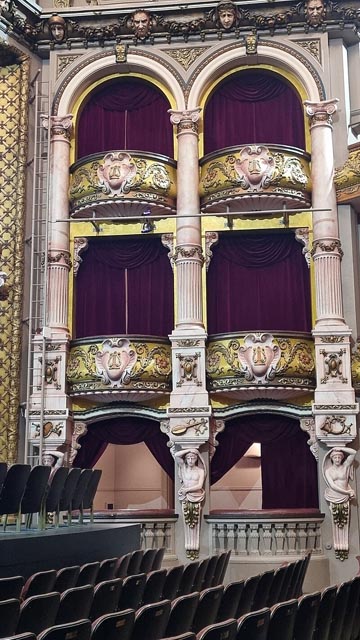
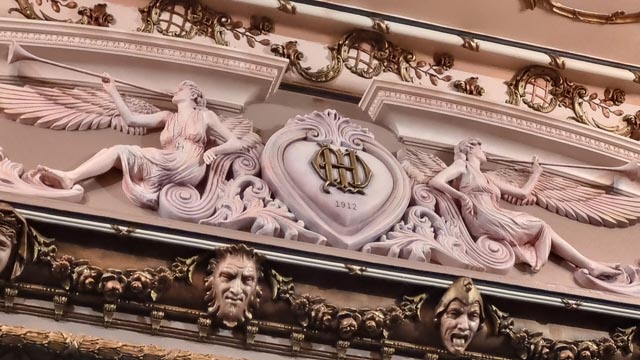
Construction of the St. James Theatre in Wellington, New Zealand, began in March 1912 and took nine months to open its doors to the public on December 26, 2012. The theatre had a unique design featuring steel framing and reinforced concrete, a first in the world at the time. The decorations added marble, cherubs, and ornate plasterwork, making it one of the more lavishly decorated venues for silent films, vaudeville, opera, and live performances. The theatre was first known as His Majesty’s Theatre and later changed to St James in the 1930s. Despite the theatre’s long-running success, it went into a decline during the 1970s and 1980s. Demolition was imminent until a campaign to Save the St. James was run, asking for public and government support to keep the venue open. It was a long battle, and by 1993 the Wellington City Council had purchased the theatre, followed by an $18.5 million restoration completed in 1997. The theatre was renamed for a short while to Westpac St. James Theatre between 1997 to 2007. Today, the St. James is now considered a category one historic place and remains the home of the Royal New Zealand Ballet, while hosting concerts, operas, and other performing arts events.
Gillioz Theatre
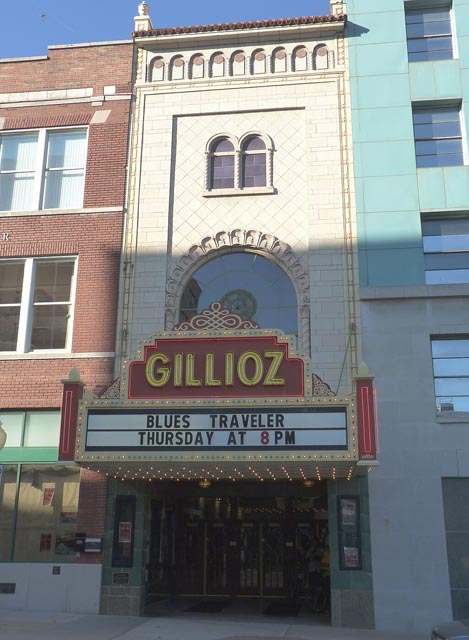
Heading to Springfield, Missouri, stands The Gillioz Theatre. Built in 1926 by bridge builder Maurice Earnest Gillioz, it was made of an uncommon pair of materials: steel and concrete, with wood used solely for the doors and railings. The design was shaped for an extravagant Spanish Colonial Revival style, and once it opened, it screened silent films accompanied by a Wurlitzer organ while also offering live vaudeville performances. The venue is a natural historic landmark, situated along historic Route 66.
It wasn’t until the 1970s that the theatre began to decline as audiences shifted to major multiplexes, and it eventually closed in 1980. The theatre lay abandoned for years and somehow escaped demolition through preservation efforts led by local advocates and the Springfield Landmarks Preservation Trust. Listed on the National Register of Historic Places in 1991. All efforts soon paid off; by 2006, the venue reopened after an extensive $10 million restoration. Today, the theatre remains open, operated by the Gillioz Center for Arts & Entertainment. The theatre continues to host concerts, film screenings, and live events.
Dodger Stadium
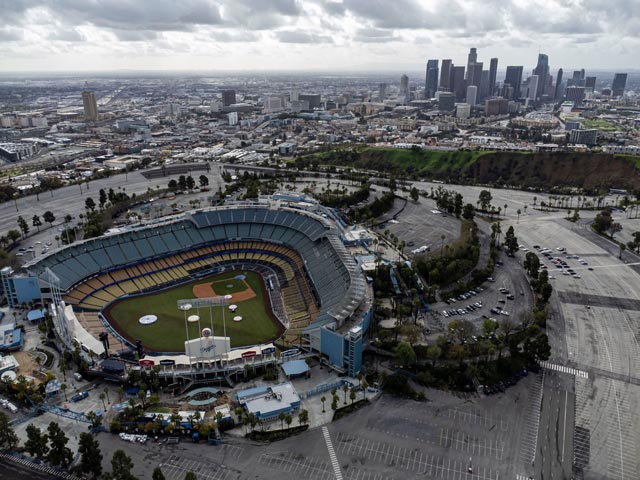
Beyond arenas and theatres, stadiums have notoriously changed their fields to host major concerts, and one of these massive stadiums across the United States is notoriously haunted: Los Angeles’ Dodger Stadium. Located in the Chavez Ravine, the Stadium opened on April 10, 1962. It was constructed for $23 million, the first Major League Baseball park built entirely with private financing since the original Yankee Stadium in 1923. Designed by Emil Praeger and Edward Fickett, the Stadium was carved directly into the hillside overlooking downtown Los Angeles. The site itself has a controversial past of once being a home to a Mexican-American community forcibly removed in the 1950s Battle of Chavez Ravine. The land was inevitably seized after a failed public housing project, then sold to the Dodgers for stadium construction. Over the Stadium’s existence, there have been multiple renovations, most significant in the 2000s and 2010s. It remains the largest baseball stadium in the world by capacity.
Nationwide Arena
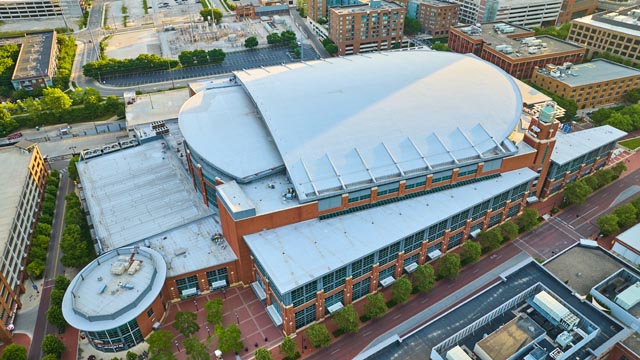
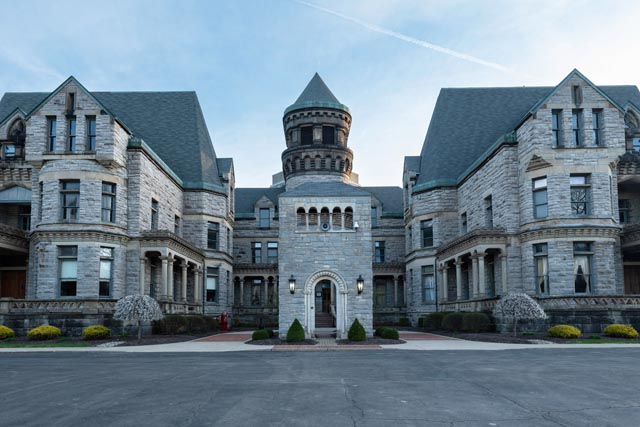
Continuing with a dark history, Nationwide Arena in Columbus, Ohio, is another find that goes beyond its use for sports and entertainment. The arena opened in 2000 after its former site, the former Ohio State Penitentiary, was demolished in 1998. The previous building was not only a home to some of the state’s most violent criminals, but it also broke the record of having the deadliest prison fire in U.S. history in 1930, claiming more than 300 lives. Despite its grim origins, the arena has become a hotspot in downtown Columbus’s Arena District, home of the Columbus Blue Jackets and host to a variety of events, including concerts and NCAA tournaments.
Alberta Bair Theater
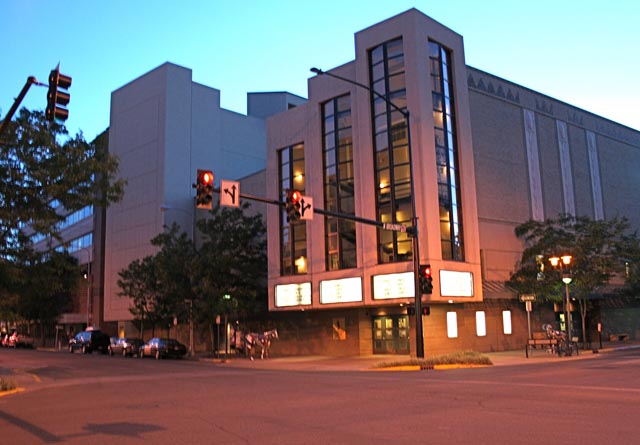
Heading out to Billings, Montana, is the Alberta Bair Theater, opened on November 13, 1931, originally known as the Fox Theatre. The venue was the last Art Deco house built by 20th Century Fox and designed by Robert C. Reamer. The theatre was a success, creating a hotspot for Billings as a movie palace and premier stage, hosting community concerts, the Billings Symphony, vaudeville, and more. With similar experiences in the late 1970s, when multiplex theaters were on the rise, the local Fox Committee tried to save and reimagine the deteriorating venue as a performing arts center. By 1987, the theatre was ultimately renamed to the Alberta Bair Theater,in honor of the theatre’s main financial contributor, Alberta Bair who passed away in 1993. The theatre was eventually relaunched as a nonprofit home for regional arts and national tours. A major modernization took place between 2019 and 2021, costing roughly $13.6 million for a complete upgrade. After facing near depletion and embarking on some refurbishments, the Alberta Bair Theater continues to stand and host events today.
The Olympia Theatre
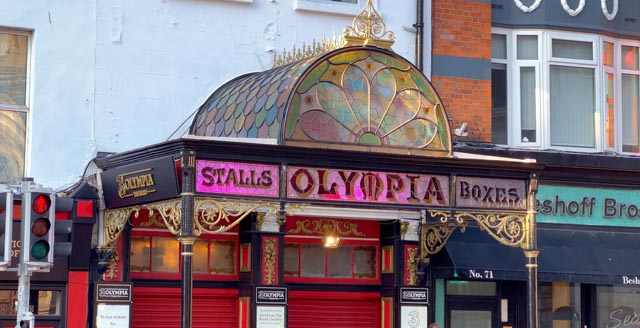
The Olympia Theatre has had several name changes over the years. The venue first opened its doors on December 22, 1879, as Dan Lowrey’s Star of Erin Music Hall, and by 1881, it was known as Dan Lowrey’s Music Hall. By 1889, it became Dan Lowrey’s Palace of Varieties, and in 1897, it became a theatre, The Empire Palace, under new management. Amid major moments in Irish history, it became the Olympia Theatre in 1923, hosting a variety of events from films to drama, opera, ballet, and more. By the 1960s, the venue faced demolition when producer Brendan Smith’s Olympia Productions secured a lease with renewal rights, effectively preserving the building as a working theatre. By November 5, 1974, disaster struck the theatre when the proscenium arch collapsed during West Side Story rehearsals, prompting a restoration project that reopened the venue in March 1977.
The venue continued to be run by Olympia Productions in the 1980s. By 1995, it was acquired by Denis Desmond and Caroline Downey, where refurbishments continued to evolve well into 2015–16. The venue was ultimately renamed to the 3Olympia Theatre in September 2021. With a long history of management and name changes, the venue remains a hotspot for concerts and events within Dublin.
Balboa Theatre
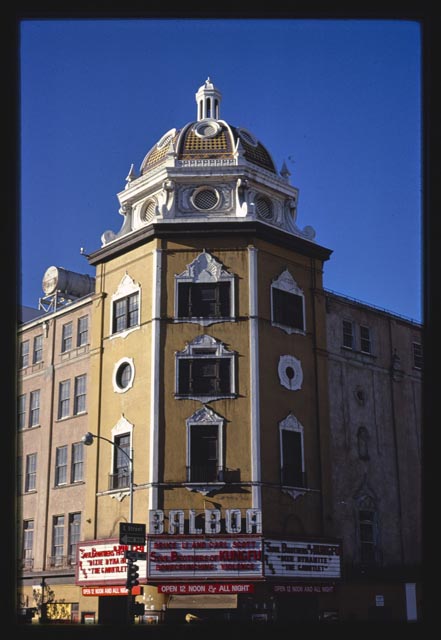
San Diego’s Balboa Theatre came to life in 1924 with the help of businessman Robert E. Hicks and architect William H. Wheeler. Like many theaters built in the Roaring Twenties, it was a place for grand vaudeville and films, with a unique palace design filled with Spanish/Moorish Revival decor. It joined the Fox West Coast circuit, added sound in 1930, and briefly rebranded as El Teatro Balboa for Spanish-language films. During World War II, the offices above the storefronts were converted to Navy housing. The theatre entered decline after the war and was sold to the Russo family in 1959. The structure has survived multiple redevelopment threats despite being designated a local historic site in 1972. Community advocates formed Save Our Balboa, later known as the Balboa Theatre Foundation, which helped secure the venue’s listing on the National Register of Historic Places in 1996. The theatre eventually underwent a city-funded restoration project in 2005–2008. By 2008, the theatre reopened as it’s known today.
Facts
St. James Theatre
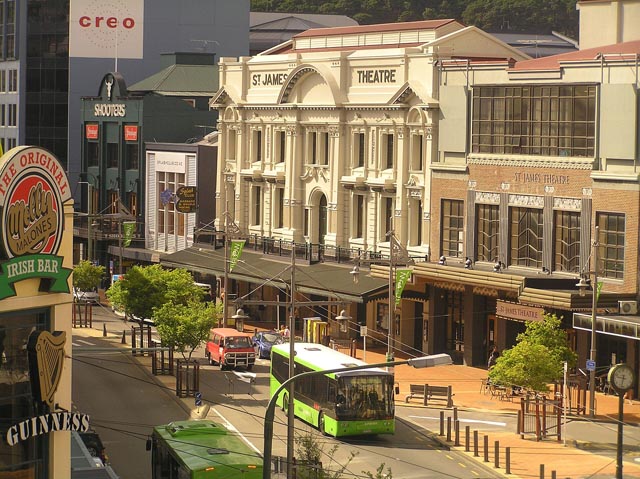
Location: 77–87 Courtenay Place, Wellington, NZ
Venue Type: Large proscenium-stage theatre
Year Built (and Key Dates): Designed in 1912 by architect Henry Eli White; opened on December 26, 1912; major restoration completed in 1997; reopened after earthquake in June 2022.
Status: Active, Category 1 Historic Place
Capacity: Approximately 1,550
Gillioz Theatre
Location: 325 Park Central East, Springfield, MO
Venue Type: Historic performing arts and concert theatre
Year Built (and Key Dates): Built and opened in 1926; closed in 1980; listed on the National Register of Historic Places in 1991; fully restored and reopened in 2006
Status: Active
Capacity: Approximately 1,300
Dodger Stadium
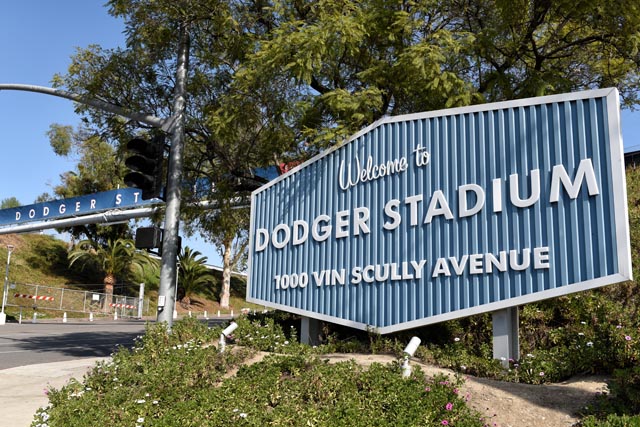
Location: 1000 Vin Scully Avenue, Los Angeles, CA
Venue Type: Major League Baseball stadium
Year Built (and Key Dates): Construction began in 1959, opened on April 10, 1962; major renovations in 2005, 2013, and 2020
Status: Active
Capacity: Approximately 56,000
Nationwide Arena
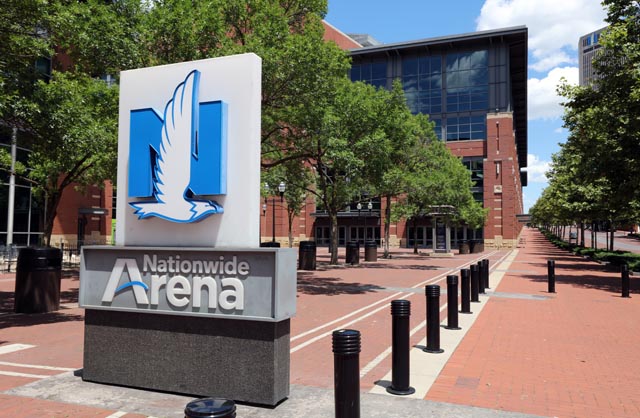
Location: 200 West Nationwide Boulevard, Columbus, Ohio
Venue Type: Multi-purpose indoor arena (sports, concerts, and events)
Year Built (and Key Dates): Construction completed and officially opened in September 2000
Status: Active
Capacity: Approximately 18,500 (hockey), 19,500 (basketball), and up to 21,000 (concerts)
Alberta Bair Theater
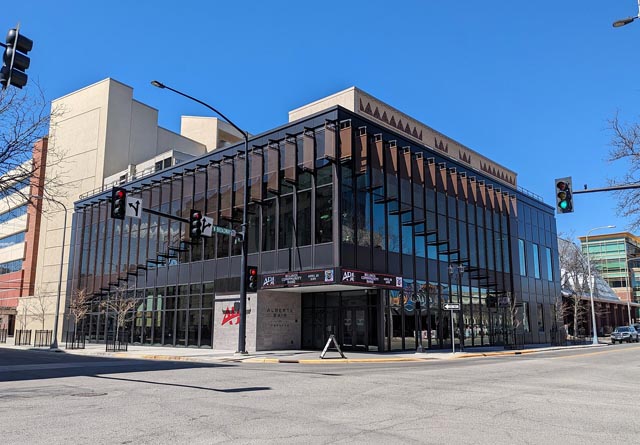
Location: 2801 3rd Avenue North, Billings, Montana
Venue Type: Performing arts center / historic theater
Year Built (and Key Dates): Originally opened in 1931 as the Fox Theatre; renamed the Alberta Bair Theater in 1987; underwent a major $13.6 million renovation (2019–2021)
Status: Active
Capacity: Approximately 1,390 seats
The Olympia Theatre
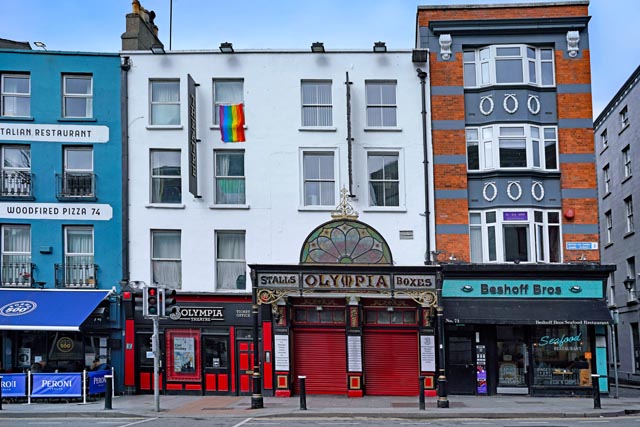
Location: 73 Dame Street, Dublin, Ireland
Venue Type: Historic theatre and concert hall
Year Built (and Key Dates): Opened in 1879 as Dan Lowrey’s Star of Erin Music Hall; renamed The Empire Palace in 1897; became The Olympia Theatre in 1923; reopened after collapse and restoration in 1977; rebranded as 3Olympia Theatre in 2021 under an eight-year sponsorship deal with Three Ireland
Status: Active
Capacity: Approximately 1,240 seats
Balboa Theatre
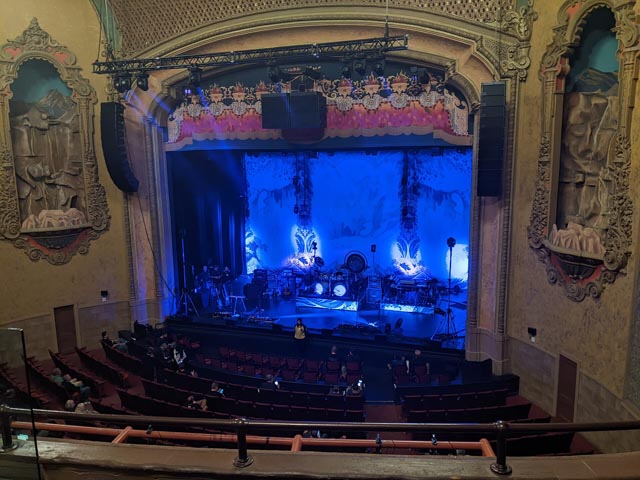
Location: 868 4th Avenue, San Diego, CA
Venue Type: Historic vaudeville and movie palace; performing arts theatre
Year Built (and Key Dates): Built in 1924; reopened as El Teatro Balboa in 1930; listed on the National Register of Historic Places in 1996; fully restored and reopened in 2008; celebrated its 100th anniversary in 2024
Status: Active
Capacity: 1,339 seats
Music Cred
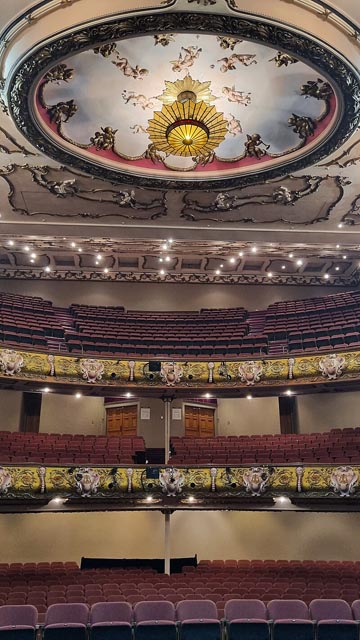
St. James Theatre
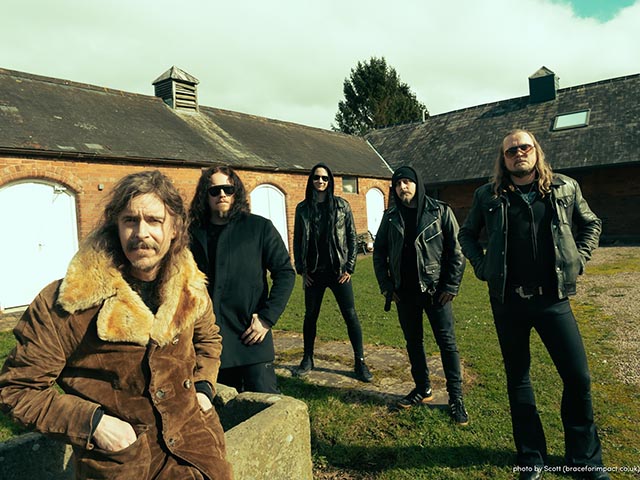
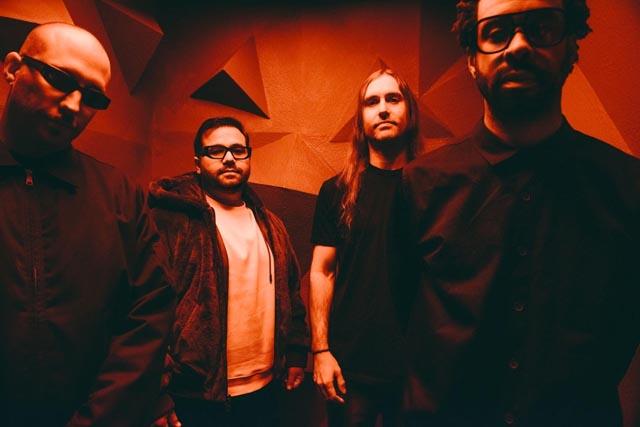
Since its restoration, the St. James Theatre has hosted more concerts, with acts including Mastodon, Slayer, New York Dolls, Eagles of Death Metal, The Mars Volta, Evanessence, Black Label Society, DevilDriver, Fear Factory, Opeth, Mudvayne, and Disturbed gracing the stage.
Gillioz Theatre
At least since the reopening in 2006, the Gillioz Theatre has held a number of acts, including In This Moment, Joe Satriani, Primus, The Breeders, Henry Rollins, Blessthefall, Black Veil Brides, Asking Alexandria, Seether, Tesla, Theory of a Deadman, Hellyeah, Clutch, and Chevelle.
Dodger Stadium
Beyond baseball, the Dodger Stadium has held concerts, including, My Chemical Romance, Yoshiki, Green Day, Turnstile, The Rolling Stones, Helmet, The Casualties, Silverstein, Joan Jett, AC/DC, and The Beatles.
Nationwide Arena
Since its 2000 opening, the Nationwide Arena has held several large concerts, seeing artists take the stage, such as The Mars Volta, Deftones, Trans-Siberian Orchestra, The Flaming Lips, Weezer, Poppy, Avenged Sevenfold, Evanessence, Skid Row, KISS, P.O.D, Linkin Park, Shadows Fall, Slipknot, Lamb of God, Def Leppard, and Aerosmith.
Alberta Bair Theater
Not many heavy acts have performed here but here are some acts that have made an appearance, Night Ranger, Air Supply, Alice Cooper, and Ray Charles.
The Olympia Theatre
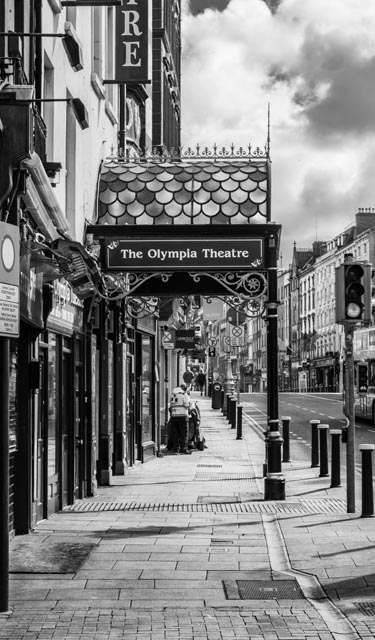
At this point, we wonder whether Alice Cooper has deliberately chosen haunted venues or it’s just a coincidence, since his name pops up on several of them. With that said, here are a few artists that have played at the Olympia Theatre: Machine Head, Baroness, Volbeat, Mutoid Man, Def Leppard, Clutch, Foo Fighters, Thin Lizzy, Iggy Pop, Alice Cooper, HIM, Obituary, Jinjer, Sepultura, Apocalyptica, The Darkness, and Halestorm.
Balboa Theatre
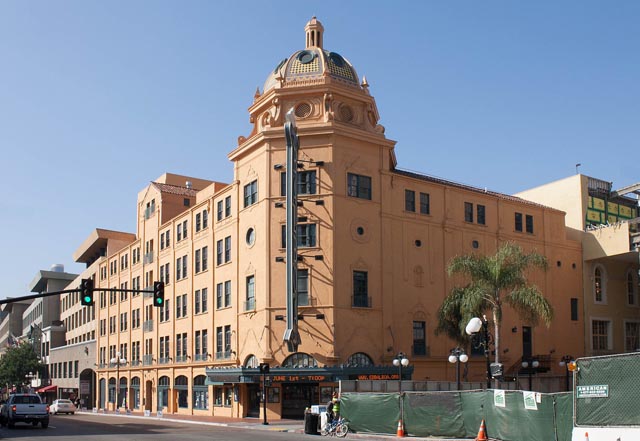
Not too many are listed, but Joe Satriani, Bruce Dickinson, Apocalyptica, Dream Theater, Chris Cornell, Steve Morse Band, and Primus are among the artists who have performed at the Balboa Theatre.
Reported Hauntings
St. James Theatre
The St. James Theatre is considered one of the most haunted theatre’s New Zealand has to offer. The supernatural lore dates back to the early Twentieth century, haunted by Yuri, a Russian dancer who is said to have fallen, or been pushed to his death, from the stage’s rigging above the theatre. Yuri is known to be a friendly ghost who enjoys playing with the lights and allegedly once saved a projectionist’s life on two separate occasions.
Beyond the friendly Yuri, darker spirits are apparently held within the Theatre. For one, The Wailing Woman, believed to be a disgraced actress who took her own life after being booed off stage, is often heard sobbing in the dressing rooms or seen wandering through the aisles. This spirit tends to target female performers by allegedly causing mysterious injuries or vocal strain. The spirit of Stan Andrews, a former manager, is said to haunt the backstage corridors. The Saint James Theatre has been known for its haunting for years, where it was featured on the TV series Ghost Hunt in 2005.
Gillioz Theatre
The Gillioz Theatre has traces of paranormal activity dating back to the 1960s. One of the few spirits reported throughout the theatre over the years is of a young boy, dressed like a newsie, who is caught wandering through the old balcony bathrooms. Another common sighting is of a woman wearing a yellow dress, often spotted near the former manager’s office. There have been reports of mysterious touches, laughter, footsteps, whispers, and flickering lights throughout the theatre, from one or more of these spirits, or from someone else.
However, the most famous spirit is of Martin Kirschner, the theatre’s longtime projectionist. Kirschner worked at the venue from 1926 until his sudden death from a heart attack on New Year’s Eve, 1962, while preparing a midnight screening. Many believe Martin’s spirit never left the theatre, as his shadowy figure has been seen in both the balcony and the projection booth.
Dodger Stadium
Beneath the glamour surrounding MLB mainstream success, Dodger Stadium holds one of the darkest histories in American sports. Long before the Dodgers arrived from Brooklyn in 1958, the land beneath Chavez Ravine was home to hundreds of Mexican-American families living in the small neighborhoods of La Loma, Palo Verde, and Bishop. Residents were forcibly removed as the city cleared the area to sell to Walter O’Malley for the construction of the stadium. Churches, schools, and even a cemetery were buried under the concrete. With this dark history comes the haunted lore of restless spirits from uprooted families who may have never left. The feelings of grief and rage reportedly linger beneath the third base and the parking lots above.
Visitors and employees claim to have witnessed paranormal activity. Security guards have reported eerie patches of fog forming on the field, strange whispers, and lights flickering on after closing. The most infamous apparition is the Woman in White, a figure seen wandering the parking lots or drifting near the edge of the ravine. The feminine figure is either seen weeping or screaming, believed to be a mother searching for her lost children, or perhaps a bride who died tragically nearby. This mysterious woman in white has also been traced back to the Hebrew Benevolent Society Cemetery, believed to remain in the parking area. Whether there’s truth behind the lore or full-on skepticism, the stadium’s dark history in Chavez Ravine is still pretty brutal.
Nationwide Arena
Due to its dark history, the Nationwide Arena is famously known as haunted. Demolishing the site and slapping on a fresh new building couldn’t remove the spirits left behind in its decay. The lore stems from its history of being placed on the grounds of the former Ohio State Penitentiary and later the 1930 catastrophic fire. Many prisoners were trapped in locked cells, unable to escape.
Reports of paranormal activity at the Nationwide Arena have been made since its opening in 2000. Staff and visitors have reported lights flickering, hearing disembodied voices, and experiencing cold gusts within controlled areas. Security staff claim to hear footsteps. The parking garage is said to be the most haunted. Witnesses describe the faint smell of smoke and eerie cries for help that suddenly appear and disappear. Some believe the restless spirits of the 1930 fire victims, and perhaps Confederate General John Hunt Morgan, once imprisoned on the same site, remain. Whether it’s a cursed history or simply the energy of lost souls, the Nationwide Arena, with year-round events, doesn’t stop the ongoing activity.
Alberta Bair Theater
Montana itself is surrounded by haunted history, making it no surprise that the Alberta Bair Theater sits atop an apparent paranormal legend. Alberta Bair saved the venue in 1987 with a generous donation, six years before her passing in 1993. However, since Bair’s death, visitors and performers have claimed that her generosity was only the beginning, as her spirit remains within. Some claim Alberta returned to watch over her beloved stage, as she’s been spotted around the aisles or near the balcony.
More spirits have been reported, including a lore of a man who died during construction in the 1930s, reportedly buried in the building’s cement foundation after a tragic accident. People have reported hearing unexplained knocks, seeing doors slam, and feeling an eerie sense of being watched. Other reports of shadows, cold spots, and apparitions have been made as well, making the venue one of the most haunted locations in Billings, Montana.
The Olympia Theatre
Now known as the 3Olympia Theatre, it was once investigated by paranormal researcher Hans Holzer and psychic Sybil Leek in 1965 after staff complained of persistent, unexplained disturbances. Workers reported disembodied footsteps, mysterious knocking on dressing-room doors, rattling windows, and a sense of being watched. Dressing Room No. 9 had the most activity, including a yellow light floating and doors slamming. Leek later claimed to sense the spirit of a young man trapped within the theatre, one who had been shot during the 1916 Easter Rising.
Additional reports also occurred, one of which came from longtime staff member Maureen Grant, who worked at the theatre from 1949 onward and shared her eerie encounters, including the spirit of Charlie Parker, a mischievous ghost believed to be a baby boy. After a medium’s visit, staff reported phantom crying, glasses flying off shelves, and coins jumping in Maureen’s Bar. Some have also spotted a pallbearer slowly pacing the center aisle. The Olympia’s reputation has become a staple of Dublin folklore and the basis for the city’s paranormal events.
Balboa Theatre
San Diego’s The Balboa Theatre has run into haunted encounters. One of which comes from longtime staff and maintenance workers. Former maintenance employee Robert Yanes claimed he could hear faint voices in the basement halls and dressing rooms. Employees have refused to go downstairs alone, while others quit not long after being hired, after hearing footsteps and seeing unseen presences.
Even after its extensive 2000s restoration and grand reopening in 2008, hauntings continued. Workers report feeling watched from the balconies, doors creaking, and a faint organ hum. While there’s no direct link to tragedy, or not widely reported, the Balboa Theatre’s haunting lore has been featured in the LA Times and San Diego’s Ghosts.
Visit Info
St. James Theatre
Gillioz Theatre
Dodger Stadium
Nationwide Arena
Alberta Bair Theater
The Olympia Theatre
Balboa Theatre