For over two decades, The Acacia Strain have channeled apocalyptic energy through an ever-evolving mix of deathcore, sludge, and existential metal. With their thirteenth studio album,You Are Safe From God Here (out now via Rise Records), the Massachusetts-based outfit continues to explore the darker corners of humanity. Read more in our album reviewhere. To break down the process behindYou Are Safe From God Here,Metal Insider spoke with guitarist and backing vocalist Devin Shidaker. A video and transcription of the discussion are both available below:
Transcription:
Thank you, first and foremost, for taking the time to hang with me and to talk about your new album.
No problem at all.
Yeah, I got it in my inbox I think two weeks ago and it was a shell-shocker. It’s so good. Very good.
Thank you.
I’m going to make kind of a noob of myself because, A, this is my first interview. This is my first video interview that I’m conducting on my own. But as someone who toured with Suffocate, I had no idea that you were in Oceano.
Yes.
So you went from Oceano to Coma Witch, am I correct? You helped (The Acacia Strain) with Coma Witch initially?
We did the Above/Below seven-inch.
Okay. Okay. So that’s where you came in?
Yeah.
Okay. I have kind of a weird question about the release of this album. So it’s in October. It’s October 24th. There were two other albums in The Acacia Strain index of hard work ethic. You guys put out an album every two years. There were two other albums that were October babies and that was Coma Witch and Death Is The Only Mortal.
Yeah.
And I just kind of wonder, is there a correlation, is there a connection or is it just that it’s just luck of the draw and you put them out in October?
Yeah, it’s kind of the luck of the draw. A lot of it, especially since vinyl has taken off way more than any other physical media sales, a lot of it gets dictated to when can vinyl be pressed. So if you record a record in March, at this point in time it’s like you’re not going to get the vinyl manufactured until October. So that has a lot to do with it. And it’s more just like when we’re able to get into the studio, “What do we have planned?” For us, March was like, “Hey, we don’t have anything going on. We can get in and record.”
I wanted to talk about The Acacia Strain’s work ethic. Basically, it’s like you guys put out albums every two years and it’s like clockwork despite the odds because you went through label changes, you went through lineup changes, and the work just keeps getting better. How do you coordinate that, how do you make that work, and how easy was it to go from Oceano to The Acacia Strain with that style work ethic?
So with how The Acacia Strain operates, I think part of the reason we’re able to put out records so regularly is we want to write. Everyone in this band has a different kind of style of creativity and we always have, despite member changes and everything. I’ve always said Vincent’s a really good curator of musicians who are able to take his ideas and turn them into songs, but we all enjoy writing. We all have to do it. Not like, “Oh, hey. It’s time to put out a record.” It’s just very quickly after we record a record, I start to get the itch of, “All right, I need to write more.”
And we write a ton before we get to the studio. Our demo Dropbox, before we started actually getting together to write, there were 40 demo songs. We go through and see what we all like, what we all don’t like, and see out of the stuff we like that fits the thing we’re going for on that particular record. And then from there we’ll start to build songs. A lot of it will be like, “Okay. Well, this stuff is going to inspire new riffs and new songs,” so out of the 40 songs that show up, five or 10 of them might have parts taken from them to be used and then we write the rest.
And then going from Oceano to that I think was great because when I was in Oceano, I joined as they were writing Contagion. And I want to say Nick, Jason, Danny, Adam had maybe three or four songs written. So I came in and I think I wrote … On my own, I want to say guitar-wise I wrote three, four songs and then we all collaborated on the rest in a room, just kind of seeing what ideas work. And we went and recorded with Zeus and it was a good experience and then we toured off of that record for the entire time I was in the band.
Near the end of my time when I had the possibility of being able to work with Acacia Strain, we still hadn’t written a new record. And as a young band that had, at that point, two records out, we had to do something and it was really hard to get that coordinated and worked out. That’s part of the reason that I left was I was like, “It’s been too long at this point and I don’t think that we kept people interested for as long as we should have because we toured on Contagion for way too long.” And Acacia Strain, I’ve been in the band for half of its existence at this point so there was still 12 years before I was in the band that they were putting out solid material regularly so it seemed like a better fit for how I wanted to work.
I think that’s awesome, especially because transitions like that aren’t easy and everything turned out flawless. Onto the title of the album … I mean, for as long as I’ve been an Acacia Strain fan, they’ve always dropped an apocalyptic album during crazy, apocalyptic circumstances and it’s almost like the most beautiful clockwork. But what’s with the title? What are the absolutes? And it’s unapologetically Acacia Strain from what I’ve seen in other interviews. What does that mean?
Yeah. I mean, to me … And I might have a different interpretation of it than Vincent does because when he comes up with titles or lyrics, especially when there’s very loose, metaphorical stuff, he’s not like, “Hey, guys. This is about this.” It’s just like, “Here it is,” and we go, “That sounds cool.” But to me, You Are Safe From God Here is just kind of a thing where there are a lot of people out there who are surrounded by religion not by their own choice. And for some people, it’s not a positive thing. For some people, it is and to each their own. But this is kind of, for us, we’re creating a place where we can be safe from the things that we don’t like. I think we’ve matured quite a bit as a band as far as how we go about things, while many years ago we were the band that would put inverted crosses on all our stuff.
The next question is just talk about your bandmates. We were just talking about Vincent and his concept for naming things. I do know him on a personal level, having lived in Albany and indulged in that scene, that he is a badass human being. He’s the sort of guy who still shows up to local shows and will mosh, like Born Low. I remember the last time I saw him was at a Born Low show and he’s a great human being and he’s very just. He’s just cool.
Yeah.
Way too cool, cooler than everybody else. But what would you say about each of your bandmates?
Honestly, my best friends. And I can say that about not just the guys in the band, but people that have been in the band before, like Tom and Kevin and Richie and Jack. I keep up with everybody and it’s kind of the thing when you bring somebody into the band. It’s not necessarily about, “Who can play this the best?” or, “Who’s the best guitar player we can get?” It’s, “Who can play this stuff, but who is somebody that we want to hang out with?” And that’s how I came into the band because Oceano and Acacia Strain had toured and we hung out every day.
Griffin and Vincent had toured together when Griffin was in Too Pure to Die many years ago. Mike was in Emmure and he is in Recon. We’ve known him forever. And then Matt filled in for Kevin when Kevin had to sit out for a year and we loved him. We kind of bullied him into being the person we wanted him to be because he would do goofy stuff. We went to a skate shop and he bought a Volcom hat and an Independent hoodie and he was like, “I had this outfit when I was in middle school,” and I was like, “Yeah, man. You’re an adult now. That’s cool if that’s what you want to wear, but grow up. Don’t dress like you’re in middle school still.” Just that kind of bullying stuff, friendly, not mean.
We enjoy being around each other and that makes for the writing process going a lot smoother. We understand each other. And so with that comes an understanding of our musical brains as well where if I’m writing something, I might be able to think, “Oh, Mike would do something like this here. Let me try that,” or, “This is the kind of drum part Matt probably would play. If I’m just demoing stuff, I can kind of keep that in mind.” And just Vincent, he’s one of my best friends in the whole world and it’s one of those things where I think even if we weren’t in this band, these are still people I’d want to be friends with and hang out with. But we are in a band and because we get along so well, there’s no end in sight.
That’s so awesome. I have always had such an incredible respect for that. What is your favorite track on the album?
It’s hard to say. Really, I like Swamp Mentality. I really like Sacred Relic. Sacred Relic is one of those ones. I wrote that at home and the main part that goes on and on, it was just like, “How do I make not necessarily a breakdown, but just a simple guitar part that sounds like all of the future flashback scenes from Terminator where it’s just the machines stomping skulls?” So I hear that part in Sacred Relic and I’m like, “That’s the Terminator part.” But it’s hard to say. I’m really happy with how every song is and how they fit together.
And when we write something, it’s kind of like the main thing is we want to be happy with it. We want to write something we want to listen to. And whenever we make a record, I listen to it all the time until I basically get tired of hearing it, and then I have to listen to it more to relearn songs when it’s time to play them live. But I haven’t gotten tired of listening to it yet. I usually pop over to our record when I’m at the gym and it works for that. I also like Holy Moonlight too.
Yeah, it does. That’s one of the main fans.
No, I really like Holy Moonlight as well. There’s a part in there we all kind of call the sonar part and it’s just like a guitar noise. But Matt came up with that and whenever it comes up, everyone’s pushing a button. I like that song too. I am excited to be able to play that one live.
Yeah, they’re all some of the most intimidating tracks that I’ve ever heard. And I just remember moving across the United States to Albany New York from Reno, Nevada when Beast came out. That song dropped and I was like, “This is a band full of people who don’t care about how something is perceived.” And that’s actually my next question is with the heightened sensitivities of religion and all the bullshit, I hate to say it like that, but with everything going on in the world right now, how do you think this will be perceived? Do you think the fans that love The Acacia Strain unconditionally are going to be like, “Hell yes. This is a relief. This is the validation that I needed,” or do you think it’s going to get some backlash?
I have to be honest there and just say I really don’t care. Obviously, everybody wants a record to do well because this is our livelihood and all that stuff, but I am happy with it. The rest of the band is happy with it. We pleased who we wanted to please. And I think that our fans at this point, we’ve been doing it long enough that they trust us to put out something that they’re going to enjoy and they know they’re going to get something that’s different from the record before and the record before. So yeah, I would love it if everybody loved the record, but it’s not going to break my heart if they don’t. And at the same time, it’s like if there’s people that there’s backlash for any reason, whatever. Get a life, I don’t care. Anything like that.
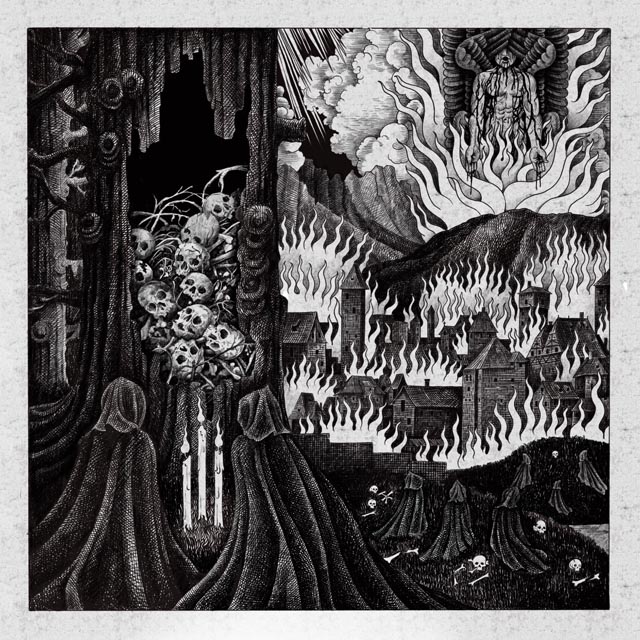
The album art. This is what sets The Acacia Strain apart from every other band is every album they have some badass, distinguishing album art. What’s the story of this one?
We decided it was time to change it up again. We worked with Caelan for a few records and then we worked with Justin, Angryblue, for a while before that, and then Paul [inaudible 00:16:04] I think did Continent and Dead Walk. So it’s like we don’t want to stick with one art style for too long. It’s like as the band evolves, everything else needs to as well. Vincent really wanted a woodcut kind of looking thing and then we started to get into finding somebody to do that and we were failing. It was either somebody that could not get anything done in time or somebody who didn’t quite do what we were looking for.
And our manager, Dog, was like, “Hey, I know this guy who is a tattoo artist and he does a lot of artwork that kind of fits that style.” And I am, of course, completely spacing on his name at the moment, but he sent it our way and we were like, “Yeah, let’s give this guy a shot,” and he nailed it. I’m in love with this artwork. And on the last tour, we had the artwork on the cabs with a full backdrop and these banners on top of the guitar cabs and it looks very cool.
New music continues to pile its way through. Since our chunk last at the end of 2025, January has brought an extensive batch of fifty-three new tracks as well as fresh videos from already-existing albums or live performances. Metal Insider has collected songs from...
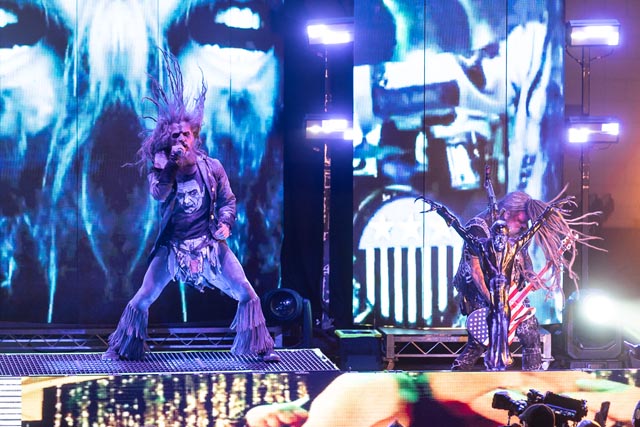
Rob Zombie has released a video for his latest single, “(I’m a) Rock ’N’ Roller.” The track is the third single taken from the shock rocker's upcoming album, The Great Satan, scheduled to arrive on February 27 via Nuclear Blast Records. The release follows the...
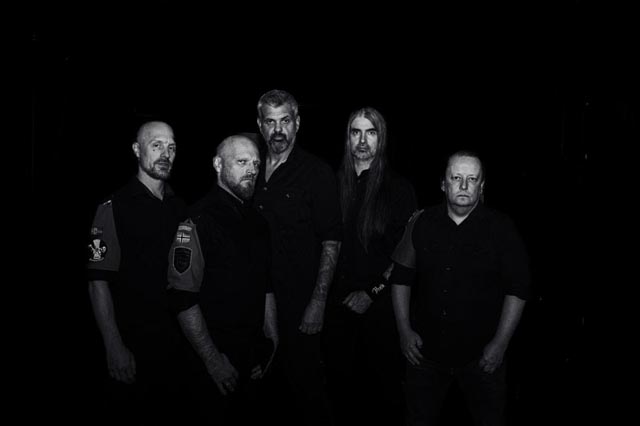
Vreid have unveiled a new instrumental single, "Kraken," written as the official soundtrack piece for the upcoming international film of the same name. The track taps into the band's blackened Sognametal roots, inspired by the mythology and landscapes of Norway's...
New & Noteworthy is Metal Insider’s weekly column highlighting some of the newest rock and metal releases coming out each week. This week finds albums from the likes of Megadeth, Poppy, The Format, Crystal Lake, The Damned, Goldfinger and Rotting Christ...
New & Noteworthy is Metal Insider’s weekly column highlighting some of the newest rock and metal releases coming out each week. Amongst the many outstanding works hitting shelves this week are new releases from the likes of Sleaford Mods, Greywind, Kreator, Soen...
New & Noteworthy is Metal Insider’s weekly column highlighting some of the newest rock and metal releases coming out each week. This week counts new music from the likes of Alter Bridge, The Protomen, Zu Beyond The Black and Bullet amongst the many outstanding...