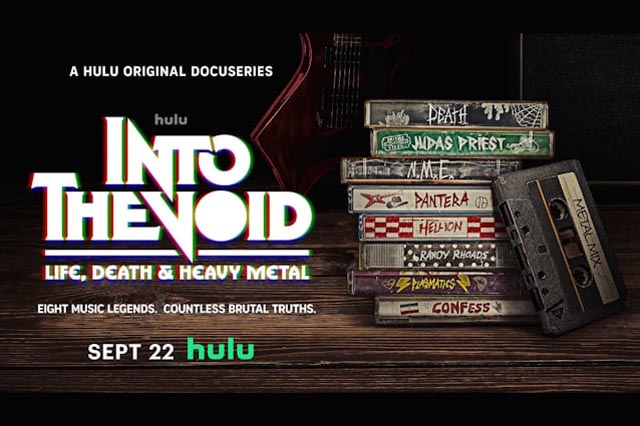
The new Hulu docuseries Into The Void: Life, Death & Heavy Metal premiered on September 22, 2025, exploring some of metal’s darker stories of murder, addiction, rebellion, and redemption. Capturing eight episodes for its first season, creators Jason Eisner and Evan Husney, the same team behind Dark Side of the Ring, brought stories of Randy Rhoads, Judas Priest’s infamous trial, Death’s Chuck Schuldiner, Plasmatics’ Wendy O. Williams, Pantera’s Dimebag Darrell, Hellion’s Ann Boleyn, and the Iranian band Confess’ fight against a death sentence.
Beyond retelling these stories through visuals, musician and composer Andrew Gordon Macpherson (Dark Side of the Ring) conceptualized the same storytelling through sound. A key element of the score involved using swelling electric guitar feedback like orchestral strings to create an “ambient metal” atmosphere, along with prepared and out-of-tune pianos and downtuned bass and guitar for a heavier tone. Macpherson also ran guitars through a rotating Leslie speaker for a warped, psychedelic sound, and used synth-based noise sequences to evoke metal’s rhythmic power without overpowering the dialogue. Lo-fi textures, such as tape hiss, vinyl crackle, and static, were layered throughout to capture the gritty, underground energy of the era.
Stylistically, Macpherson challenged himself to avoid overkill in the score, ensuring the dialogue remained clear while paying close attention to each artist’s unique sound and story. Metal Insider caught up with the composer to learn more about his experience creating the score for a series that dives deep into the lives of legendary figures in heavy music.
What emotions did you want the music to reveal?
The emotional landscape of the show is vast and complex, and the music has to cut through the “overgrowth” of grief and remorse and guilt and rage and love and everything in between. I used to deliberately name the emotion I was trying to convey/reveal musically but I’ve shifted gears to focus on “Kinetic Scoring” which is my own framework for writing music as motion; using specific verbs to map out and prompt musical ideas that, in conjunction with the interviews, (hopefully) propels the story story forward and illicit different nuanced emotional states… I found that writing a “Chase” piece vs. writing a “Fleeing” piece are similar but a different emotional demand is implicit so I found better, more inspiring verbs… All this is a pompous way of saying… it’s kind of intuitive and it’s kind of a desperate attempt to codify my own creative process so I can ensure delivery of a fuck-ton of impactful music on time and never phone it in..
How did you approach paying tribute to Dimebag Darrell?
My childhood bedroom had a door on one wall, a window on the opposite wall, a closet on the third and floor to ceiling Dimebag/Pantera posters on the fourth. His death had a deep impact on me so I wanted to do something special and unique to pay tribute in the score. There’s a piece I wrote called “Dimebag Immortal” that is an elegy played on three electric guitars with whammy pedals, arranged like an orchestral string trio, pipe organ, piano and timpani. I recorded it with Payson Power from Tomb Mold and Michael Catano from North of America on the other guitars. We also adapted the whammy trio to other cues in the episode. I thought that might be a cool and unique way to tip my cap to Dime’s tone while still meeting the needs of the show and filmmakers. I also bought the Van Halen bumblebee guitar 3 years ago in anticipation that we might get to make this episode and use it in the re-enactments of Dime’s funeral, and we did!
Did you feel extra pressure when recreating tones of legends like Randy Rhoads?
Mildly, but I just researched the gear, and I was able to replicate his guitar rig for the most part… There’s another TV composer I know, Peter Chapman, that had an original MXR Distortion+ “Script” pedal that was the only piece I couldn’t reverse engineer, so he helped me out. That said, tone is in the fingers and I’m no Randy Rhoads… but I don’t think the expectation or the goal was ever to make a straight ahead sound alike of any of Randy’s music. I just wanted to access it and incorporate it as a colour in the score which is it’s own thing.
Was there a particular guitarist’s style that was most difficult to capture?
The Dimebag whammy tribute was the most work, so arguably the most difficult…but I’ve been a music production nerd for a while and can replicate a lot of guitar tones fairly quickly and convincingly. When I scored Tales From the Territories, I had this epiphany that the history of guitar effects is a huge part of the history of music production, and I could benefit from bringing that history into higher resolution for myself….So bought a ton of vintage pedals and amps and other effects, so I could get more familiar with their idiosyncrasies and have key ingredients of many different sounds.
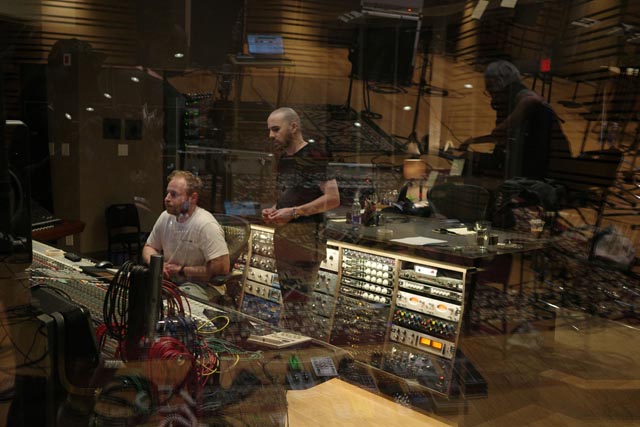
Photo Credit: Vaughn Robert Squire
What was the weirdest instrument or object you used for the score?
I manipulated the aforementioned whammy pedals via MIDI, which was very weird and not really a musical process…more like a data-entry/trial and error process. Other than that, for the Judas Priest episode I did a lot of backwards recording to evoke “back-masking” and “subliminal messages” with some spooky results.
How much improvisation did you allow to happen?
In the sessions with Michael and Payson, I opened it up for improvisation a lot because the pitch of the instruments was kind of “on-rails” from the MIDI Controlled whammy pedals, so they had free reign of the articulations they made on the guitar. The other cues were made by me, alone in my studio, and so there’s constant noodling on bass guitar and piano, experimenting by smashing effects together, sketching and erasing MIDI notes to get the cues on their feet quickly. I don’t have a lot of time, so that’s where the verbs come in handy to give me a framework to generate stuff quickly.
What was the hardest scene in the series to score?
There’s a scene where Tim Post, the lawyer for the Vance Family in the case against Judas Priest, is recounting the boys suicide/suicide attempt that was difficult to tackle. It hit close to home for some recent events in my life, so I was not feeling as impartial as I normally might. And such a story requires a delicate touch and nuance and to resist the urge to sensationalize the event…So it wasn’t hard from a musical sense, but from a tone and POV sense. The show must go on.
What was the most surprising technical problem you ran into?
From the beginning, it was “how do I write a score about heavy metal that can wrap around interview dialogue and still sound like metal?” Guitar solos and double kick and blast beats and cymbal catches and speed picking is all dialogue-audio poison…But I think we arrived at sort of an “ambient cinematic metal” on the verge of post-rock that solved that problem. Another technical problem was the super annoying realization that the MIDI CC values that control the expression of the whammy pedals are not consistent between generations of the whammy, so I had to correct the MIDI data in the studio so that we would actually be in tune.
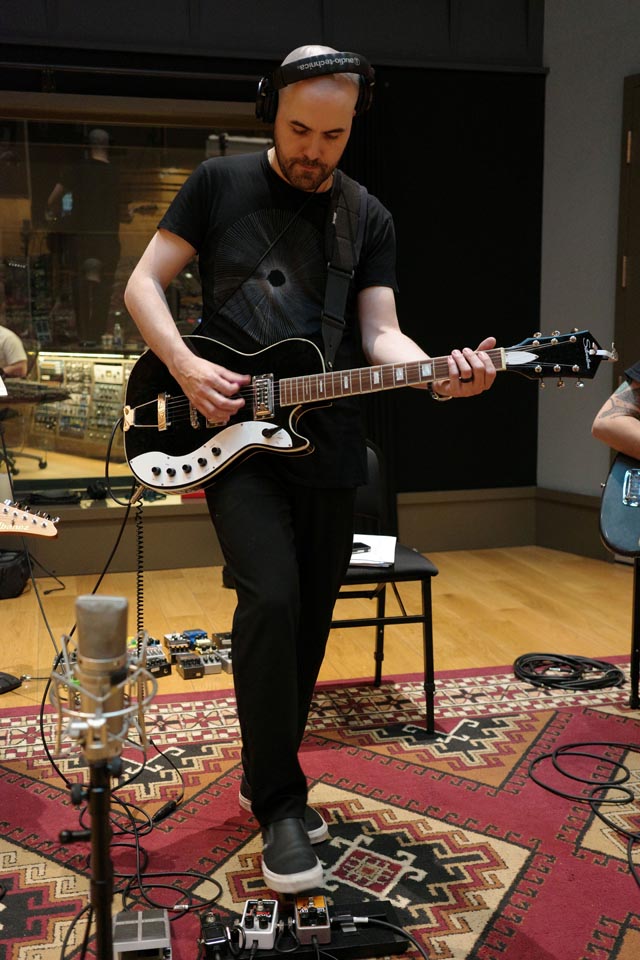
Photo Credit: Vaughn Robert Squire
What was the first heavy album you ever bought?
Black Sabbath “Paranoid.” From a bargain bin at a Music World store in Sydney Cape Breton. It was march break, I was 12, and 8 months into teaching myself guitar and had seen multiple references to Black Sabbath and specifically the song Paranoid in Guitar World and other music magazines, but it was the 90’s so I didn’t really have a way to hear the song at will unless I bought the CD. I used to go to Cape Breton over March Break with family, so I remember listening to the CD on a Panasonic discman in the hotel and getting my mind blown.
What was your gateway band into metal?
Soundgarden and Smashing Pumpkins kind of pointed back to Sabbath for me, and then I eventually got the Nativity in Black tribute album, which has a Sepultura cover of “Symptom of the Universe” on there that got me into really heavy stuff. There was also a local band called Cephalectomy that was a death metal band, and their first tape was super inspiring to get me into making my own recordings and experimenting with music production, sampling, etc and when I got to know them, they opened up the entire galaxy of metal to me.
Which band or artist has shaped you most as a composer?
Tangerine Dream is kind of my ideal for cinematic music I guess, or at least their style, including their influence on John Carpenter (and others). They form a big part of my taste for scoring TV and movies. There are a few others, like David Axelrod’s string and horn and drum kit arranging style, Ravel’s piano compositions, the minimalism of a band like Sade, the groove of Black Sabbath, and of course, the power of Dimebag Darrell.
Would you want to score another season if it happens?
I’ll score 100 more seasons, are you kidding? Bring it on!
Do you see yourself doing more music tied directly to metal culture?
More Into the Void! But aside from that, I have a couple doom-y songs I want to record with my mate Jon Hutt (drummer from the Motes and other hugely influential Nova Scotia bands). We used to work in a photo lab together and always joked about starting a metal band called “Gore Owl.” Now, 20ish years later, I actually have some songs we could do, so we’ll see?
What’s your next project?
I’m working on a TV series, a couple of features and an Interactive project I can’t really disclose yet. I’ve done some production for a psych rock artist named Brendan Philip and played some bass, guitars and done strings for Sixtoo’s “30” album. Looking for more ways to share more music with people without engaging with the current tech-dominated music industry platforms as much. I’m pretty eager to do more Into the Void and Dark Side of the Ring though, so cast your spells for us!
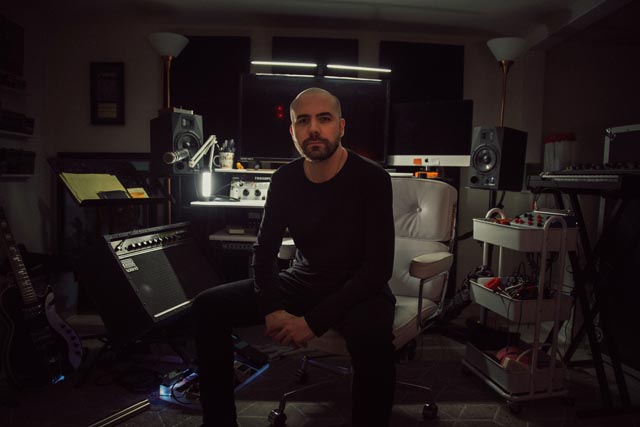
Feature Image Photo Credit: Johnny Hockin