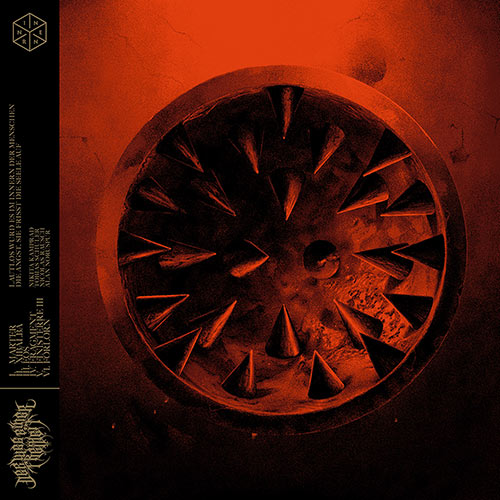
Der Weg Einer Freiheit return with Innern, their sixth album and one of their most personal to date, out today (12th) via Season of Mist (read our review here). Built on themes of suffering, transformation, and introspection, the record expands their signature mix of black metal and atmospheric soundscapes. Metal Insider caught up with vocalist/guitarist Nikita Kamprad for a track-by-track look at the album, where guitarist Nicolas Rausch explains the closing track, “Forlorn.”
01) “Marter”
Marter was the first song written for the album in late summer 2023, and the entire record was intentionally composed in chronological order to preserve a natural and organic flow. We believe that listening to the album in its entirety is the best way to fully experience the new songs.
Starting off with more than nine minutes of music, Marter is one of the longer and more dynamic songs with a lot of changes in timbre, tempo and dynamics. It builds this huge arc of tension, with all the layered, orchestral-like guitars, but also with synths playing a much bigger role this time. On Noktvrn we had already started experimenting with synths, but here they step forward even more, providing an almost kind of cinematic vibe — though they still sit underneath the guitars and bass, which carry most of the harmonic weight.
The lyrics deal with mental health and the search for your own place in the world. It’s also about the dangers of silence and repression, especially in a society where talking openly about struggles is still stigmatized. The idea is: don’t just bury your pain, anger, or emotions, because if you keep them inside, they eat you up from within. The song’s chorus kind of turns that around into something hopeful — showing that healing can happen when fears and pain are shared, when you’re not carrying that weight alone anymore.
02) “Xibalba”
Xibalba, the second track on the album, is also its longest, stretching beyond ten minutes — a deliberate and bold choice so early in the record. We wanted to challenge the listener to slow down, disconnect from distractions, and fully immerse themselves in the journey.
Lyrically, Xibalba confronts the negativity and fear that dominate our news and social media feeds — a system designed to capture attention by exploiting anxiety and aggression. This constant bombardment drains our focus and blinds us to the good that still exists in the world and within ourselves. The song urges us to reconnect with the inner light we are born with, a fundamental energy that can guide us if we choose to nurture it.
The title comes from Mayan mythology, where Xibalba is the underworld — literally, the “place of fear.” For us, it symbolizes this inner darkness that grows when we let ourselves be controlled by all that outside negativity and manipulation. But it also carries an important message: that there’s a way out of that place if we stay connected to what really makes us human — compassion, dignity, and self-awareness.
03) “Eos”
Eos is probably the most aggressive and technically demanding track on the whole album — maybe even in our entire career. Sometimes we jokingly call it Lichtmensch 2.0, because it has the same kind of direct, brutal energy as that older song. What makes Eos stand out, though, is how much the vocals are in focus. I really wanted to push myself further here, trying out different styles — from throat singing to traditional screams, and even this new kind of hybrid between screaming and clean singing in the end of the song. For me personally, vocals have always been one of the most direct ways to connect with both the music and the listener, requiring nothing more than the body itself to convey intensity and emotion.
Lyrically, the song is a visceral meditation on destruction and renewal, contrasting the brutality of war with the silent resurgence of nature. It adopts the voice of a fallen soldier whose final hope is to become one with the earth: a vessel for life rather than a casualty of violence. Over time, life stirs in silence; the blood-soaked soil gives way to green, and the Earth begins to dance once more. In the song’s final act, the architect of war is overtaken by the same regenerative force, dragged from his throne and absorbed into the soil which closes the eternal circle of life.
04) “Fragment”
Fragment may be the deepest and most disturbing song on the album, particularly because of its dissonant and abrupt ending. It was the last full track I wrote for the record, and completing it left me with a profound sense of emptiness — a feeling that, in some way, is audible in the music itself, especially in the ending. The song reflects my need for silence and solitude, which I sometimes require to refocus, meditate, and reconnect with the parts (fragments) of myself that feel lost or incomplete.
Lyrically, Fragment explores this search for inner clarity and self-understanding. It is about finding the inner voice that guides and shapes us each day, helping us recognize what we may have lost connection with or what feels missing. Ultimately, the song returns to the central theme of the album: the importance of starting with oneself. Just as Marter emphasized confronting and expressing one’s emotions, Fragment underscores that true compassion and meaningful change begin with valuing and understanding oneself.
05) “Finisterre III”
After finishing Fragment, with its long, haunting scream and sudden ending, I felt the album needed some kind of reconciliation — an outro, an interlude, something to let the listener breathe. The next day, I sat down at an old piano from the 1920s that I had gotten from a friend for my studio for just a few bucks, a piano that had obviously survived both world wars. Despite its age, its character and vibe were perfect. I experimented with melodies and harmonies, and what began as a simple, spontaneous exercise quickly evolved into Finisterre III, a piece that would serve as a reflective outro to Fragment.
The track was recorded almost like a demo: I placed a pair of microphones in front of the piano and just played. You can hear the slight detuning, the pedal squeaks, even my breathing at the end — all unintentional, yet all contributing to its raw and intimate feel. These imperfections fit perfectly, creating a quiet, human counterpoint to the intensity of Fragment. At that moment, I truly felt I had said everything I wanted to say on the album — though the journey would take a slightly different turn afterward.
06) “Forlorn”
After the album was basically finished, Nicolas, being a music producer himself, came up with the idea of a collaborative track between him and myself, and it straight-up felt like the perfect way to close out the album. It still had some room in terms of total playtime, but as I said, I felt I had already expressed everything I wanted to. So, Nicolas’ proposal became the starting point for the final song, Forlorn.
Nicolas Rausch adds:
Forlorn came together on an early Saturday morning after a sleepless night. Nikita sent me a four-note pattern over a voice message, played on an acoustic guitar. That very recording ended up as the guitar loop you hear in the intro of the song. From there, I began layering guitar chords and synth ambience to build an intimate, melancholic atmosphere.
The flacholete instantly sparked the idea of mantra-like vocals in my head, so I started recording this endless repetition of the main vocals line.
Lyrically, the song reflects the burden that empathy can carry — the urge to free someone close from suffering, and how that weight can eventually make you withdraw from everything around you just to protect yourself from the surrounding pain.
After finding an idea for the intro and the verse, Nikita and I worked together on the rest of the song by sending parts back and forth until it fully came together. The very last ingredient that completed the song and, in a way, the whole album, came from Alan (bass) who added those very distant synth-like guitars at the very end of the song and makes it the result of a beautiful collaborative process the band hasn’t experienced in this way before.
New music continues to pile its way through. Since our chunk last at the end of 2025, January has brought an extensive batch of fifty-three new tracks as well as fresh videos from already-existing albums or live performances. Metal Insider has collected songs from...
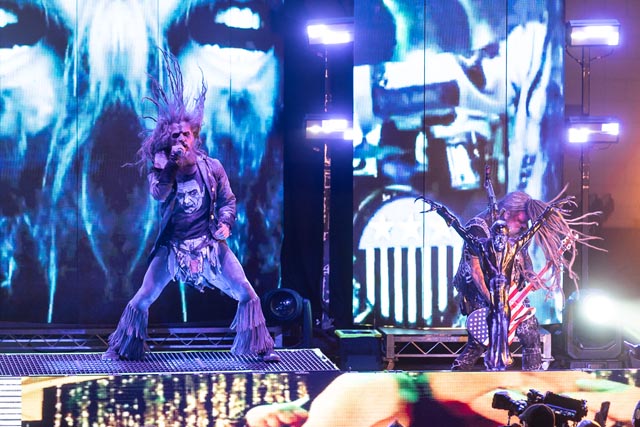
Rob Zombie has released a video for his latest single, “(I’m a) Rock ’N’ Roller.” The track is the third single taken from the shock rocker's upcoming album, The Great Satan, scheduled to arrive on February 27 via Nuclear Blast Records. The release follows the...
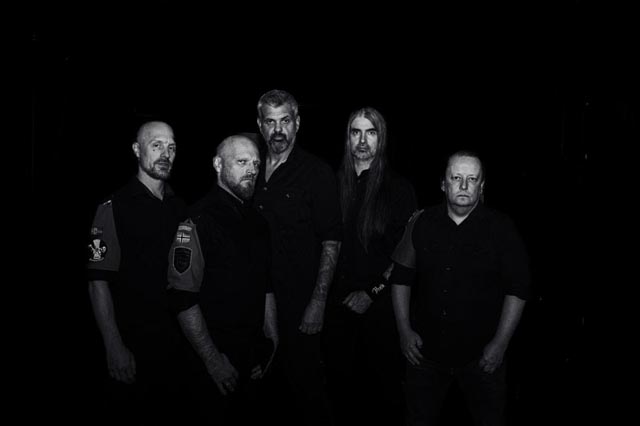
Vreid have unveiled a new instrumental single, "Kraken," written as the official soundtrack piece for the upcoming international film of the same name. The track taps into the band's blackened Sognametal roots, inspired by the mythology and landscapes of Norway's...
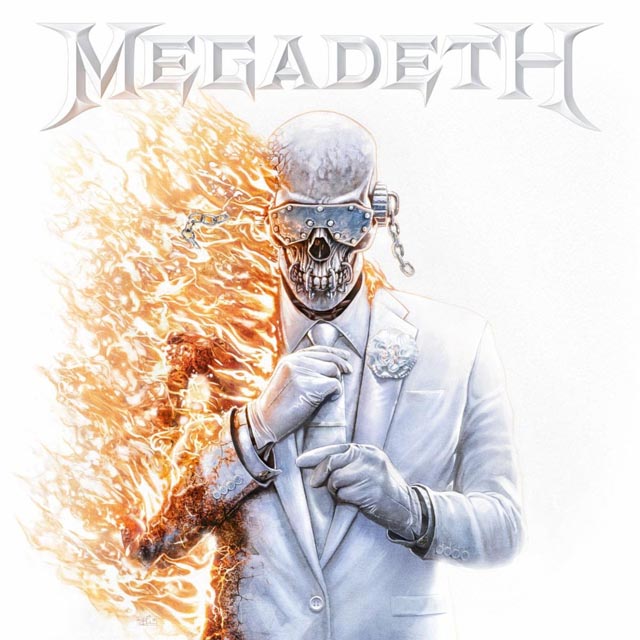
New & Noteworthy is Metal Insider’s weekly column highlighting some of the newest rock and metal releases coming out each week. This week finds albums from the likes of Megadeth, Poppy, The Format, Crystal Lake, The Damned, Goldfinger and Rotting Christ...
New & Noteworthy is Metal Insider’s weekly column highlighting some of the newest rock and metal releases coming out each week. Amongst the many outstanding works hitting shelves this week are new releases from the likes of Sleaford Mods, Greywind, Kreator, Soen...
New & Noteworthy is Metal Insider’s weekly column highlighting some of the newest rock and metal releases coming out each week. This week counts new music from the likes of Alter Bridge, The Protomen, Zu Beyond The Black and Bullet amongst the many outstanding...