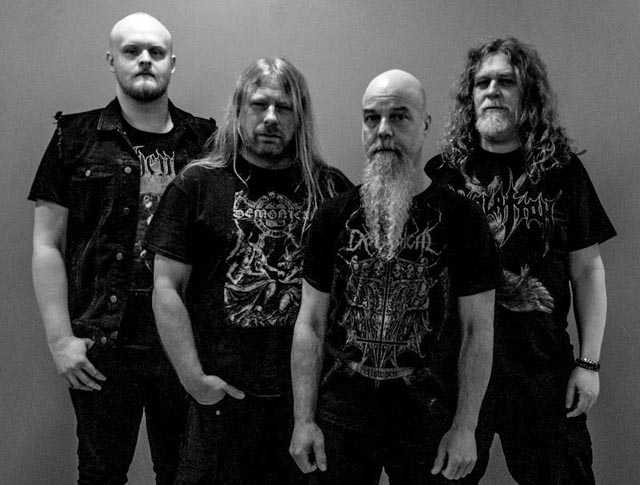
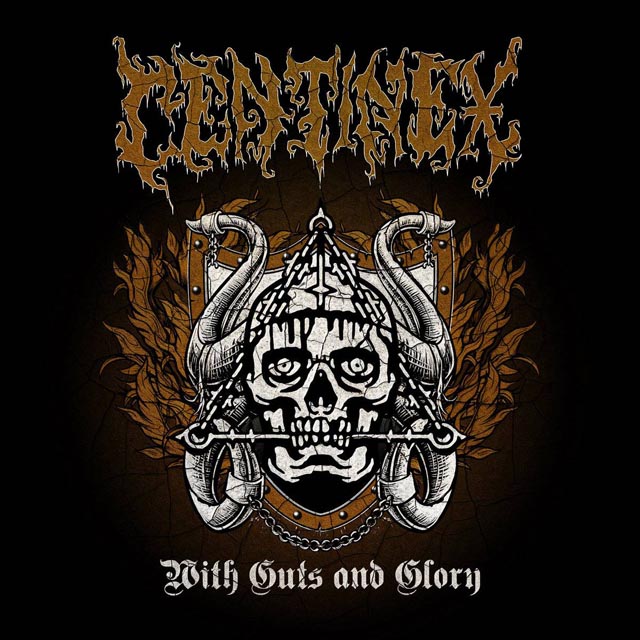
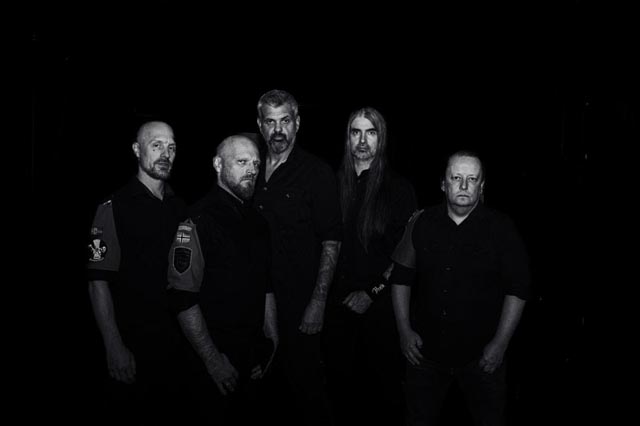
Swedish death metal veterans Centinex have stormed back with their ferocious new album, With Guts and Glory, out November 7th via Black Lion Records. Metal Insider spoke with bassist and founding member Martin Schulman to discuss the record, as he feels the new album takes him back to 1992’s Subconscious Lobotomy. Schulman also goes into detail reflecting on the band’s good and bad eras.
Transcription:
How did the writing process for the new album, With Guts and Glory, differ from 2020’s Death In Pieces?
It didn’t really differ in any special way. The thing was that I wrote, like basically all the tracks for the new album, and I had finished writing them already, like, I don’t know, like a year before we recorded the album. So the material was ready. We had plans to record it earlier than we did. Still, for different reasons, some shows and activities with our other bands, and, yeah, different kinds of things, it took a while before we were able to turn on the studio and start recording. So, that was the difference compared to the previous recordings because in the past.
We finished the material and then started recording, like, quite soon after. But now it took a while. So that’s the only difference there. Then, of course, the material is slightly different from that on the previous albums. But yeah, that’s a different story.
Can you talk about the story behind the song, “Your Religion Dies Tonight?”
Yeah. First of all, I didn’t write any lyrics for the album, so don’t ask me about the lyrics. That’s entirely up to our vocalist, who wrote all the lyrics, and I, of course, checked them before we started recording. But what the lyrics are about is something that should be answered. But musically, that track is a punk, thrashy track, which, somehow. It defines the album in quite good ways. So we decided to release that as the first single.
What song was the most challenging to finish during the recording?
None of them really. Of course, we worked with the vocal arrangements. The recording process was basically the same as in the past: we rehearsed the tracks before the recording, but we never really rehearsed them with any vocals. The lyrics are almost always ready when we enter the studio, but we do like the vocal arrangements there.
It’s really important to have. I mean, if you have a good vocal arrangement on a track, it can make the wonders for the track because, I mean, I think there are a bit too many, like, death metal bands to adjust, like they have a track and then they have some lyrics and then they throw them in there. But we really tried to make it feel like a working arrangement, and even, like, if you listen carefully, you can hear there’s almost a melody or an arrangement for the vocals. So. And that’s usually quite hard to do in, like, in a rehearsal environment in the rehearsal room where, like, everything is loud and noisy and everything.
So it’s easier to record the track first, and then you have the lyrics, and then you really try to. Yeah. Make a good arrangement and even make some changes —maybe in the lyrics, like take away a few parts and add some parts, change some words, and stuff — to get a good flow in the vocals. So that’s, yeah, that’s like one thing, but it’s really, we have done like that in the past for many albums. So that’s like really something new for us. But that’s it. That’s a good way for us to work in the studio.
Now, you have a newer lineup. How has the latest lineup shaped the creativity for this record?
Well, this lineup — we have had it since 2020, basically. The previous album was recorded with this same lineup, but back then, it was really new. I mean, the drummer —whether it was the last album, the drummer joined the band just, like, two weeks before recording, because we had a different drummer.
But then, like a couple of weeks before we started recording the album, we realized that Nicke Olsson didn’t really work out. So we had to, like, almost in Panic, check around for some other drummer. And luckily, yeah, we knew this guy (Florian Rehn), so he joined the band and blah blah, blah. But yeah. So, back then, for the previous album, the lineup was like, really new, basically.
So that was different. But then, since then — during this, yes —we have made quite a lot of shows. We got to know each other better. So, in that sense, it was easier to start recording with the standard lineup. I mean, playing in a band is so much about it; it’s not only about the musical things, it’s also about, like, personal things. Yeah. You have to click, the personalities have to click, and everything has to work out. So it’s an advantage that you can, yeah, do some tours. And you can travel and spend time together to get to know each other. Well, to get to know the good and bad sides.
That’s an advantage: having a steady lineup for when you record an album. Because when we record the album, we record them basically live. We record the bass, the guitar, and the drums, like the record that lives. Then we do some. Yeah, additional guitar. And then there’s also the vocals. So, that’s also of course good if you’re, as a band, play well together and know the good and bad sides of every person. It makes things easier.
So there’s probably better this time around than the other album. They didn’t just join a few weeks ago.
Exactly. The scenario was more… We had rehearsed and… Yeah. Between these two albums, we have toured quite a bit, played festivals, and done other stuff. So we had been spending some time together. And that’s always an advantage.
Now, this year marks twenty years since World Declension. Looking back, how do you feel about that record today?
That album is like a completely different era of the band because I don’t know. Oh, maybe you know that. I started a band in 1990, and then we kept on going up until 2006 when the World Declension album was released. And then after that, we took a break, I put the band on ice. And that break lasted from 2006 up until 2014. So then I made like, yeah. Then I started the band again with a completely new lineup, unlike the one on World Declension. And yeah, then we have had a few lineup changes since then as well.
But anyway, so in a way, World Declension was, that’s off like an end of one era of Centinex, and then, what was it like seven, eight years later? The second era started, and World Declension — listen to that one —and then compare it to this new album, and you can hear that there’s quite a lot. It’s a musical, change. So it’s a bit different. So that’s of course… I mean, but times change and people change and, so, for me, I haven’t been listening to ‘World Declension’ for many, many years. And actually, when we play live, we don’t do any tracks from. World Declension., I mean, for what I remember, World Declension turned out pretty good, but there were quite a lot of, like, internal problems within the band around that time—and also issues with the record label and blah blah—long story. So, even if I remember the album turning out pretty good in my opinion, I still only remember all the problems and issues from that era.
So, it really belongs to the past. And that was something like, as I said, that was like Centinex mark one. Now it’s Centinex mark two or something. So it just marks the band’s trial era. And, when you guys did break up or take a pause in 2006, was there a time when you thought that the band wouldn’t return?
If I remember correctly, I didn’t plan to return with the band. I didn’t plan anything back then —like putting this on ice for a few years and then starting again. It just happened. And one of the reasons was that, Well, when we put the band on pause in 2006, that was the last time we played, and it was outdated, but it wasn’t really popular. This style, I mean, this whole old-school death metal revival, it wasn’t popular with, like, old-school death metal back in 2006.
During those years, when the band was on pause, there was still constant interest from various record labels, which released reissues of the old material. And around, around 2010, 2012, there. Then there was more of this old-school style coming back, and the band got, like, requests to play live again and do some special shows. So there was growing interest in the band. And yeah, just growing slowly, but at least it was growing. I was in a different place, my personal life had changed, and I had more time than for the band and everything. So then, basically, at the end of 2013 and early 2014.
Then I decided that, yeah, it’s time to start the band again and put it back together. A couple of years earlier, I didn’t have those plans. So it came naturally, or like it wasn’t any, like, a tactical move to put the band on ice and then make a comeback a few years later. It just happened.
Musically, between the two errors of Centinex, how do you feel about the earlier albums in relation to where the band is today?
I think, like really early on, like our debut album, from ’92, and, yeah. Then we made some demos and promos around that time. Musically, Centinex from the early 90s is closer to what Centinex is today than, for example, those albums from 2000, 2004, and 2006. So, it feels like Centinex is more back to its roots today than it was twenty years ago.
Musicality: Of course, there’s a difference between the new album and our debut album, but one similar thing is the band’s atmosphere or feeling. It is more. We’re used to what we do and everything, but still like a grounded, relaxed feeling in the band. Now. Yeah. We started the band in the early ’90s. That’s strange, because we are all now at least 30 years older than we were back then, and everything. The feeling in the band is good, and that’s something that also reflects in the music and everything.
And for the new album, which song are you most excited about performing live?
All of them. I think because, yeah. It’s been a while since we released the previous album, and as I said, we’ve had quite a lot of shows. So we have been. Yeah, you get a bit tired of playing that. Those old songs, or older songs, over and over again. So, yeah, really looking forward to it. We plan to do the whole new album, basically, or at least have all the tracks rehearsed so we can do that live, because it’s always nice to. Yeah, to do some new, new, fresh material live. And also, yeah, of course, we are very satisfied with the album. So we want to present them in a live environment.
Is there anything else that you want to say or add about the new album?
Everyone should check it out. Of course. But it sounds like a cliche. And I know that every band, basically every band, says it. We do music for ourselves, and we, for most, want to satisfy ourselves with the music. And of course, it’s a bonus if someone else also takes our music or the album is good. So. Yeah. I hope that people will enjoy the album. And, yeah. And then, basically, those who have been following Centinex from the beginning —it’s nice that they can enjoy it, because, as I said, I see similarities between this new album and our old stuff. So, but yeah, let’s see what happens with the album. So far, people who have heard it have enjoyed it. It’s different from what they thought, but still, they really like it. So that’s good.
New music continues to pile its way through. Since our chunk last at the end of 2025, January has brought an extensive batch of fifty-three new tracks as well as fresh videos from already-existing albums or live performances. Metal Insider has collected songs from...
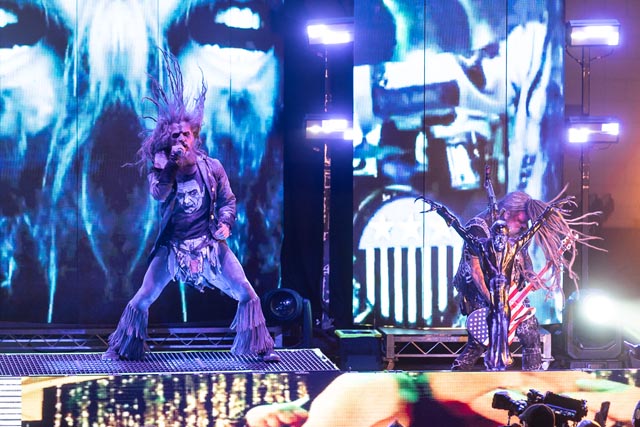
Rob Zombie has released a video for his latest single, “(I’m a) Rock ’N’ Roller.” The track is the third single taken from the shock rocker's upcoming album, The Great Satan, scheduled to arrive on February 27 via Nuclear Blast Records. The release follows the...
Vreid have unveiled a new instrumental single, "Kraken," written as the official soundtrack piece for the upcoming international film of the same name. The track taps into the band's blackened Sognametal roots, inspired by the mythology and landscapes of Norway's...
New & Noteworthy is Metal Insider’s weekly column highlighting some of the newest rock and metal releases coming out each week. This week finds albums from the likes of Megadeth, Poppy, The Format, Crystal Lake, The Damned, Goldfinger and Rotting Christ...
New & Noteworthy is Metal Insider’s weekly column highlighting some of the newest rock and metal releases coming out each week. Amongst the many outstanding works hitting shelves this week are new releases from the likes of Sleaford Mods, Greywind, Kreator, Soen...
New & Noteworthy is Metal Insider’s weekly column highlighting some of the newest rock and metal releases coming out each week. This week counts new music from the likes of Alter Bridge, The Protomen, Zu Beyond The Black and Bullet amongst the many outstanding...