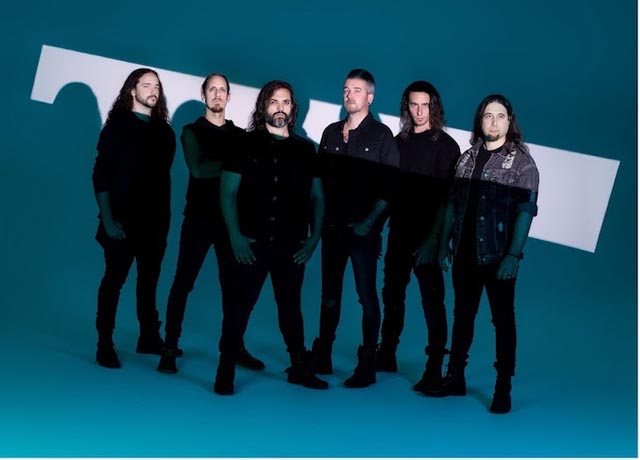

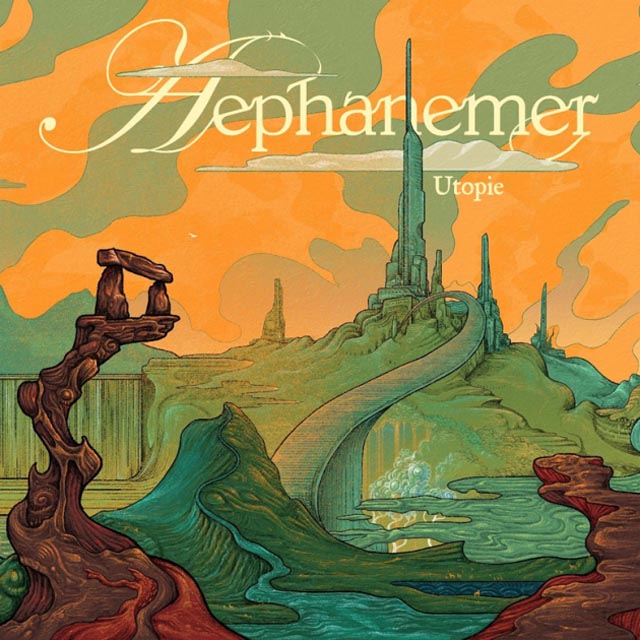
French melodic death metal outfit Aephanemer are celebrating the release of their fourth studio album, Utopie, out today, October 31, 2025, via Napalm Records. To continue with the celebration, the group has teamed up with Metal Insider for a track-by-track guide.
Échos d’un monde perdu
Échos d’un monde perdu is an orchestral intro that sets the tone for the entire album. We love creating these short pieces because they allow us to convey the atmosphere of the record in just one minute. The first part of the track evokes a sense of despair, gradually building in intensity, while the second half introduces what we call the Utopie theme, a hopeful motif that returns at the end of the album. Composing this kind of track is particularly challenging for us, as there are no guitars, bass, or drums to mask any awkward moments in the orchestrations. In many ways, this track is a microcosm of the album’s emotional journey, capturing the tension between darkness and the possibility of a brighter future.
Le Cimetière Marin
Le Cimetière Marin takes its title and a line from Paul Valéry’s poem, which reflects on the fragility of life and the passage of time. Musically, we wanted the track to feel heroic in a classical sense, not in a modern, cinematic way. It is meant to give the impression of the beginning of an adventure. The opening theme and the reinforced use of woodwinds are meant to evoke the marine atmosphere. We layered several melodies at the same time in the Chorus, which is something we really enjoyed doing throughout this album. Overall, it sets the mood for the album and introduces some of the ideas and emotions that will return later.
La Règle du Jeu
La Règle du Jeu is one of the more energetic tracks on the album, which is why we chose it as a single. It mixes classical touches, from Vivaldi-inspired lines in the solo to some more dissonant moments inspired by composers like Dvořák and Tchaikovsky. The title comes from Jean Renoir’s 1939 film, which explores the hypocrisy and moral confusion of French society before World War II. Musically, we also drew on melodic death metal influences, particularly bands like In Flames. We tried to balance energy, melody, and layered orchestration without overdoing anything. For us, it’s a track that feels lively and expressive, and we hope listeners can feel both the intensity and the nuances.
Par-delà le Mur des Siècles
Par-delà le Mur des Siècles is probably both the catchiest track on the album and also the one with the most unusual structure. Writing it was very enjoyable because it let us mix many of our musical influences: metal riffs, classical-style leads reminiscent of Chopin, a short folk-inspired interlude with flutes, clarinets, and bassoons, and a small religious choir section before the chorus. We are not sure that all of these influences will be obvious to listeners, but we hope people can feel the richness and variety of the music. For us, it’s also a song that will be very enjoyable to play live.
Chimère
Chimère has a slightly darker tone than the earlier tracks, reflecting the album’s gradual shift from bright to more somber moods. The influence of Russian composers like Tchaikovsky and Rachmaninov comes through, but subtly, without being overwhelming. The chorus takes inspiration from Handel’s Sarabande, itself rooted in the Spanish Follia, adding a classical elegance. We blended these elements with our metal influences to create a track that is both energetic and layered. It was a challenge to balance everything, but it feels like a natural part of the album’s journey.
Contrepoint
Contrepoint is one of the fastest and most intricate tracks on the album. The title itself, which means “counterpoint” in French, reflects the layers of melodies and polyphony woven throughout the song. We tried to merge our love for baroque music with melodic black metal influences, creating a track full of energy, harmonies, and intertwining lines. As always, it wasn’t planned in detail from the start: the structure emerged naturally while composing. The result is a piece that challenges us musically but also gives a lot of joy to play.
La Rivière Souterraine
La Rivière Souterraine is a long instrumental track, continuing a tradition we’ve kept since our first instrumental EP “Know Thyself” in 2014. It opens with a guitar solo that was originally composed for piano and later adapted. The rest of the piece is a kind of emotional journey, aimed to reflect the struggle to hold on to hope in the face of immense challenges. The mood is deliberately ambiguous, meant to evoke the flickering flame of perseverance. It’s a track where the music alone carries the emotions, without lyrics, which makes it both challenging and rewarding to compose and perform.
Utopie (Partie I)
Utopie (Partie I) is the first part of the title track and represents despair, the feeling of losing hope in the possibility of a utopia. It begins with a long orchestral section, deliberately slow and immersive, meant to make the listener pause and truly feel the weight of the emotions. Then the metal instruments enter, reinforcing and developing this theme of despair while adding intensity and depth. The track is designed to guide the listener through a journey of tension and reflection, capturing the struggle before any sense of hope appears, which it does in the next track.
Utopie (Partie II)
Utopie (Partie II) opens with the hopeful Utopia theme that first appeared at the very beginning of the album, signaling the possibility of renewal. This track represents the act of trying again despite despair and setbacks, embodying the effort to rediscover
hope for a better future. It is a complex piece, with many different sections and moods, reflecting the emotional ups and downs we believe are part of any realistic journey toward optimism. In a way, it is a meta-track, encompassing the emotional arc of the entire album within itself, like a small circle within a larger one. Ending on a positive and hopeful note was very important to us, as it gives the listener a sense of resolution and the feeling that even in darkness, the spark of hope can endure.
Feature Image Photo Credit Melody Morana