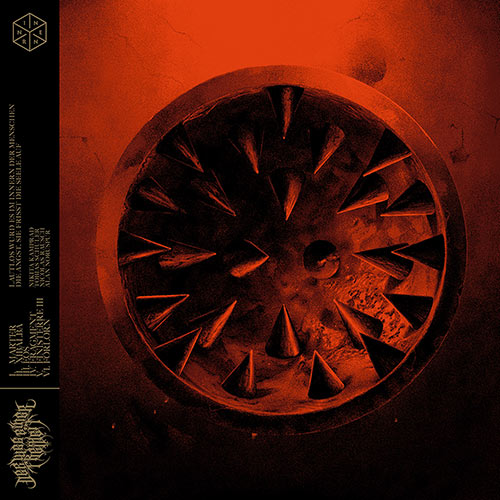
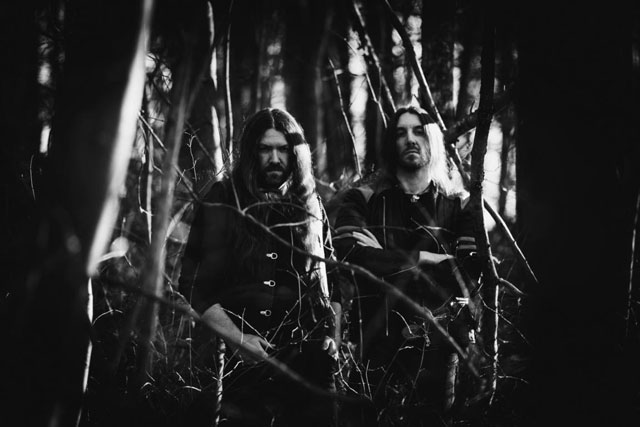
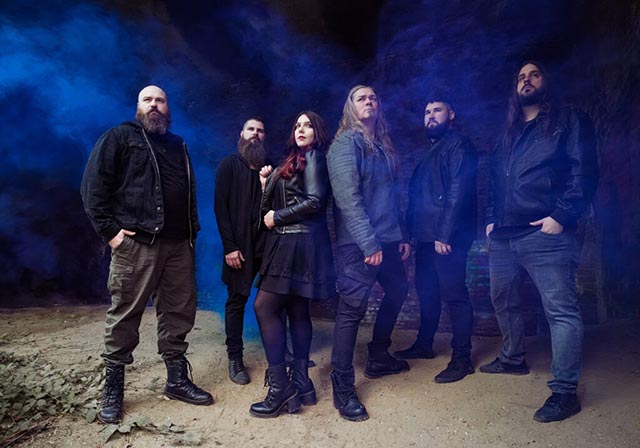
Germany’s Der Weg einer Freiheit, founded in 2009, has caused quite a storm over the years, earning much acclaim from various types of respected outlets across the world. Now, these veterans present us with the six-song Innern with the support of the celebrated Season of Mist — the best and most fearless label specializing in metal around, in addition to the much different and extremely curmudgeonly Trondheim-based entity known as Terratur Possessions.
Der Weg einer Freiheit may be a black metal band, but, on Innern, they made use of their artistic freedom in order to craft a product that transcends genres. We have already heard Der Weg einer Freiheit draw from classical, post-rock, progressive, and other influences. Innern demonstrates Der Weg einer Freiheit’s continued will to experiment, as they take us into the realm of introspection. Thematically, the meditative Innern steers clear of Satanism, a topic typically associated with black metal but that can expose bands that aren’t truly immersed in it as posers.
All lyrics are in German, except on the final song, “Forlorn.” Guitarist, vocalist, and co-founder Nikita Kamprad’s enunciation is, for the most part, quite clear, even while performing harsh vocals.
By extreme metal standards, Innern amounts to a highly accessible offering. The first song, the almost 9-and-a-half-minute “Marter,” is the perfect introduction into the current world of Der Weg einer Freiheit. This tormented number combines brutality and pomp in a manner that keeps us constantly engaged. Whereas a certain cosplaying band from the Adirondacks, for example, just might have bored discerning listeners to death with their unnecessarily long songs earlier this year, the sprawling compositions of Der Weg einer Freiheit allow for beautiful development and complexities. Der Weg einer Freiheit proves that if a group has the talent and originality to pull off long numbers, they shouldn’t be discouraged from doing so.
Throughout the album, Der Weg einer Freiheit nails atmospheric touches, creating a sense of vastness. Synths contribute a soft, glowing warmth that interacts nicely with Tobias Schuler’s nuanced and enjoyable performances on drums. Der Weg einer Freiheit doesn’t only pummel us with their onslaughts but make room for negative space and relative gentleness. Unexpectedly, Innern even hits us with relatively dance-friendly moments, the most notable of which commences before the mid-point of the epic “Xibalba.”
The infusion of ear candy adds welcome contrast to the more aggressive aspects of this composition and helps the music burrow its way into listeners’ bodies. Ultimately, the vocal fire of “Xibalba” gives way to a very long, majestic instrumental ending that lasts for about four minutes yet seems to fly by. Clearly, Der Weg einer Freiheit understands the importance of the Heideggerian art of reticence.
“Eos,” Innern’s premier single and third track, definitely serves as a highlight. This unique and captivating, exotic black hole of a song is followed by “Fragment.” The pleasant intro of the latter gives way to clean vocals of a chanted, spectral nature. “Fragment” eventually takes a frenetic turn, as harshes and cleans are blended. Der Weg einer Freiheit then delivers the piano piece “Finisterre III.” Next, “Forlorn,” the aforementioned finale, exudes indie vibes during Kamprad’s first spoken verse, though Der Weg einer Freiheit balances this with rawness.
Kamprad handled the production, minus the recording of the drums. When a musician has the skill to produce his own work, a good portion of the time, he is in the best position to make sure his vision is fulfilled properly. That certainly seems to have been the case here. In conclusion, Der Weg einer Freiheit’s Innern is a thoroughly professional effort that will surely resonate with a broad pool of modern music enthusiasts.
(Purchase Der Weg einer Freiheit’s Innernhere or here, and also keep following Season of Mist on social media platforms.)
New music continues to pile its way through. Since our chunk last at the end of 2025, January has brought an extensive batch of fifty-three new tracks as well as fresh videos from already-existing albums or live performances. Metal Insider has collected songs from...
Rob Zombie has released a video for his latest single, “(I’m a) Rock ’N’ Roller.” The track is the third single taken from the shock rocker's upcoming album, The Great Satan, scheduled to arrive on February 27 via Nuclear Blast Records. The release follows the...
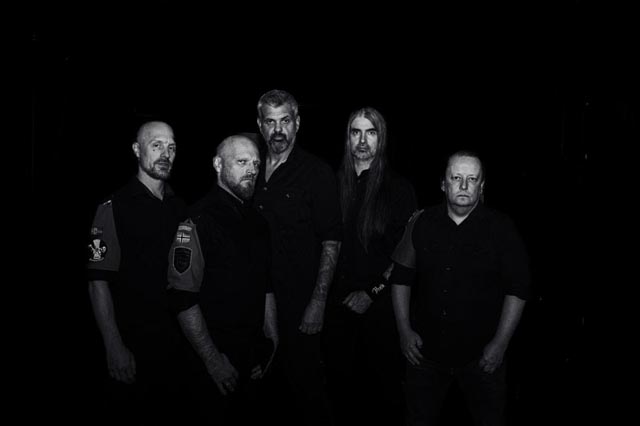
Vreid have unveiled a new instrumental single, "Kraken," written as the official soundtrack piece for the upcoming international film of the same name. The track taps into the band's blackened Sognametal roots, inspired by the mythology and landscapes of Norway's...
New & Noteworthy is Metal Insider’s weekly column highlighting some of the newest rock and metal releases coming out each week. This week finds albums from the likes of Megadeth, Poppy, The Format, Crystal Lake, The Damned, Goldfinger and Rotting Christ...
New & Noteworthy is Metal Insider’s weekly column highlighting some of the newest rock and metal releases coming out each week. Amongst the many outstanding works hitting shelves this week are new releases from the likes of Sleaford Mods, Greywind, Kreator, Soen...
New & Noteworthy is Metal Insider’s weekly column highlighting some of the newest rock and metal releases coming out each week. This week counts new music from the likes of Alter Bridge, The Protomen, Zu Beyond The Black and Bullet amongst the many outstanding...