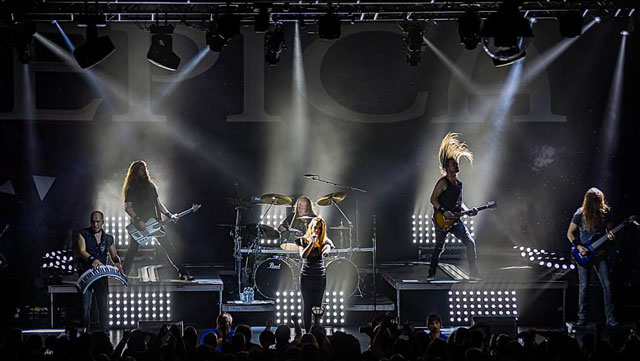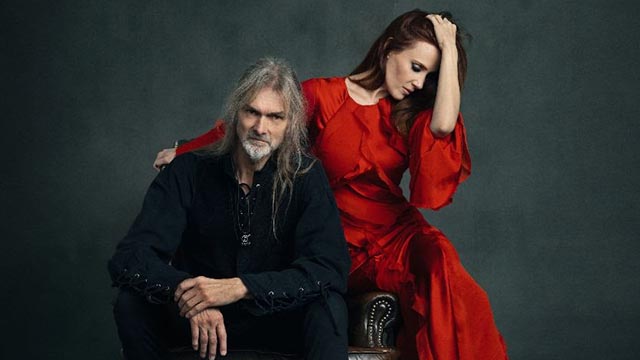
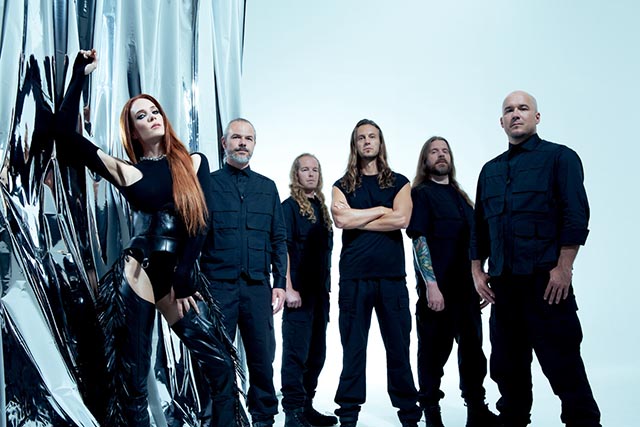
Dutch Symphonic metal giants Epica released their ninth studio album, Aspiral, on April 11th via Nuclear Blast, and it has quickly gained momentum as one of 2025’s standout records in the genre. With its intricate arrangements and themes of renewal and reflection, the album continues the band’s exploration of deep lyrical concepts and cinematic overtures. As the album continues to draw traction, Metal Insider recently spoke with vocalist Simone Simons about the creative process behind Aspiral and how the band has evolved over the past two decades.
How would you compare the writing process for the new album, Aspiral, to 2021’s Omega?
It was kind of similar because for Omega, we started with writing camps where we’d rent a small house somewhere, and all the band members would be in the same place for a couple of days. That’s something we began doing because we’d previously written albums while being on tour or from our home studios in four different countries, just sending files back and forth. We wanted to go back to doing it the old-school way.
In order to do that, we had to clear our schedules from touring so we could plan these writing camps. We loved it so much with Omega that we tripled the amount of time for Aspiral because we really wanted to dedicate our time and creative energy to the ninth album.
It was very lovely, we had a different location this time, in the middle of nowhere. We’d start the day with breakfast together; then everyone would begin working on the songs. Our producer Joost [van den Broek] was there too; in the evening, we’d all have dinner together. So, it was really lovely.

Now, Epica’s music often features a multi-layered storytelling structure, almost like a science fiction film or novel. The narration in the title track seems to reveal the album’s hidden meaning. Can you elaborate on the narration embedded in “Aspiral?”
Yeah, the narration is done by the artist Stanisław Szukalski, and it’s actually an excerpt from the documentary, but this passage hasn’t been used before. So, it’s kind of like a premiere, that we got to use it in our music. I think he just tries to motivate us, that if you want to do something, you just need to get up and start doing it. Don’t expect miracles from the beginning, but invest your time and energy into something to make it bloom.
And that’s also the message I try to say in the lyrics, that if you want something to grow, you really need to nurture it. You need to take care of it and pour in a lot of love, time, and dedication for something to work. And you need to invest in it and be committed.
It’s kind of like manifesting.
Yes.
…putting on your focus. So musically, I noticed “Darkness Dies in Light — A New Age Dawns Part VII” contains a lot of signature Epica elements, yet the album as a whole shows a new direction, especially with the song structures. I immediately noticed that shift from the beginning with “Cross the Divide.” Were these different directions intentional in shaping the album’s flow? And how do you all continue pushing those creative boundaries?
We like to push ourselves. The starting point for that was after Omega, when the pandemic struck. We had our “pandemic project,” which we named The Alchemy Project, where we worked with other artists in the metal scene. We experimented a lot and found ourselves feeling inspired. It was a bit of a safe space for us to explore and see how our Epica fans would react, and we got a really positive response to those songs.
That gave us the motivation and a starting point to explore different sides of Epica, and realize that there’s still a lot of leeway to try new things. Even though this album, and some of the singles, are a little easier on the ears, there are still quite a few songs that, like you said, have the classic Epica elements. I think we found a really good balance between incorporating something new and staying true to the sound people know us for.
Yeah, I’ve definitely noticed that about you; you’re always very ambitious and hardworking, always trying to push things to the next level. Going back a bit, though, the new album has those signature Epica elements, but it also follows the direction you’ve taken since The Quantum Enigma. I was curious, are there any songs from earlier in your career, maybe as far back as The Phantom Agony or shortly after, that you personally wish you could revisit, whether by performing them live again or even through a re-recording?
Oh yeah, I would love to re-record The Phantom Agony because my vocal performance has definitely improved since then. I can still hear the younger, kind of inexperienced Simone on that first album. We’ve played those songs, like “Sensorium” and “Cry for the Moon,” a lot live over the years. And yeah, I’d definitely sing them a little differently now because they’ve evolved with time.
It’s always a bit of a challenge for me to listen to the really old recordings. If I have to revisit them, I usually listen to the live versions, which are a little more recent, and a little more experienced. Recently, I actually went back through some of the Epica discography and listened to Requiem for the Indifferent. I remember that during the writing process for that album, we didn’t have those writing camps yet. We were all working digitally, and I think it would be nice to re-record or rework some of those songs now with the same level of intensity we brought to Aspiral, just to polish them up a bit more.
But that’s the tricky thing with songs, you have to finish them at some point, even though they might continue to evolve in your head. You’ll listen later and think, “Oh, I could have done this,” or “I should have tried that.” But eventually, you have to let them go. The great thing about playing songs live, at least for me, is that I can make small changes in the vocals to suit my voice better or just add a little improvisation here and there.
But yeah, in the end, you have to finalize a song. And with six people, all with different opinions, it can be hard to reach that consensus. Plus, there are deadlines; the label wants the album finished, so when that time comes, it has to be done. So yes, there are definitely a couple of songs I’d revisit, but at the same time, they have their own charm. They’re like little time capsules from that point in our career.
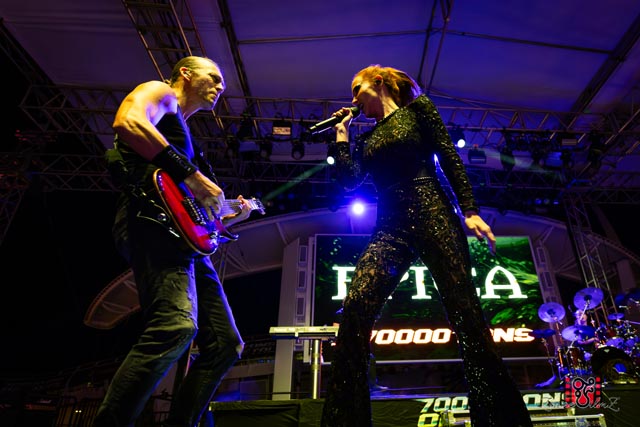
Yes, I’ve really noticed how much you’ve evolved over the years, it’s incredible. It feels like you’ve truly mastered your talents and skill sets, but you’re still so open to learning and trying new things. I think that spirit really came through in 2024 with The Symphonic Synergy, and of course, the surprise of you opening for Metallica last year. How have these experiences been like for you?
Well, the Metallica shows came like falling out of the blue sky, out of nowhere. It was a huge surprise and a true gift for us to be given this opportunity. And to also meet the band—the pioneers. It was a dream come true, a lovely experience that I will treasure forever. The Symphonic Synergy itself was also magical.
I mean, we are a symphonic metal band, and for the album, we work with the orchestra. We record real instruments, but to be able to do it live is just very difficult, logistically and financially. Organizing all of that really took over 150 people to create that show, and everybody worked their asses off.
In a way, it’s kind of a shame we only did four shows, but the silver lining is that we recorded one of them in Amsterdam, and that’s going to be available as a Blu-ray in one of the special editions of Aspiral. So we can still relive that moment, and the fans can still catch a little bit of that magic that I think we managed to create.
I’m really glad that’s actually going to be available. Now, your return to the U.S. this year is a bit brief compared to your previous tours. Is there a specific reason for limiting it to just three shows? Do you have more planned, or are there certain constraints you can share with us?
Yeah, we did try to set up a U.S. tour, but it was just an organizational hassle to pull it together on such short notice. Since we were already doing the Mexican tour, we thought, “Maybe we can at least do a couple of shows in the U.S. while we’re nearby.” But the plan is to do an extensive North American tour later this year or next year. So this is like a little bit warming up to what’s to come.
Okay, I was like, “There’s more coming. I know it’s going to happen.” In 2024, you surprised everyone with your solo record, Vermillion, which, honestly, was my personal favorite album of the year. How did that experience challenge you as a vocalist and how has it influenced the new Epica record in any way?
It challenged me, I challenged myself, and Arjen [Lucassen] challenged me with writing beautiful songs and pushing me to the next level. It was great not to have any limitations and just explore what my voice could do. I really searched for all the extremities within my voice. I didn’t feel any pressure, and it all felt very natural. I was positively surprised with the outcome and how my vocal performance turned out.
It was very empowering, and I carried that feeling and knowledge into Aspiral because I literally went from recording with Arjen straight into the Epica writing camp. Everything was tightly scheduled, but I was in that creative flow and felt good. It definitely benefited Epica.
After releasing your solo record and now with Epica’s new album out, are there any other projects you’d like to pursue or any artists you’re interested in collaborating with?
Well, I would love to, at some point, do a second Alchemy Project and reach out to other artists to collaborate with. There are so many talented musicians out there, and maybe even a crossover into different genres. Who knows? I still love classical music, and I’ve even been thinking about taking more classical singing lessons to continue evolving as a singer and explore more of that side of my voice.
I’m open to anything, really, and I think the rest of the band is too, since we all enjoyed the Alchemy Project so much. But right now, we’re very focused on Aspiral. In 2027, we’ll celebrate our 25-year anniversary, so we’re already brainstorming for that. And yeah, whatever comes our way, we’re keeping our hearts and minds open. The Metallica shows were a total surprise, so you never know what could happen next.
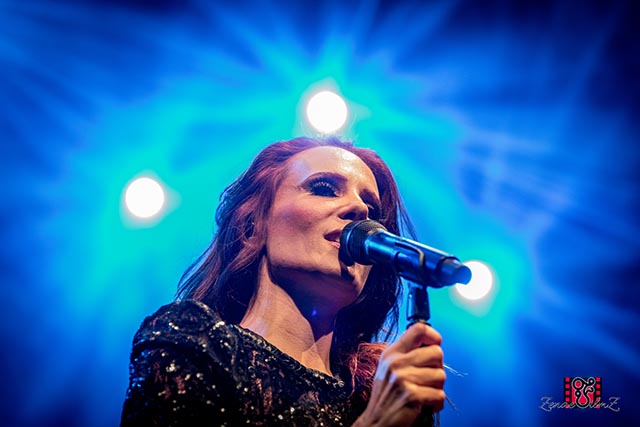
That really is the beauty of Epica. You all work so well together, or at least it certainly seems that way to us over here. You’re such a strong ensemble live, and each member plays such an essential role in making Epica what it is. Watching the band grow over the years has been incredible, and Aspiral, the new album, is just another milestone that shows how much you’ve evolved. With that said, is there anything else you’d like to share about the new album?
Yeah, I think we really managed to explore the world of Epica even further and grow, not just as individuals, but also as a band. We’re very proud of what we’ve achieved so far in our career and really excited to see what the future holds. I’m also looking forward to how the new songs will sound live. We’ve already performed “Arcana” and “Aspiral,” but of course, the new setlist will be infused with many more new Epica songs.
I can’t wait for April 11th, when everyone can finally hear the full album from start to finish. I’m really excited to hear what people think of it.
I think, as you said, the album will offer something great for longtime Epica fans and will likely welcome some new listeners as well.
Yeah, that will be great.
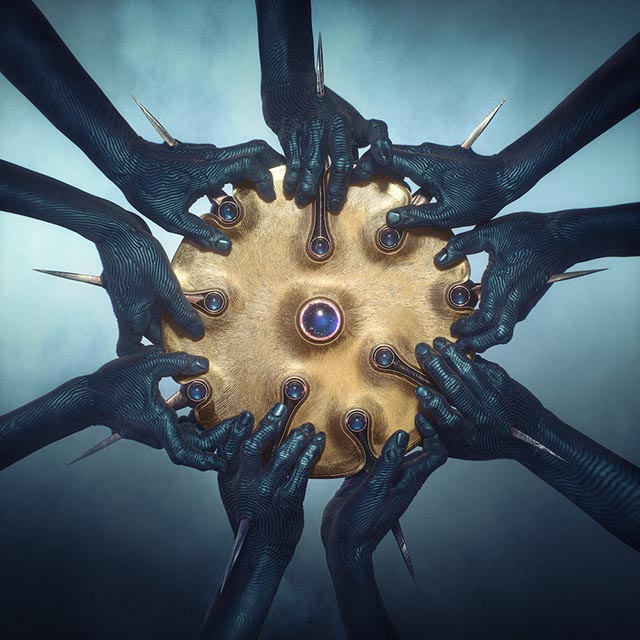
Feature Image Photo Credit: Tim Tronckoe