I don’t think I could possibly love a band more than when I’m watching them actively refuse to become a fixed idea. The Hirsch Effekt take up shop in the lab where music feels less like a product and more like a mid-thought transcription from a parallel universe. Every time you think you’ve figured out what they are, they move, not out of restlessness, but out of principle.
Calling The Hirsch Effekt “progressive,” “experimental,“ or even “metal“ feels like filing paperwork for something that’s still alive. Their music operates with intention disguised as disorder. It’s never confusing, but it is disorienting. Where most bands chase impact, The Hirsch Effekt seem far more interested in destabilization. That’s a compelling proposition when reality itself already feels unreliable.
The early releases: Holon: Hiberno, Holon: Anamnesis, Holon: Agnosie (and also, that semi-mythical Zinnschauer split that functions like a secret handshake for the obsessed)—feel like a prolonged stress test of everyone’s assumptions about early ’90s industrial music. Prog, post-hardcore, and art-rock aren’t blended on these albums so much as forced into close quarters, stacked side by side like exhibits in a catalog that refuses to tell you where to start. Songs fracture. Rhythms fold inward. Vocals swing between restraint and rupture. The technical passages stretch out like endless dreamscapes—less comforting reverie, more Salvador Dalí clock-melting logic.
By the time Eskapist and Kollaps arrive, the chaos begins to organize itself. Not softened, but sharpened. These records mark the shift from experimentation to declaration. This is where The Hirsch Effekt stop sounding like a band testing ideas and starts sounding like a band committing to what needs to be said—urgently, definitively. Kollaps in particular reads like an accidental historical document: collapse as process. Systems failing in sequence. Stability unraveling on schedule. The vulnerability here isn’t tender—it’s vacant. An absence where safety used to be. Like standing somewhere familiar and realizing it no longer welcomes you.
Urian follows with no interest in continuity or commercial logic. Instead of reacting to the world, the band starts interrogating it. The music feels less like expression and more like inquiry—asking why the ground is shaking, whether emotion equals meaning, or if meaning is just vibration we’ve collectively agreed to take seriously. It’s overwhelming, but meticulously composed, the sound of a band pulling questions apart at the molecular level.
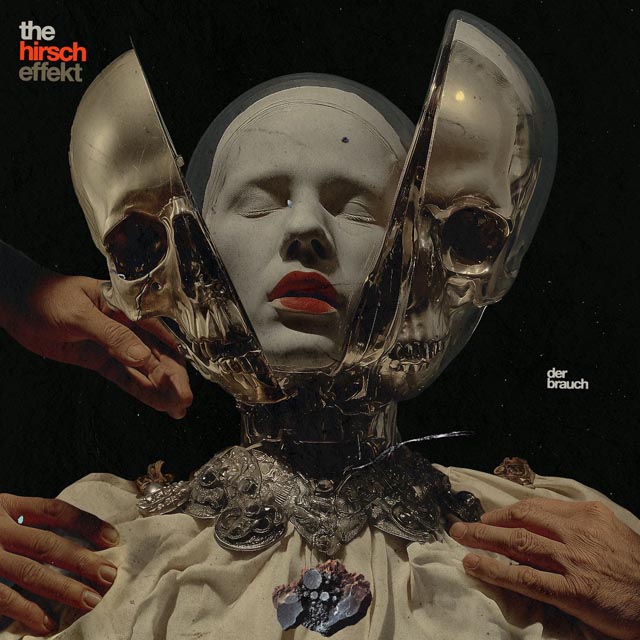
With Der Brauch, released January 30, the pandemic weight is unmistakable, but the narrative shifts. This isn’t another album about collapse. It’s about endurance. The Hirsch Effekt return to historical and folkloric roots, not to romanticize the past, but to stabilize themselves within it. The elemental permanence of folklore doesn’t soften the music; it grounds it. What emerges isn’t recovery or healing—it’s persistence. Standing upright. Holding and continuing without illusion.
If you need proof that Der Brauch demands to be experienced on vinyl, start here:
Track 3: “Das Seil“ — Like observing chaos from a watchtower and screaming your findings into the void, regardless of whether anyone’s listening.
Track 5: “Der Doppelgänger“ — A rare example of altruism in heavy music. Not motivational, not self-congratulatory. The song absorbs its own ego and redistributes the energy outward. You don’t feel inspired; you feel accompanied.
Track 9: “Die Heimkehr“ — An album closer that permanently earns its place on the eternal October playlist. Spiritual without being sentimental, final without being conclusive.
Order The Hirsch Effekt’s latest album, Der Brauch, at this location.