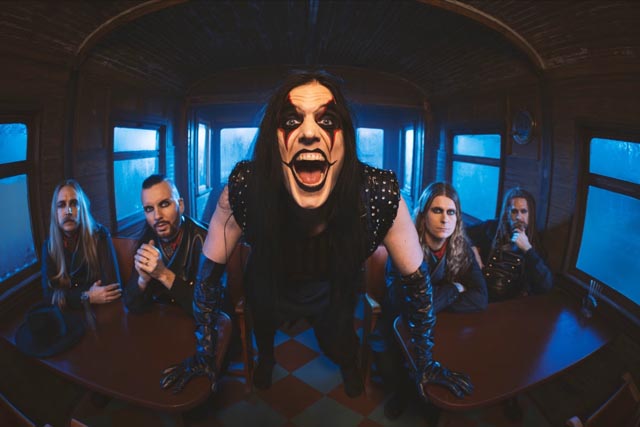
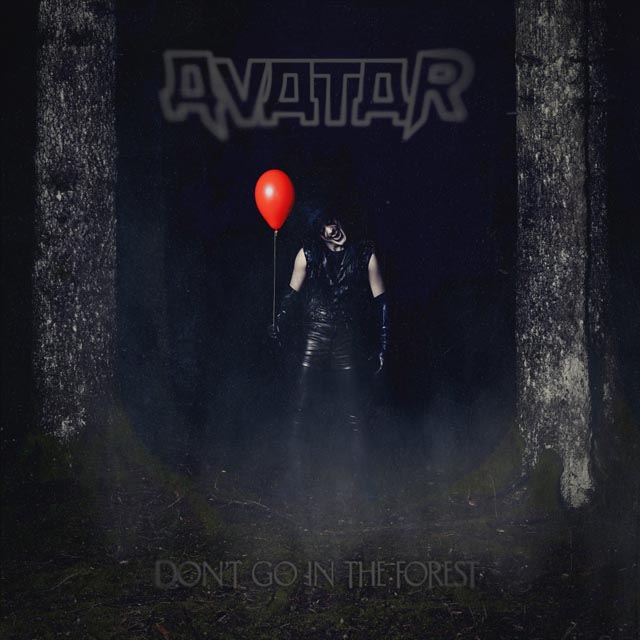
Swedish metal giants Avatar have unleashed their new album,Don’t Go in the Forest, on Friday (31st). Known for their elaborate theatrics and always-evolving creativity, the band pushed their craft to the next level with this latest release. The record gets a bit darker, diving into dark psychological themes. Metal Insider caught up with frontman Johannes Eckerström to discuss the creation ofDon’t Go in the Forest, today’s fascination with true crime, touring alongside Metallica in 2026, and more.
Transcription:
What was the biggest creative risk you took on the new album?
It would be the vocals that I found new, big challenges for myself, which has always been the case. That is always pushing that because it’s so important to me. And, for us as a band, to find ways to feel like beginners. So, in something to be excited about and reasons to make the music, aside from just that, we need to print new t-shirts.
And in this case, I created way more room for more involved melodic singing and using more of my range, downwards. And trusting that I can, instead of always being a part of the screaming of guitars and the screaming of the drums, be carried by them, so that I can be more dynamic. So, yeah. Definitely more involved, melodic way of singing, even though the melodic singing has been there. You know, longer than it has been in our case now, but it’s way more of that and really focus on, you know, bringing the lyrics forward that’s going deeper inside. That’s what I sing, what words are being sung as, at least as important as, what notes you sing.
You guys have a lot of experimental elements throughout this record. So it’s very different from some of your previous work. It feels like an experimental horror film. Is it inspired by dreams or real experiences?
Well, it’s a bit of both. But certainly a good half of the songs really were, I relied way more on my subconscious this time, because I think just by growing up hearing and reading interviews with other artists where they would sit and be asked, What is this song about? And they would have such thought-out answers that, when I was really young, I started writing songs. Okay, you really had to decide what a song is about before you start writing it.
And over the years, I have distanced myself from that more and more and more, to come to understand the explorative part, because all ideas that you have start in an abstract place. Whatever you do artistically, it’s like you jump down into a dark lake, swim to the bottom, look in the mud, and you find a little treasure. And that could be the two lines, first lines of lyrics, or just the riff you, you know, noodling on. And I’ve been a bit in a hurry to like. Oh, what’s this? What does this mean? What could this become? What’s the point? And try to set the end goal with it. And now I’ve been, I put way more trust in, some sense of beauty.
Like, oh, I like where this is going. Let’s see where it goes. And trusting that I feel, you know, a surface level. This is good. Trusting that means something subconsciously: that when the song is finished, I take a step back and realize it’s all there anyway. And that certainly gave more access to stuff from dreams and stuff, more deep-seated and removing yet another filter of bullshit from myself, which is also kind of, kind of the idea. Anyway, with every album, it’s an opportunity just to peel off another layer of ego and self-delusion and, you know, crap.
In the press release, you said how the album could only be made now. What made this the moment in your career for this to be the right time for this record?
Well, part of it is that intuitive thing — meaning less and less filtering. That takes some, some balls, that takes some, balls to do that. You have to grow over the years, you know, and vulnerability being a big part of it, you know, maturing that over time, I get better at being comfortable sitting in, in a more.
Yeah, vulnerable states, with what, what we’re seeing and what we do and and then also that it just also reflects where we are at right now, which is true for any of our albums that, and I think all my favorite bands, and, or many of my favorite bands, especially bands that keep being favorites from album to album where it’s like, oh, what they are going to do next? It’s like that with Gojira’s current output; they couldn’t have pulled it off in their early days. So they evolve. With Devin Townsend, there always seems to be a sincere reflection of where he’s at at any given time. So just because we are the people who we are right now in the band, in itself, that we simply weren’t those people earlier, you know?
You guys have definitely expanded within the last ten years alone. You’re about to open for Metallica. You’re all over the festival circuit, too.
Exactly. And we did it all as an independent label. In the last, the second album, we released ourselves and feel kind of good about that. It’s the independent Avatar that landed the Metallica gig and stuff like that.
A song I liked from the record is actually the latest single, “Death and Glitz”—a take on the current moment with the media and the true crime obsession. How did that concept evolve? I thought that was a very interesting take on that song.
Again, the abstract beginning of ideas, I guess that, oh, where it came from, it starts with the music once I really sit down. Okay. So what is this, start to dwell, you know? Why do I like this riff?
I like things because they make me feel things. There’s a certain emotion there to begin with. That then resonates with what’s going on in life in general. Because, yeah, I started to notice a pattern in the exploitation and how, because of true crime, it doesn’t feel like information. It doesn’t feel like we were learning, and it doesn’t feel like healing, and it doesn’t feel like it necessarily helps the victims or the survivors of the victims.
So what’s left? Well, then all that’s left is the murder porn, right? And then you start to realize, well, it’s never an ugly old man being killed. And I’m sure there’s plenty of very nice, sweet, ugly old men who could be murdered. But. No, no, we don’t like that. We like it. We like it when death has nice tits, you know?
So it’s like. So what’s that about? And then I start, you know, sit down with it from my male perspective and try to think so. Who? What do those who really who aren’t bothered by this? What’s there, you know, and there’s something about that. If you’re dead, you can be everything and anything that someone desires, because you can fill in more blanks of that future that never happened.
And so a dead woman can be very obedient. A dead woman can solve the whole clash between being the whore or the Madonna, and that, you know, is what feminism is talked about forever. Yeah. Something is disturbing that there needs to be sex appeal in those stories. And then I think another round of it. Well, in my experience, this genre is even more popular among women and girls. What’s that about? You know, so is it the misogyny? No. Not necessarily. This is self-insertion. Like, start picking it apart and theorizing, because again, this is not a scientific paper or a deep study of it, but just feelings about it.
But there’s certainly there’s something, there’s something disgusting going on there. And I think and and I don’t necessarily mean to judge with it because I caught myself in like, what the hell are we watching here? What are we doing here? Right. And you start to say this, this comes from a place of questioning, first and foremost, myself. And then the avalanche from there. But it’s all you know, and it’s in the beginning. It’s a simple, like, oh, this has a sweet disco beat. Disco. And then the movie starts playing in the head of the disco. But somebody died, you know, and it kind of built organically from there.
It’s a very different angle I’ve witnessed on true crime, but it is a good point. And it, I guess, you know, sex sells regardless of the genre.
Yeah, exactly. But then, when you sell dead people and sex as well, you know. And you zoom in on the tears of the crying parents. And again, I don’t think we’re helping them. I don’t think.
Sometimes it’s overkill.
What do certain channels do about the stories and the massive output of them as well? You know, the fact that I feel like every time I open some streaming service, it’s like something new that I recommended, and it’s in the top ten of this week because everybody watched it, you know, and murder sells. But again, it’s yeah, you know, imagine doing that. And if you do it in that style about the Holocaust, we’ve become pretty evident how wrong it is. But then you get numbed to, you know, it’s just, every time you start to pick apart anything that can be meant named pornography, you know, you start to see the ugly in us as consumers of the things we watch.
So that’s a very true point. It’s a very distorted world we live in right now. Do you consider Don’t Go In The Forest more of a continuation of your previous work or a full reinvention?
They’re all continuations. Even when they don’t sound like continuations, they’re continuations. And maybe more so, they are reactions, you know, because I was really pleased with Dance Devil Dance. And we set out certain goals with that album, and I felt we nailed it. And as soon as I feel that sense of satisfaction, I think we, I think we all kind of go, boring, next. You know, if we feel good about what we do and want to move on to something else.
So, like that, it’s always a new beginning and always goes back to the whole thing about wanting to feel like a beginner again, wanting to try something new, wanting to improve as a musician by, you know, stretching just a little bit further than you feel comfortable with, you know, by a little bit, a couple sizes too big shoes while riding, and then you have to work on your craft to, to pull it off. So that moves things for us.
But then the fundamentals of what we do, where we’re a metal band trying to come up with badass riffs and we try to impress and excite each other, and we do it very collectively, like it’s the five of us. And those pieces are always there. Therein lies the evolution of us five coming together and figuring out what we want to do as we write songs and, you know, steal each other’s riffs and all that. That is part of the process.
You guys have an excessive touring schedule coming up through next year. And how did you get asked to support Metallica for their tour next year?
That is something that many people worked very hard on for a long time. And just put us on their radar. So that’s just what people who get 15% of our income are supposed to be doing and helping us do, so to speak. So you massage it over a time, and then exactly how the final steps happened to make it a reality. I’m not even sure. I just know I got a call. Hey, man. Good news. There was good news: without Metallica, there is no Avatar. I think of all the influences and everything. The thing is that John (Alfredsson), when he was twelve, went skiing and broke his leg and was bedridden.
And, so he was gifted a stack of CDs. Two of those CDs were Load and Reload. And he heard those and wanted to start a metal band and play Tama drums. And John was the one who, you know, talked to his buddy Jonas (Jarlsby), like, hey, want to start a band? So, that whole initiative that got everything rolling at the ripe old ages of fourteen and fifteen, you can trace it directly back to Metallica. So it’s a very beautiful, full-circle moment for us.
That’s awesome. And that is also a very massive, massive stage setup.
Yeah. I have been thinking a lot about it. And I’ve been talking to our tour photographer, who also works with a bunch of other bands, including Epica, who did a show with Metallica. And like so, how do they do that? You know, to break it apart because you are, you know, used to having the vast majority of the audience in front of you and then some to the left or right, maybe depending on the stage shape. But wherever you turn, they will all be behind me. And not to get hysterical about that, and segment it like the whole art and craft of being on stage, will have a nifty little challenge there, but I look forward to it.
If Don’t Go in the Forest were a horror film, what kind of monster or villain would it feature?
Well, I don’t know. Well. And, in any case, I would like it to be one of those where you don’t see the monster for 99% of the movie because they’re always the best. And more importantly, the protagonist would be someone we care about because that’s what I like about a good horror movie, and why I, you know, I think all our favorite memories of people who are into horror movies, our best memories of horror are watching
it when we were on paper, too young to watch them. And, good horror is perfectly fine for kids to see, because good horror is all about caring. The time you get scared, for real. Watching horror is when you worry about whoever is in danger. So, to really feel horror while watching it, it’s all about empathy and engagement. That’s the side of a horror movie that interests me more than what monster it is. So then, beyond that, it may be so The Exorcist, right? Where, except for some weird cutaway shots, you never really see the monster inside that poor girl. And maybe that is. Yeah. So yeah, we’re. I’m the devil and I make your care.
That’s the perfect horror where you can’t see anything, and it terrifies everybody. What message or feeling do you hope fans can take away from the new album? From start to finish?
There is a bunch of stuff. Some of it is more about resonating and connecting. But I mean, if there are songs that have more concrete messages, maybe, like we said, the question is your murder porn consumption. And don’t be afraid to open the forbidden door in your mind, to find catharsis and healing, to start a union, and to go on strike.
Tour Dates
2025 U.S. Headline Tour
11/05 Phoenix, AZ @ The Van Buren 11/06 San Diego, CA @ The Observatory San Diego 11/07 Riverside, CA @ Riverside Municipal Auditorium 11/08 Las Vegas, NV @ Brooklyn Bowl 11/10 Seattle, WA @ Moore Theater 11/11 Portland, OR @ Roseland Theatre 11/12 Boise, ID @ Revolution 11/14 Salt Lake City, UT @ The Union 11/15 Denver, CO @ Fillmore 11/17 Minneapolis, MN @ Fillmore 11/18 Madison, WI @ The Sylvee 11/20 Detroit, MI @ The Fillmore Detroit 11/21 Pittsburgh, PA @ Stage AE 11/22 Columbus, OH @ KEMBA Live! 11/23 Silver Spring, MD @ The Fillmore Silver Spring 11/25 Huntington, NY @ Paramount 11/26 Boston, MA @ House of Blues 11/28 Allentown, PA @ Archer Music Hall 11/29 Charlotte, NC @ The Fillmore Charlotte 11/30 Louisville, KY @ Old Forester’s Paristown Hall 12/02 Chicago, IL @ Riviera Theater 12/04 Nashville, TN @ Marathon Music Works 12/05 St. Louis, MO @ The Pageant 12/06 Tulsa, OK @ Tulsa Theater 12/07 Dallas, TX @ House of Blues
2025 Mexico Headline:
10/31 Mexico City, MX @ The Pepsi Center
2026 European Headline Tour:
02/05 Stockholm, SE @ Fållan 02/07 Helsinki, FI @ Kulttuuritalo 02/09 Oslo, NO @ Sentrum Scene 02/10 Copenhagen, DK @ Vega 02/11 Osnabrück, DE @ Die Botschaft 02/12 Brussels, BE @ A.B. 02/14 London, UK @ Exhibition 02/15 Manchester, UK @ Academy 02/16 Glasgow, UK @ Barrowland 02/17 Nottingham, UK @ Rock City 02/18 Bristol, UK @ O2 Academy 02/20 Amsterdam, NL @ AFAS Live 02/21 Esch-Sur-Alzette, LU @ Rockhal 02/22 Zürich, CH @ Komplex 02/24 Barcelona, ES @ Razzmatazz 02/25 Madrid, ES @ La Riviera 02/27 Lisbon, PT @ LAV 02/28 Bilbao, ES @ Santana 27 03/02 Lyon, FR @ Le Cube 03/03 Milan, IT @ Alcatraz 03/04 Vienna, AT @ Gasometer 03/05 Munich, DE @ Tonhalle 03/06 Cologne, DE @ E-Werk 03/07 Paris, FR @ Le Zenith 03/09 Wiesbaden, DE @ Schlachthof 03/10 Zlin, CZ @ Sports Hall Datart 03/11 Warsaw, PL @ Stodola 03/12 Berlin, DE @ Columbiahalle 03/13 Hamburg, DE @ Docks
Supporting Metallica — Summer 2026:
05/24 Frankfurt, DE @ Deutsche Bank Park 06/11 Budapest, HU @ Puskas Arena 06/19 Dublin, IE @ Aviva Stadium 07/05 London, UK @ London Stadium
New music continues to pile its way through. Since our chunk last at the end of 2025, January has brought an extensive batch of fifty-three new tracks as well as fresh videos from already-existing albums or live performances. Metal Insider has collected songs from...
Rob Zombie has released a video for his latest single, “(I’m a) Rock ’N’ Roller.” The track is the third single taken from the shock rocker's upcoming album, The Great Satan, scheduled to arrive on February 27 via Nuclear Blast Records. The release follows the...
Vreid have unveiled a new instrumental single, "Kraken," written as the official soundtrack piece for the upcoming international film of the same name. The track taps into the band's blackened Sognametal roots, inspired by the mythology and landscapes of Norway's...
New & Noteworthy is Metal Insider’s weekly column highlighting some of the newest rock and metal releases coming out each week. This week finds albums from the likes of Megadeth, Poppy, The Format, Crystal Lake, The Damned, Goldfinger and Rotting Christ...
New & Noteworthy is Metal Insider’s weekly column highlighting some of the newest rock and metal releases coming out each week. Amongst the many outstanding works hitting shelves this week are new releases from the likes of Sleaford Mods, Greywind, Kreator, Soen...
New & Noteworthy is Metal Insider’s weekly column highlighting some of the newest rock and metal releases coming out each week. This week counts new music from the likes of Alter Bridge, The Protomen, Zu Beyond The Black and Bullet amongst the many outstanding...