Metal Insider is getting into the Halloween spirit this year with something a little different. Throughout October, we’re sharing the history and eerie tales behind venues across the world. Check out our latest column, Halloween Countdown for more, and Enjoy!
Introduction
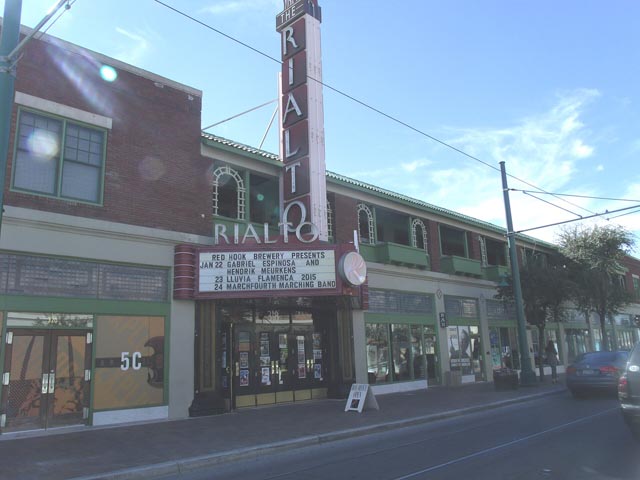
Post World War I, entering the roaring 20s, the Rialto Theatre in Tucson, Arizona was built by 1920. Designed with elegance and a Venetian-inspired style, the building became the center of entertainment for downtown Tucson, settled on Congress Street. Initially meant for the upper class, the Theatre became a community hub for events, ranging from social gatherings to vaudeville shows featuring comedy, music, and dance. Of course, during the golden age of silent films, these films were played with a Kilgen pipe organ and live musicians. The first feature-length screening was in 1920, withThe Toll Gate, written by and starring William Hart.
Similar to other theatres throughout the United States, it was the great depression that changed everything. By 1929, the venue was sold to Harry Nace, who later made a sale with the Paramount-Publix division of Paramount Pictures. The venue was then upgraded with new seating and fresh art deco. Eventually, just as the next era replaced the Theatre, silent films were kicked out as “the talkies” took over the screens. By the late 40s, Paramount took over, and by the 1950s, the central area became a thing of the past. Dwindling ticket sales led the Theatre, known as the Paramount back then, to close in 1963. Up until 1971, the Theatre became nothing but a storage facility for a furniture store. In 1973, the theater was reopened as El Cine Plaza, initially showing Spanish-language films before shifting to adult films, which led to several legal battles and baffling controversies. The Theatre’s history continued to grow darker with arson attempts and a boiler explosion in 1984, severely damaging the structure. Having more lives than some bands that go through lineup changes or alter their sound and style, the venue ultimately had its subsequent revival. It was the start of becoming what we know it as today, back in 1995, when Paul Bear and Jeb Schoonover restored it as a concert hall. By 2004, the City of Tucson purchased the Theatre and officially became what it is today, The Rialto Theatre. Since then, the venue has had countless concerts and events. You can read the full, extensive historyhere.
Facts
Location: 318 East Congress Street, Tucson, AZ Venue Type: Historic theater and concert venue Year Built (and Key Dates): 1920 Built by William Curlett & Son alongside Hotel Congress 1929 Purchased by Paramount-Publix; transitioned to sound films 1948 Renamed The Paramount 1971 Reopened as El Cine Plaza (Spanish-language cinema) 1973–1978 Operated as adult theater 1984 Closed following boiler explosion 1995 Reopened as live music venue under original Rialto name 2004 Purchased by City of Tucson; major restoration began 2015 Rialto Theatre Foundation purchased the venue Status: Active, operated by the nonprofit Rialto Theatre Foundation Capacity: Approximately 1,400
Music Cred
Beyond history and ghost sightings, the Rialto Theatre has been a common location on a touring cycle, with many bands stopping here on their scheduled routes. A few of those artists include: Cannibal Corpse, L.A. Guns, Tom Keifer, Static-X, Leprous, Napalm Death, Melvins, 200 Stab Wounds, Sepultura, Suffocation, Borknagar, Emperor, and Mr. Bungle.
Reported Hauntings
While Tucson offers haunted tours and paranormal hotspots, and even a drive to nearby Phoenix reveals its share of eerie locations, the Rialto Theatre doesn’t have an extensive list of ghostly encounters. Each location’s lore varies, but given the Rialto’s long history, multiple reincarnations, and numerous renovations, it’s no surprise that reports have surfaced over the years.
According to the theatre’s officialwebsite, one tragic story dates back to the mid-1940s, when a piano player in the orchestra pit was fatally injured after his bench collapsed, causing the piano to fall on top of him. He struck his head on the concrete edge of the pit and died from his injuries. Legend has it that his spirit never left the building.
Paranormal accounts shared byPhoenix Ghosts describe sightings of a shadowy figure, unexplained footsteps, and objects moving on their own, all believed to be the pianist’s restless spirit. However, others claim more than one ghost roams the historic venue, possibly former performers or tenants who once lived in the apartments above the theatre. To this day, there hasn’t been enough investigation to determine just how many spirits linger inside.
Visit Info:
Visit the Rialto Theatre website at this location.
Interested in horror and the paranormal?Metal Insider is teaming up with the newly resurrected siteDizarranged, which is also running a haunted countdown to Halloween, featuring 31 haunted places from around the globe.
New music continues to pile its way through. Since our chunk last at the end of 2025, January has brought an extensive batch of fifty-three new tracks as well as fresh videos from already-existing albums or live performances. Metal Insider has collected songs from...
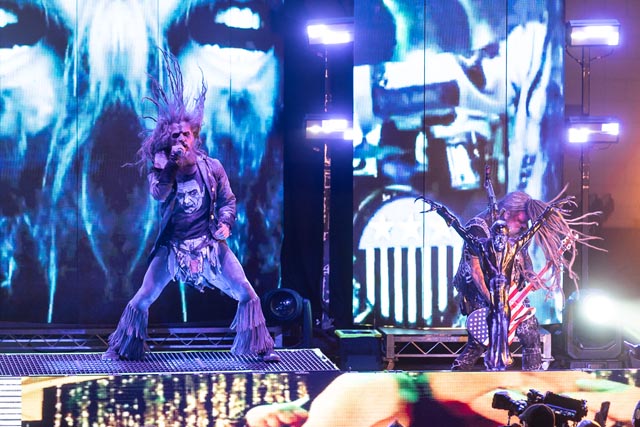
Rob Zombie has released a video for his latest single, “(I’m a) Rock ’N’ Roller.” The track is the third single taken from the shock rocker's upcoming album, The Great Satan, scheduled to arrive on February 27 via Nuclear Blast Records. The release follows the...
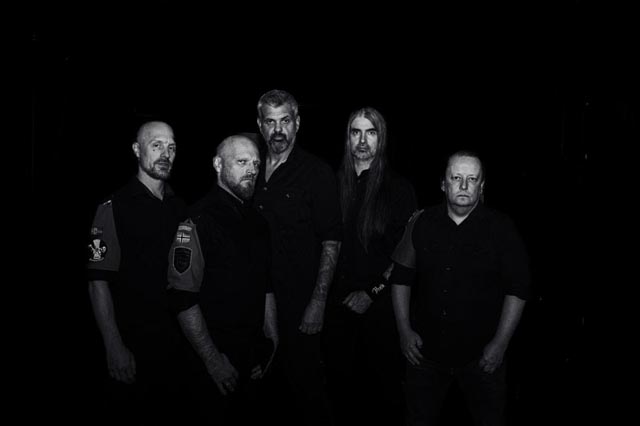
Vreid have unveiled a new instrumental single, "Kraken," written as the official soundtrack piece for the upcoming international film of the same name. The track taps into the band's blackened Sognametal roots, inspired by the mythology and landscapes of Norway's...
New & Noteworthy is Metal Insider’s weekly column highlighting some of the newest rock and metal releases coming out each week. This week finds albums from the likes of Megadeth, Poppy, The Format, Crystal Lake, The Damned, Goldfinger and Rotting Christ...
New & Noteworthy is Metal Insider’s weekly column highlighting some of the newest rock and metal releases coming out each week. Amongst the many outstanding works hitting shelves this week are new releases from the likes of Sleaford Mods, Greywind, Kreator, Soen...
New & Noteworthy is Metal Insider’s weekly column highlighting some of the newest rock and metal releases coming out each week. This week counts new music from the likes of Alter Bridge, The Protomen, Zu Beyond The Black and Bullet amongst the many outstanding...